rsc said..."... every time except once I've always had a thanks and I didn't know ..." (Dave)
Look I'll confess I've barked back once to someone who tried to help. I'll explain why just to make a point about the importance of 'approach'.
In this case I'll accept 60% responsibility.
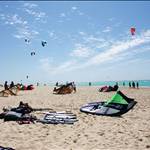
The case study details are not overly important: larger 12m kite; new starter; self launch; strongish wind; public beach; did it a few days before ok; made a mistake due to forgetting something; damaged equipment; and sore body. And very angry for a few hours.
I was about to launch and it was very touch and go -- it was probably going to hurt. But I'm a large build and I'd done it before very carefully. Just then, at the point of lift, a young lady dressed as an instructor walking by with her student walked/ran up behind me and yelled out over my shoulder that I had "the bar around the wrong way" (or words to that effect). I turned my head and this split my attention and caused some confusion for a moment.
In the 2-3 nano-seconds I looked down at the bar and it was the right way round (red to the left) and I said "I know what I'm doing" (or words to that effect, meaning what the "f..." are you talking about?) and in the process turned back to the kite and continued with the delicate balancing act, and bingo, before I had time to think, up it went. I was a little off balance due to the intervention (both mentally and physically) and was lifted up and dumped on a small sand lump about 10m away: 110kg, 12m and 20+knot wind resulted in one broken string, very sore ribs (not broken thank goodness) and a red face. I was angry! And she had walked on as if nothing had happened.
Now, her intentions were 100% good, I have no doubt of that. I have no hard feelings, although at the time, after packing up and limping back to the car, I was very dark in my thoughts. I drove to the school she was working from and vented mightily explaining the risk they were taking. I purchased a new string at a healthy discount.
These are the points I made at the time:
1. I was a member of the public on a public beach and not in any way contracted to, or contracting (at that time), the school or their staff.
2. Someone who was under their contract/employment intervened in my recreational activities and (in my mind) contributed (if not caused) a potentially serious accident and damage to my equipment. [Of, course we'll never know whether the kite launch would have been ok had I been left to my own resources, timing and sensory intuitions.]
3. If we were in a more litigious society, or I was an American tourist, then perhaps the incident may have developed a more serious legal tone.
Yes, there are serious risks in harnessing powerful forces like wind with kites. There are also potentially serious risks and powerful legal forces if you intervene uninvited in a personal matter in a public space.
Now, to keep it short: let me conclude with my deconstruction of this event which may suggest why I consider it a 60:40 split of responsibility -- and a learning experience.
1. I needed someone to help launch the kite. I was not self launching for any other reasons than (a) I was a bit shy; and (b) there were no others nearby willing to offer their assistance without my walking up to them (and I was already harnessed and connected etc).
2. I did not have the bar around the wrong way. I had the kite around the wrong way! I was not to the side enough ... in fact almost standing directly in front of it upwind. That was the mistake. I was in a difficult launch space chosen poorly with small sand hills making walking round difficult -- although the aerodynamics of the place did offer some down wind calmer space (where the kite was sort of). But I confess I was somewhat forgetful at that point of what the lessons had said.
3. The young lady focused on the negative 'mistake' and made her own mistake -- or at least did not communicate well with/to me in that critical moment: either in message content, or in tone. (from my perspective)
4. I reacted poorly and should have shown a bit more humility and wisdom and asked for clarification. But, in my defence, yelling that someone's shoe lace is undone as they stand on the ledge about to fall is not good procedure.
In hind sight, she would have been more helpful if she had had called out "Can I help you launch?" -- and then assessed the situation (myself/wind/kite) and engaged in explaining a better way to do it. I can 100% guarantee that I would have waited and thanked her sincerely for her help and advice.
We can all learn a lot I think. I did in any case. I still do not know her name, but I'm sure (well 99%) a few days later she came by and very nicely offered to help launch my kite for me.
It was a nice resolution to my 'lesson' imo. No doubt I'm down in the books as one of those 'idiots' -- but I'll wear that. But nor is she in court facing a huge hike in her (and the schools) public liability insurance -- and possibly government departments looking into the matter for more regulations etc.
People, please be careful how you approach members of the public -- even ones learning how to kiteboard!
It is not a question of needing more rules (enough of the nanny state already!) -- what is needed are protocols, style, technique and just plain old common respect and courtesy.
My suggestion would be to set up some small funds to do some short
You Tube videos on these classic scenarios. Use humour. This 'Show Pony' example is a classic scenario that done properly would get the message across, go viral and bring the house down. Ever seen the John Cleese workplace training videos? (*) Same idea. Archetypal exaggerated idiot works through the situation. Don't tell -- show.
Given that about 8/10 people I meet on the beach kiteboarding are Swiss or German or Brits tourists out here for their winter (and loving it) then surely there is a business case to approach the WA Government (e.g Tourism) for funds to do these using local instructor talent hamming it up?
Hope this helps.
(*) not the ones I'm thinking of (circa. 1980s), but the closest I could find to show the principle.


 and beer - Oh Yeah