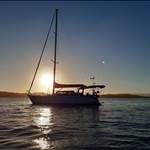
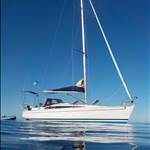
Yesterday we foresook a nice day out on the water for a safety training day. For the first 3 hours, we stayed at the dock and using the Cat 2 audit form as a guide we took the crew over the boat working from front to back.
We broke this down into sections such as;
a) Water; seacocks, bilge bump location and operation, toilets,
b) Energy; engine access, warning tell tales, fire extinguisher access, fuel management systems, gas management systems, isolation valves, stove/oven operation and inbuilt safety features
c) Electrical; isolation switches, circuit breakers, lighting, emergency lighting, portable lighting. high load circuit locations , battery locations
d) Communication. VHF operation and calling procedures, DSC operation, Sat phone, EPIRB and PLB including AIS operation and testing, and explaining what systems used what networks, ie: Satellite or VHF and the difference in SAR response.
e) Personal; how to properly wear a PFD and operation, tethers, knives, jacklines, movement around the boat, watches, impairness from fatigue, cold, the order of steps in an emergency.
f) Boat safety: Liferaft deployment and operation and equipment, Dan buoys, life rings, V sheets, boat identification, flare location, types and use, Fire procedures, fire blankets, extinguishers, keel operation and manual backup procedures.
I tend to forget the complexity involved in doing all this properly, there's a lot to it. So, we tried breaking it up and making it as interactive as possible, we stopped regularly and brain-stormed worst case scenarios. It;s easy to find the gas isolation valve sitting at the dock, now what about if the boat is inverted? It's pitch black, the cabin is half full of water, now can you do it? What about emergency lighting? Where is the battery isolation switch? Can we get to and successfully deploy the liferaft?
We talked about Finistere, CR, Rambler and the speed of which things can go wrong. and what we've learnt from those incidents and some of the crew that have been in these situations shared their experiences. It really struck home with the newer crew the seriousness of the situation, and why safety should not be treated as merely a tick box in order to go offshore sailing.
A quick break for lunch, then we headed out to do the sailing component. For the next 5 hours, we practiced heaving to, heaving to without a headsail, MOB retrieval to windward, MoB retrieval downwind under full kite, lassoing, retrieval over the transom, reefing, shaking out reefs, rotated crew into positions they normally wouldn't man, we worked them hard.
For anyone that is interested, the RYA method of Mob retrieval is first class. It's simple, repeatable and full of common sense, and easy to get your head around and understand. It's the simple things that make it brilliant, you crash tack the boat leaving the jib sheeted on the (now)) wrong side,dont touch the main, and in most conditions it can be done with a single person on deck not even leaving the helm. You don't need to touch your sail plan at all before you're heading back to the Mob, giving crew downstairs time to get on deck and prep for the recovery. It's so logical, yet I believe unless you've been trained in it, you might not work it out naturally, at least I never did.
We got in just before dusk, tired both physically and mentally, but the crew were bouncing. I swear they all grew an extra inch. I mentally castigated myself for not doing this more often, not only did they learn some fundamental skills, the level of enthusiasm, confidence and the gelling together as a team are intangibles that , in my humble opinion, are just as valuable as the skills they learnt. You could see they knew they had taken fundamental steps in becoming better sailors, and it was evident in their smiles, enthusiasm and engagement, even on the way home sharing a few beers and going over the day.
Good times. 12 sleeps to Gladstone, another tick box on the to do list....check!
PS: Wahoo! I got my new wheels at last! One of the crew Kris trying them out and helming for her first time, talk about the proverbial chesire cat :)




 .
. 


 and the BSO - he had a day off
  while l caught my own mooring in the 20+ knot blow which developed in the meantime.