nswsailor said..
Time for a reality check from my practical experience with Top Hats.
Now a lot of the words that have been said by forum posters are very true and Shanty, you should take careful note of what has been said.Now some assumptions that have been made. Average speed for a start. You will average around 2 to 3 knots at BEST. I only average 4.6 knots and that is cruising which in practice means motor sailing whenever the speed drops below 3 knots. Why am I motor sailing, because Top Hats when loaded for cruising are not very fast and any distance over thirty miles that requires a tide to be meet at the destination requires that at some point I will be motor sailing.
That means your voyage could take over 500 days!
Water. Water equals weight, whether you carry it or carry fuel to run a water maker. I reckon you will need a minimum of 300 litres [based on your timing, more if mine] Mk 1's carry 159 litres. Mk 2's carry around 120 litres and the Mk 3 around 100 litres. Shoal draft versions carry none. So there is a large gap of about 10 x 20 litre jerry cans plus.Food. If you are going to run a refrigerator [more weight] you will need a large battery bank with solar panels to keep it charged. You will also need a small generator and fuel if you loose your solar panels. Cooking food will require gas as you will not be able to carry enough methylated spirits for a meths stove. In an onboard situation I can see no way that you will be able to keep any vegetables or fruit fresh, so after about 2-3 weeks you will be relying on tin and dried food or what you have in a frig. You are planning on a frig?
Watch keeping. This will kill you because of the time required to complete the voyage. DON'T be encourage by what Rob did in SUNDOWNER in circumnavigating Australia because he took time off to allow for the right season for his next section but most importantly what most people don't realize is that Rob had another 30 foot yacht with him from Brisbane around the top, down WA and across the Bight [with 15m waves] to his home port in VIC. This meant they were alternated their sleeping so one yacht was always on watch! Rob took about two years to complete the circumnavigation.
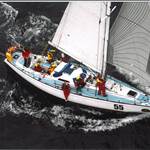
Someone said that Top Hats are a light weight JOG boat and this is correct. Mates of mine who race strip everything they can out of them, then they become fast [even on handicap] and they still do win races.
Shanty I admire your dedication but you will miss out on so many experience by doing a dash around Australia when you can cruise and enjoy all that Australia has to offer, a much better experience I think. If I had done what you wish to do, just think how bland my blogs would have been for you when you were growing up.
The advice to at least use a 32-34 foot yacht should be seriously considered over a Top Hat.
NSWsailor
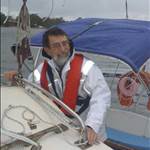
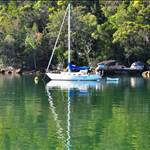
Onboard SV Seaka, a Mark 1 Top Hat anchored at Raby Bay in Moreton Bay on a three to four month cruise towards Lizard Island.
500 days at sea! This answers your principal question in this thread, a Top Hat is too small for the job.
An S&S34, your other prospective boat, can average a bit over 5kts. That is what I achieve with mine on long offshore passages. However, your boat will be loaded up a lot more than mine usually is and you will be solo so sail trim and steering will not be as good as we usually achieve. So you might average 4.5 kts.
Getting past the NSW east coast is a problem in a small boat. Solo sailing north inshore away from the EAC involves an unacceptably high risk you will hit something hard (another boat, fishing nets, land etc). So you might decide to go south along the NSW coast to be going with the EAC. Definitely achievable, there isn't much out there to hit. However, that also means crossing the Great Australian Bight against the westerlies and currents. Nuh, not good.
Crossing the top end and down through the GBR. Lots of hard stuff to run into. How do you plan to do it?
This idea you can sleep for 20 minutes at a time and not be fatigued is rubbish for more than a couple of days at a time. Some sailors like Ellen MaCarthur say they do it but she is not sailing close inshore, she is in deep water and when the conditions are good she gets an all nighter in, and reasonably often.
Every time we go to sea we are taking risks, smart sailors consider and reduce them to as low as practicable and if they are still unacceptably high change their plans. The acceptability of risk in sailing should include the risk you place on others to come to your aid to get you out of trouble you should have foreseen and prepared for or not put yourself into that situation to start with.
A two handed around Australia non-stop sail would be a more appropriate challenge, in my view. And more fun.