Gizmo will probablyexplain it better, but here goes,
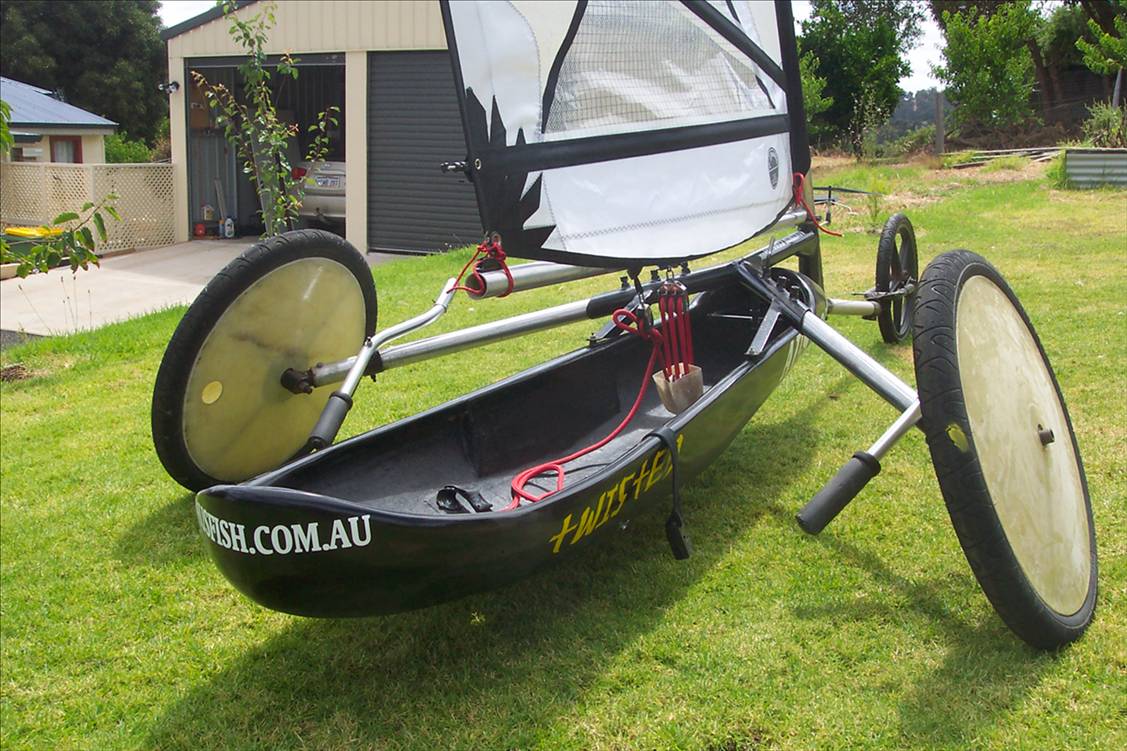
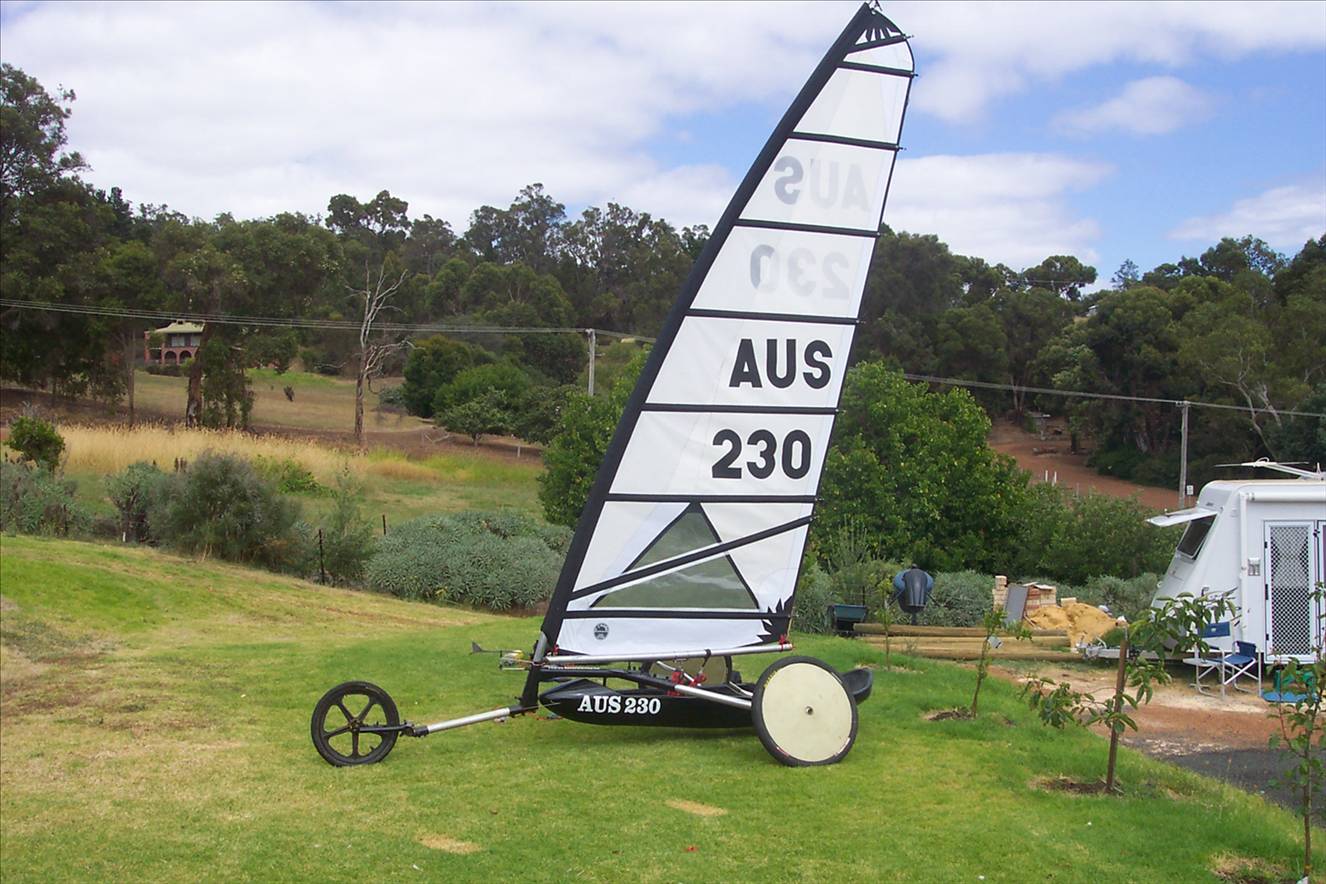
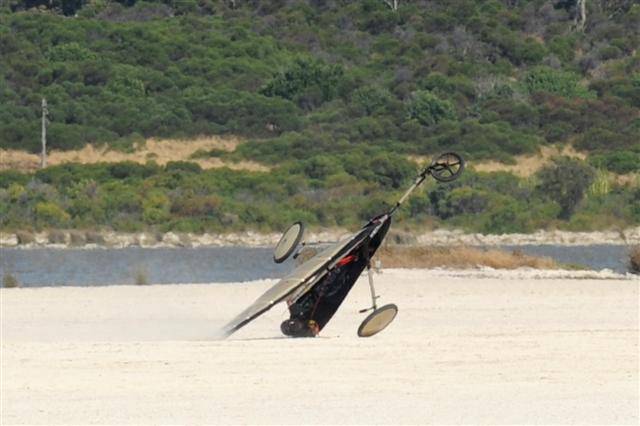
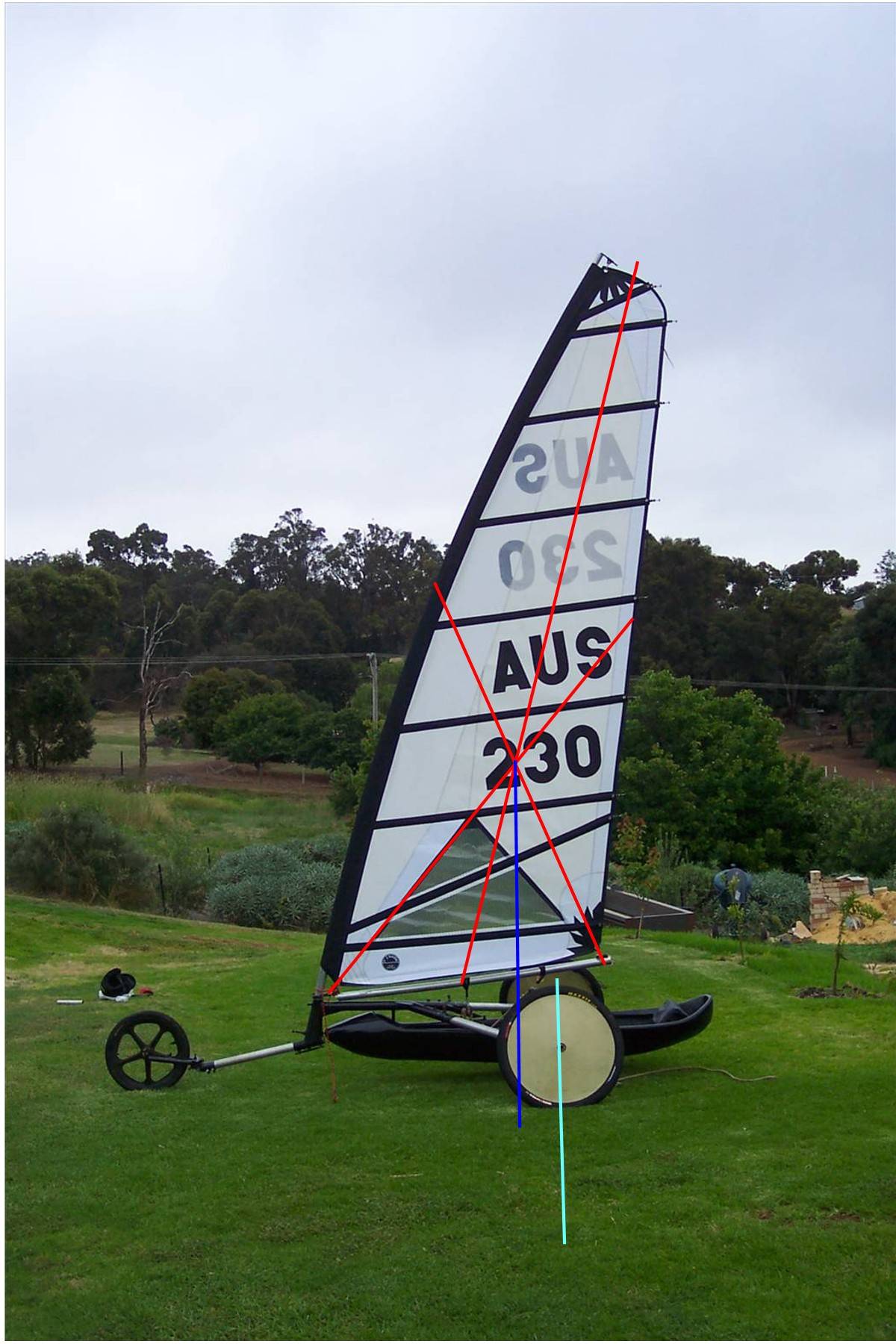
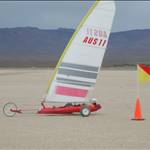
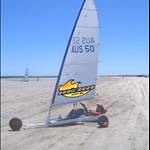
your body AND the yacht will combined ,create a centre of resistance. since the yacht has 3 wheels(the most stable platform)you need to balance it by being back more.
THEN you add the rig.If its too far frward the yacht will want bear away, too far back and it will want to round up.(centre of effort)
Remember that the yacht is powered by a sail that applies a side load to the wheels ,which then roll forward in response.Ie it is not wheel driven.
Big narrow wheels give lowered rolling resistance, BUT if stood upright would peel off the rim due to the side load, or the rims would fail, BUT having heavier tyres and rims would give a flywheel effect, ruining the acceleration benifits of really light wheels.
Landyachts ,in general have no suspension other than the flex of the tubes or axles( too heavy).The OTT style chassis(Over the top) compensates for this by having long flexible limbs that can ride out some serious bumps and dips. they were designed for European tidal beach conditions which can be really brutal.
Many of the design features become un;neccessary on really smooth hard surfaces.Mind you these yacht on hard and smooth go scary fast!
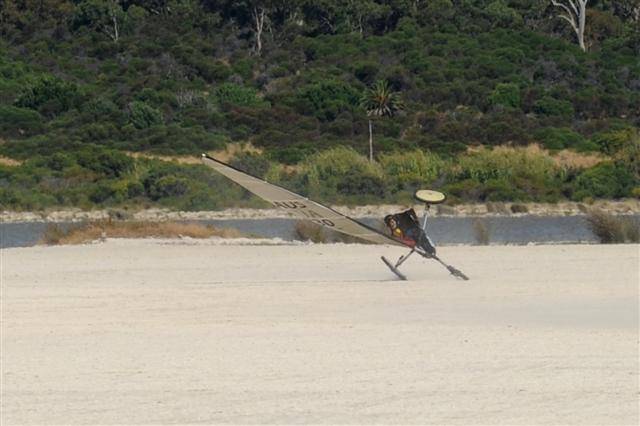
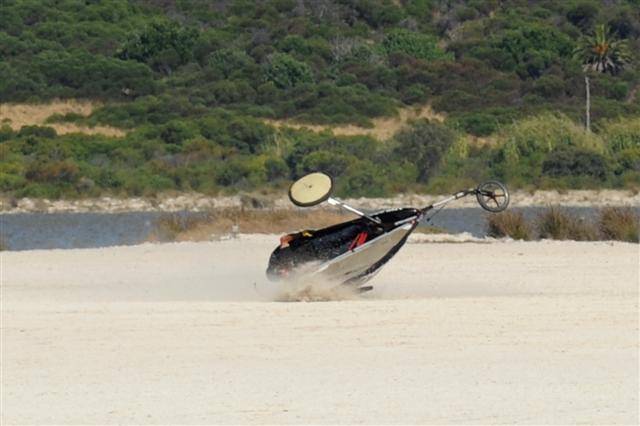
The right tyre can also be a dilemna. Vic discovered that really tough MTB tyres VS lake walyungup rocks is not in his favour .
One of the things to consider with this top end style yacht is that they need to be custom built for for each pilot, to get all the balances right.
And thats why , when we worked on a simple design for the beginner that would still go like a rocket, we followed the example of the blokart and went small. All of the above considerations were used to get a yacht that the builder could understand the mechanics of

does that make sense