

Select to expand quotesprayblaze said..
The boards look sick, can't wait to try the new quad 9. Why only big sizes in haiku package?- maybe not supposed to be jumped as much...
As for the sails I am a bit skeptical- less monofilm means less reactivity, less skin tension. Apart from the mast- monofilm is the motor of the sail. No matter how durable expensive and sophisticated are laminates, nothing beats monofilm. Otherwise race sails would have abandoned monofilm long time ago for good. The 24/25 wave sails were a good compromise between monofilm/scrim surface area and proper positioning of monofilm with a patch above the longest batten- a very important place for the behavior of the sail. Lets see what the reviews will say. Cheers
What do you mean by "reactivity" ? Power up? Depower? It's a bit vague id like to understand your description more? what characteristic do you think monofilm is giving you that laminates don't? Do you have examples or can you describe the feeling of laminates sails relative to film?
Select to expand quotesprayblaze said..
The boards look sick, can't wait to try the new quad 9. Why only big sizes in haiku package?- maybe not supposed to be jumped as much...
As for the sails I am a bit skeptical- less monofilm means less reactivity, less skin tension. Apart from the mast- monofilm is the motor of the sail. No matter how durable expensive and sophisticated are laminates, nothing beats monofilm. Otherwise race sails would have abandoned monofilm long time ago for good. The 24/25 wave sails were a good compromise between monofilm/scrim surface area and proper positioning of monofilm with a patch above the longest batten- a very important place for the behavior of the sail. Let's see what the reviews will say. Cheers
I beg to differ. Carbon laminates are taking sails to a whole new level. if only it was cheaper.
What about the feeling of the Goya custom quad9 in Haiku edition, in "real" world choppy sections, before the encounter with a decent wave ? They describe it as stiffer and with a more "crispy" ride and if I am not mistaken it will bear a carbon bottom ? If anyone has already tried one, it would be good to have an Idea.
Select to expand quotesheddweller said..sprayblaze said..
The boards look sick, can't wait to try the new quad 9. Why only big sizes in haiku package?- maybe not supposed to be jumped as much...
As for the sails I am a bit skeptical- less monofilm means less reactivity, less skin tension. Apart from the mast- monofilm is the motor of the sail. No matter how durable expensive and sophisticated are laminates, nothing beats monofilm. Otherwise race sails would have abandoned monofilm long time ago for good. The 24/25 wave sails were a good compromise between monofilm/scrim surface area and proper positioning of monofilm with a patch above the longest batten- a very important place for the behavior of the sail. Lets see what the reviews will say. Cheers
What do you mean by "reactivity" ? Power up? Depower? It's a bit vague id like to understand your description more? what characteristic do you think monofilm is giving you that laminates don't? Do you have examples or can you describe the feeling of laminates sails relative to film?
Monofilm is thicker than the 2 thin films of the laminates, therefore it is stiffer. When pressurised it stretches less then is more reactive to gust.
Carbon laminate is even stiffer if the connection (bonding and or sewing) is well made, and only in the direction of the carbon strippes.
I guess this makes it difficult to use properly in slalom sails, that's why Monofilm is still used.
I guess if a sail designer had unlimited time and budget to design the best slalom or speed sail, he would end up using carbon laminate, or even more 3di. But FEA and CFD are expensive and difficult to use properly on a windsurf sail.
Select to expand quoteNicko29 said..sheddweller said..sprayblaze said..
The boards look sick, can't wait to try the new quad 9. Why only big sizes in haiku package?- maybe not supposed to be jumped as much...
As for the sails I am a bit skeptical- less monofilm means less reactivity, less skin tension. Apart from the mast- monofilm is the motor of the sail. No matter how durable expensive and sophisticated are laminates, nothing beats monofilm. Otherwise race sails would have abandoned monofilm long time ago for good. The 24/25 wave sails were a good compromise between monofilm/scrim surface area and proper positioning of monofilm with a patch above the longest batten- a very important place for the behavior of the sail. Lets see what the reviews will say. Cheers
What do you mean by "reactivity" ? Power up? Depower? It's a bit vague id like to understand your description more? what characteristic do you think monofilm is giving you that laminates don't? Do you have examples or can you describe the feeling of laminates sails relative to film?
Monofilm is thicker than the 2 thin films of the laminates, therefore it is stiffer. When pressurised it stretches less then is more reactive to gust.
Carbon laminate is even stiffer if the connection (bonding and or sewing) is well made, and only in the direction of the carbon strippes.
I guess this makes it difficult to use properly in slalom sails, that's why Monofilm is still used.
I guess if a sail designer had unlimited time and budget to design the best slalom or speed sail, he would end up using carbon laminate, or even more 3di. But FEA and CFD are expensive and difficult to use properly on a windsurf sail.
well, i was really looking for actual felt differences, what you have given me is an explanation of why you think it does something, not that it actyually does do that thing or a description of how that thing manifests
so what does "stretches less" and "more reactive to gusts" mean in practice? so really we are talking about wave sails, so the stiffer more reactive sails in film ( if true)- what happens in a gust? do they accelerate quicker? power up quicker? feel more powerful? less powerful? go faster? go slower?
is there any video you could point to where we could see this effect? are there any sails that are noteably more reactive or less reactive that you could point to?
Select to expand quotesheddweller said..Nicko29 said..sheddweller said..sprayblaze said..
The boards look sick, can't wait to try the new quad 9. Why only big sizes in haiku package?- maybe not supposed to be jumped as much...
As for the sails I am a bit skeptical- less monofilm means less reactivity, less skin tension. Apart from the mast- monofilm is the motor of the sail. No matter how durable expensive and sophisticated are laminates, nothing beats monofilm. Otherwise race sails would have abandoned monofilm long time ago for good. The 24/25 wave sails were a good compromise between monofilm/scrim surface area and proper positioning of monofilm with a patch above the longest batten- a very important place for the behavior of the sail. Lets see what the reviews will say. Cheers
What do you mean by "reactivity" ? Power up? Depower? It's a bit vague id like to understand your description more? what characteristic do you think monofilm is giving you that laminates don't? Do you have examples or can you describe the feeling of laminates sails relative to film?
Monofilm is thicker than the 2 thin films of the laminates, therefore it is stiffer. When pressurised it stretches less then is more reactive to gust.
Carbon laminate is even stiffer if the connection (bonding and or sewing) is well made, and only in the direction of the carbon strippes.
I guess this makes it difficult to use properly in slalom sails, that's why Monofilm is still used.
I guess if a sail designer had unlimited time and budget to design the best slalom or speed sail, he would end up using carbon laminate, or even more 3di. But FEA and CFD are expensive and difficult to use properly on a windsurf sail.
well, i was really looking for actual felt differences, what you have given me is an explanation of why you think it does something, not that it actyually does do that thing or a description of how that thing manifests
so what does "stretches less" and "more reactive to gusts" mean in practice? so really we are talking about wave sails, so the stiffer more reactive sails in film ( if true)- what happens in a gust? do they accelerate quicker? power up quicker? feel more powerful? less powerful? go faster? go slower?
is there any video you could point to where we could see this effect? are there any sails that are noteably more reactive or less reactive that you could point to?
In theory a stitchless sail will react quicker to gusts than a usual stitched sail as the seams on a stitched sail will load up and stretch and the stitches will stretch and breath.
The sail may not necessarily be more powerful, that depends on how the sail is built and what shape has been built into it.
I'd say the most reactive wave sails are the Ezzy Taka's as they have a 3/4 batten which means they go completely neutral and then load up again and they have a massive wind range due to the fact that they can be tuned a lot more than most sails.
It's good to note that a lot of companies are now using carbon materials that stretch less and are lighter. How long sails last is a whole other story.
Yea but you are missing the point. What is the difference in use? What does film do better? What does more reactive mean to you?
Do they plane earlier? Jump higher? Have more or less wind range? Turn better, worse? Feel different? In what way?
Select to expand quoteNicko29 said..sheddweller said..sprayblaze said..
The boards look sick, can't wait to try the new quad 9. Why only big sizes in haiku package?- maybe not supposed to be jumped as much...
As for the sails I am a bit skeptical- less monofilm means less reactivity, less skin tension. Apart from the mast- monofilm is the motor of the sail. No matter how durable expensive and sophisticated are laminates, nothing beats monofilm. Otherwise race sails would have abandoned monofilm long time ago for good. The 24/25 wave sails were a good compromise between monofilm/scrim surface area and proper positioning of monofilm with a patch above the longest batten- a very important place for the behavior of the sail. Lets see what the reviews will say. Cheers
What do you mean by "reactivity" ? Power up? Depower? It's a bit vague id like to understand your description more? what characteristic do you think monofilm is giving you that laminates don't? Do you have examples or can you describe the feeling of laminates sails relative to film?
Monofilm is thicker than the 2 thin films of the laminates, therefore it is stiffer. When pressurised it stretches less then is more reactive to gust.
Carbon laminate is even stiffer if the connection (bonding and or sewing) is well made, and only in the direction of the carbon strippes.
I guess this makes it difficult to use properly in slalom sails, that's why Monofilm is still used.
I guess if a sail designer had unlimited time and budget to design the best slalom or speed sail, he would end up using carbon laminate, or even more 3di. But FEA and CFD are expensive and difficult to use properly on a windsurf sail.
Isn't that the point. carbon sails are stiffer in the load directions and allow twist in other directions.. I suspect this is part of the issue north are having.. I mean we are talking single monofilm v 2 layers of monofilm with an interlayer.. the interlayer takes the loads so the external monofilm layers can be thinner providing a lighter stronger matrix.
There is also a lot of marketing going on... the laminate material comes from the factory not the sail designer.. the sail designer figures out if he/she wants to use the material or not.. this is why both simmer and Goya seem to be using the same carbon laminates in their sails from the same factory. It's how the material is implemented that provides differences between sail designs.. also there are other carbon laminate materials out there with different interlayer designs. stiffness in multiple directions.. etc. just it seems too expensive at this time.
Severne who really started this whole thing with their pro models had carbon fibres running in multiple directions and over time have transitioned to similar laminates as simmer and goya. it;s from a different factory and is not the exact same cloth from what I understand. could be wrong..
Select to expand quotesheddweller said..
Yea but you are missing the point. What is the difference in use? What does film do better? What does more reactive mean to you?
Do they plane earlier? Jump higher? Have more or less wind range? Turn better, worse? Feel different? In what way?
I guess it depends on the shape and panels pattern of the sail. It will probably accelerate quicker, if the rider can handle it. To sure about the ultimate speed.
Regarding handling it's probably more reactive to rider input but might be a little unstable.
I personally really like the q ply scream. It's light and last well. I found it very beneficial to wave sail since it introduction around 2010's.
Not sure about carbon film. I would like to test it by myself and look at how it last over years...
I would definitely prefer dyneema.
My 2022-23 carbon Blade pros are lasting really well. I wave sail and get beat up like most in WA who hang out in waves. I'd normally be buying some new sails after 3 seasons but don't need to with this quiver. I'm perfectly happy to do the 2026-27 season and see what they look like.
As for the feel etc... I'll be dropping a sail with my next lot ie 1 less sail from 4.5-5.7. The extended range that some are dubious about undeniably exists in my opinion, might go 4.7, 5.3, 5.7 unless Ben comes up with more genius stuff. I reckon the top end control is where the gains mostly are followed by being extremely tunable. For me there's far less thinking about what to rig on any given day, I like being powered so I am probably sailing bigger than I used to.
There's a case for using std sails in lesser used or smaller sizes... maybe.... but for one, I haven't found a downside to the Severne carbon wave sails after 3 pretty solid seasons out west.
Select to expand quotesprayblaze said..
Reading behind the lines means that carbon laminates maybe lighter and bells and whistles in the beginning, but over time strecth. If you buy a 150 cm wave sails after using it 20 times it ends up 154 cm which might not be bothering fore some people despite spending a fortune.
Does this amount of stretch happen? Have you observed it?
Select to expand quotesheddweller said..sprayblaze said..
Reading behind the lines means that carbon laminates maybe lighter and bells and whistles in the beginning, but over time strecth. If you buy a 150 cm wave sails after using it 20 times it ends up 154 cm which might not be bothering fore some people despite spending a fortune.
Does this amount of stretch happen? Have you observed it?
To add... after 3 seasons my sails are still rigging on the same numbers. The only thing I've replaced on my rigs is rope. If there's any stretching, it's pretty negligible.
Select to expand quoteBrent in Qld said..
My 2022-23 carbon Blade pros are lasting really well. I wave sail and get beat up like most in WA who hang out in waves. I'd normally be buying some new sails after 3 seasons but don't need to with this quiver. I'm perfectly happy to do the 2026-27 season and see what they look like.
As for the feel etc... I'll be dropping a sail with my next lot ie 1 less sail from 4.5-5.7. The extended range that some are dubious about undeniably exists in my opinion, might go 4.7, 5.3, 5.7 unless Ben comes up with more genius stuff. I reckon the top end control is where the gains mostly are followed by being extremely tunable. For me there's far less thinking about what to rig on any given day, I like being powered so I am probably sailing bigger than I used to.
There's a case for using std sails in lesser used or smaller sizes... maybe.... but for one, I haven't found a downside to the Severne carbon wave sails after 3 pretty solid seasons out west.
That has been my own experience with the s1 pros in far less conditions than the west coast.. total convert.
like you will do my 2 main sizes in carbon and normal materials for the rest that get less use
Select to expand quoteNicko29 said..
Thanks for your long report Jens. As a pyramid 86 (orange) owner, I can totally relate to what you described!
I find kind of funny/surprising that they never compare the polakow to the goya thruster, since the 2 shapes share many similarities : thruster, pointy nose, swallow tail, fast rocker, fins. Even the 92/93 have almost identical width...
I guess the polakow is still more surf and rad, whereas the thruster 5 is a touch easier and better at planning /jumping. But would like to hear it from them
That's what I was thinking too Nick. KT doesn't tend to compare often between the Goya and Quatro alternatives. Probably bad for business. We'll just have to wait for the punters who buy them to tell us.
Expect the Polakow is faster than the other wave boards in their Goya and Quatro range. It looks almost identical to the good old Radical Thruster Quads that Polakow was using a decade ago, before JP changed to more modern shapes, what's new! I recognised the shape and only the tail seems different. As someone who is still using the Radical Thruster Quads (in a thruster setup), I'd be keen to trial these boards. I think they might feel very similar.
Here's the shape overlay, you barely see the JP board except for the tail because they are nearly identical 😂 I can't easily do the reverse but you can find the 2018 JP catalog online if you'd want to try it.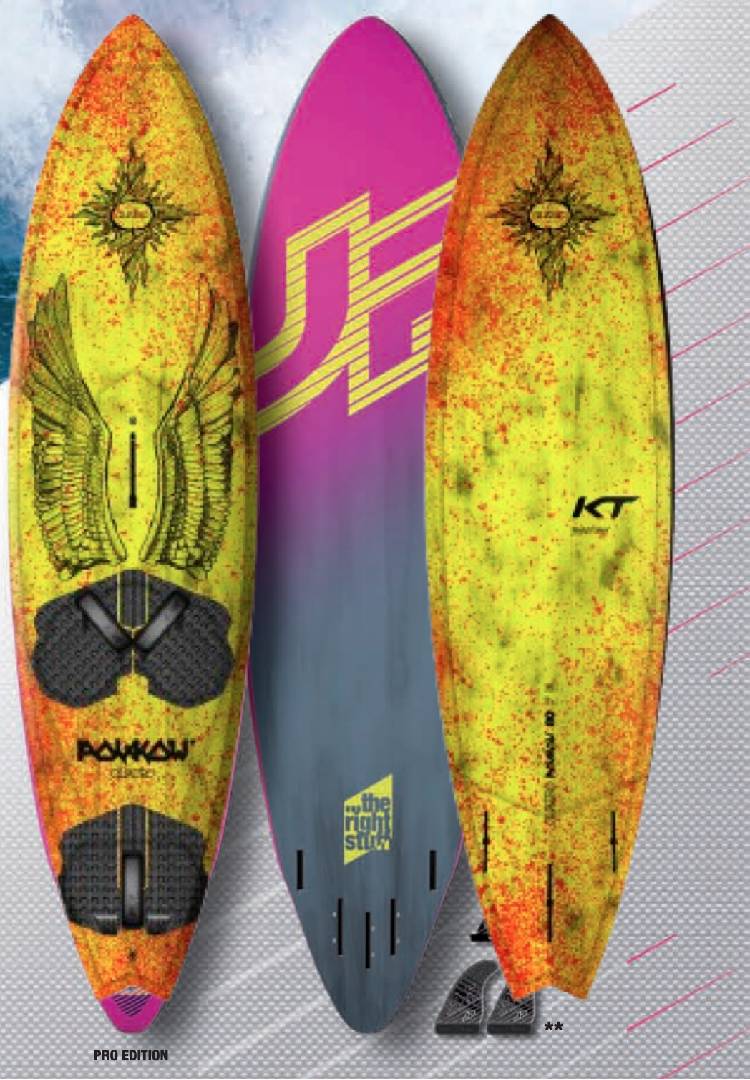
Not sure you can rely on pictures from the websites to compare outlines... They could be only illustration not respecting the true shapes.
Also not sure if Jason Polakow ever rode that jp radical thruster quad. I reckon it's pretty notorious that he always rode quatro custom...
But maybe the shapes of his custom back then infused in the shaping of werner gnigler for the radical thruster quad.
The outline should be pretty accurate, at least for the JP. I imagine they take the CADs but it's obviously 2D only. Anyway, in the video it looks very similar. At least narrow and long but the volume distribution can be different.
Shame there's no size details on the website apart from litres.
As Nicko said, Polakow never rode JP/Gnigler boards, always Quatro customs. As Keith mentioned in the video "... we're working together since 20 years...".
Select to expand quoteAlexF said..
As Nicko said, Polakow never rode JP/Gnigler boards, always Quatro customs. As Keith mentioned in the video "... we're working together since 20 years...".
That doesn't mean jp Australia didn't copy them , adjust rocker and issue a detuned version.
Exactly, surely Polakow influenced the shape of that board. Just found a photo with the size of the 85, it's 224.7x57.3 cm. Love the accuracy with those numbers lol. That's quite a bit shorter but that's probably due to the tail. The 2016-2018 83 (closest size) had a 56.5 cm width, so not that far off.
Select to expand quotesprayblaze said..
Listen carefully to what JD says at the end - monofilm sails were as crisp and strecthless as it gets although lasting 5 minutes. This why there is no substitute for monofilm in race sails for the time being. Reading behind the lines means that carbon laminates maybe lighter and bells and whistles in the beginning, but over time strecth. If you buy a 150 cm wave sails after using it 20 times it ends up 154 cm which might not be bothering fore some people despite spending a fortune.
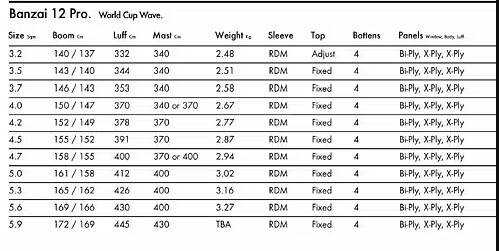
Here is the first link to some specs of the new Banzai 12. Its from the swedish Surfers.se They changed the bigger sizes as they talked about in the video. Nowthere is 5.6 and 5.9, and the 5.6 can go on a 400 cm mast! Has anybody seen any other sails specs?
surfers.se/vindsurfing/vindsurfingsegel/vagsegel/goya-vindsurfingsegel-banzai-12-pro-2026