Mark _australia said...
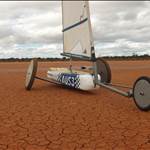
Well there you have it. It is conceivable that my land yacht here could bust 50 knots. the bloke being towed could break 50 or even 60.
Now if KITING counts (stand on a board, towed by a kite) then the above has to count (standing on a board, towed by a wind powered land yacht).
That should be enough to end the debate: kiting must be excluded, as to allow it would open the floodgates to all sorts of silly contraptions
What do you call yellow pages? It's hardly a 'functional' craft for general sailing. It was built for and it's entire ethos is purely speed sailing, in one direction mind you, which in my opinion puts it in the 'silly contraption' category. Have you seen some of the other contraptions past/current to have a crack at this record? A kite is right in the non silly corner as far as i'm concerned.
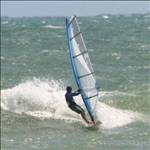
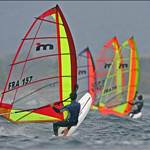
Having classes is a valid idea but there's something less glamorous about saying you're the fastest windsurfer/kiter etc rather than the fastest 'sailor' on the planet. This would lead to an 'open' class, including the aforementioned 'silly contraptions' and low and behold kites. In my opinion a kite is 'sailing' as much as a windsurfer is. Sailing as I define it is just using the wind, however you may harness it be it a kite or a sail, to propel yourself across the water. This does not include being towed by gliders, helicopters, land yachts etc.
Hence I consider a kite to currently hold the world speed sailing record, like the windsurfer before it and the silly contraption (yellow pages) before it. I think people are just really really pissed off that a humble kite was the first to break the 50kt holy grail, something that people have put massive amounts of time and money into for years.
The most impressive record to me is actually that of yellow pages because it's a pure example of engineering and efficiency. It's record was 47ks or so was set in about 18kts of wind. THAT is efficient. Antone set it in about 60kts or something crazy and the kites set it in about 40kts or so. Three radically different approaches which require entirely different conditions but all have equal merit as far as i'm concerned.



 or any thrust
 )
)