The school of diesel knocks: diesel engines 101

> 10 years ago
Reply
Register to post, see what you've read, and subscribe to topics.
scruzin
scruzin
SA
562 posts
SA, 562 posts
12 Jun 2014 9:26pm
I recently had a persistent fuel leak that took me ages to debug. It prompted me to write up some basics on marine diesel engines, which I've learned from the "school of diesel knocks."

Full write-up with photos:
blog.arribasail.com/2014/06/tech-boat-maintenance-diesel-engine-and-fuel-system.html


Artwork by velanoble.com/

LooseChange
LooseChange
NSW
2140 posts
NSW, 2140 posts
13 Jun 2014 1:28am
One of the things you mention in your blog is "diesel bug", the bug is a fungus (cladosporium resinae) that lives in oily fuels eg. diesel and kero and if left unchecked can very quickly render the best engine totally useless as it clogs your filters and lines. Like most fungi, if conditons are right it will grow at an alarming rate.

It used to be a huge problem in the aviation world till it was brought under control. One way to control is try and maintain your tanks to be as full as possible, thereby avoiding the airspace where condensation can form. All jet and turbine powered aircraft these days are refuelled as soon as possible after landing.
scruzin
scruzin
SA
562 posts
SA, 562 posts
14 Jun 2014 2:12pm
LooseChange said...
One of the things you mention in your blog is "diesel bug", the bug is a fungus (cladosporium resinae) that lives in oily fuels eg. diesel and kero and if left unchecked can very quickly render the best engine totally useless as it clogs your filters and lines. Like most fungi, if conditons are right it will grow at an alarming rate.

It used to be a huge problem in the aviation world till it was brought under control. One way to control is try and maintain your tanks to be as full as possible, thereby avoiding the airspace where condensation can form. All jet and turbine powered aircraft these days are refuelled as soon as possible after landing.


Yes, it's nasty stuff. Even though we have fancy biocides, as you say, keeping one's fuel tank as full as possible is the best - and cheapest - defense.
LooseChange
LooseChange
NSW
2140 posts
NSW, 2140 posts
14 Jun 2014 9:12pm
Over the years I had many a battle with the stuff as it contaminated avcat and avtur fuel tanks on aircraft I worked on. The biggest problem on aircraft was the complexity of the fuel systems and access to the tanks to clean and rid them of the bug.
cisco
cisco
QLD
12365 posts
QLD, 12365 posts
15 Jun 2014 12:33am
I am told that the bug will develop more quickly in stainless steel tanks than fibreglass or aluminium tanks.

Any comment on that??
scruzin
scruzin
SA
562 posts
SA, 562 posts
15 Jun 2014 7:43pm
cisco said...
I am told that the bug will develop more quickly in stainless steel tanks than fibreglass or aluminium tanks.

Any comment on that??


I don't know if it develops more quickly or not, but diesel bug will certainly cause more damage to metal tanks since they secrete/excrete acid.
LooseChange
LooseChange
NSW
2140 posts
NSW, 2140 posts
15 Jun 2014 8:50pm
I can't comment on stainless steel as I've never seen it in stainless, but I do recall seeing it in a number of planes ranging from helos to F111 and commercial jets.
MorningBird
MorningBird
NSW
2707 posts
NSW, 2707 posts
15 Jun 2014 9:06pm
Stainless tanks in Morning Bird for 30 years. No problems as yet. Touch wood.

I understand colder weather causes more condensation and more chance of algae growth. Warm diesel returns to the tank from the return line and then cools, a reason to keep the tank full as there is less air to condense water out of.

Has anybody in Sydney or further north had fuel algae problems?
Ramona
Ramona
NSW
7754 posts
NSW, 7754 posts
16 Jun 2014 9:04am
Used to have algae problems occasionally in the 80's in some fishing vessels but not mine. Have not heard of the problem for a very long time. The Coop had a diesel tank near the wharf. When that closed we had to cart our own fuel and the problem went away at the same time. Had a period when I used Bio diesel and that closed when the tax was added so it was back to a different supplier. All the diesel at the pump now is automotive diesel and a little drier and more refined. I doubt whether there is much of problem with algae these days.

Interestingly the Volvo handbook for installation for commercial vessels states;

Materials.
The fuel tanks should preferably be made of stainless steel, but even light alloy or sheet metal tanks can be used. On the other hand, copper, galvanised or hot dipped galvanised plating is highly unsuitable as material for fuel tanks.


My yacht tank is fibreglass.
seabird
seabird
QLD
227 posts
QLD, 227 posts
16 Jun 2014 10:00am
cisco said...
I am told that the bug will develop more quickly in stainless steel tanks than fibreglass or aluminium tanks.

Any comment on that??


I have stainless steel tank never had a problem and I always keep my tank only half filled (100lt tank). I've had the boat for 6 years
I do add a biocide every time I add fuel. ( Diesel Power)


I plan to pump out a sample of fuel from the bottom of the tank, depending on what I find I may remove and clean
southace
southace
SA
4798 posts
SA, 4798 posts
16 Jun 2014 10:08am
In 30 years of boating I have never experienced a fuel bug.......one of my yachts the tank is 25 years old with diesel, prior to that it was 15 years with petrol....never any kind of contamination or bugs....my previous yacht I just sold had a new 100 litre tank installed when I did the re-build 7 years ago....left many times in the tropics under 50 percent full the sight glass never had a single drop of water to drain and certainly never any kind of fuel bugs. Both boats had S/S tanks fitted in the re-builds And never used any bug treatments.

My only experience was with a aluminium charter yacht I skippered we will always have the tank full after each charter but on a few occasions I found the Sight glass full of water before the next charter. It's my belief that the hot return fuel would create moisture when returning to the tank.
echunda
echunda
VIC
765 posts
VIC, 765 posts
16 Jun 2014 12:51pm
Thanks for this.

I never knew about fuel contamination.

I went down to my boat this morning and checked the fuel tank. The diesel is green and a little cloudy however the separator seems clear.

I'll have to go through it a little more to find out if I have an issue.

How do you get an owners manual for the engine?

Is there any free online for Yanmars?
LooseChange
LooseChange
NSW
2140 posts
NSW, 2140 posts
16 Jun 2014 1:43pm
echunda said...
Thanks for this.

I never knew about fuel contamination.

Nobody ever knows about it till they have a problem

I went down to my boat this morning and checked the fuel tank. The diesel is green and a little cloudy however the separator seems clear.

Green is just the dye they add to the fuel (BP is very greeny/yellowish), cloudy is generally when it's cold

I'll have to go through it a little more to find out if I have an issue.

Now your getting the hang of it, prevention is better than cure.

How do you get an owners manual for the engine?

Buy it or download it, your choice.

Is there any free online for Yanmars?

Yes.


scruzin
scruzin
SA
562 posts
SA, 562 posts
17 Jun 2014 11:34am
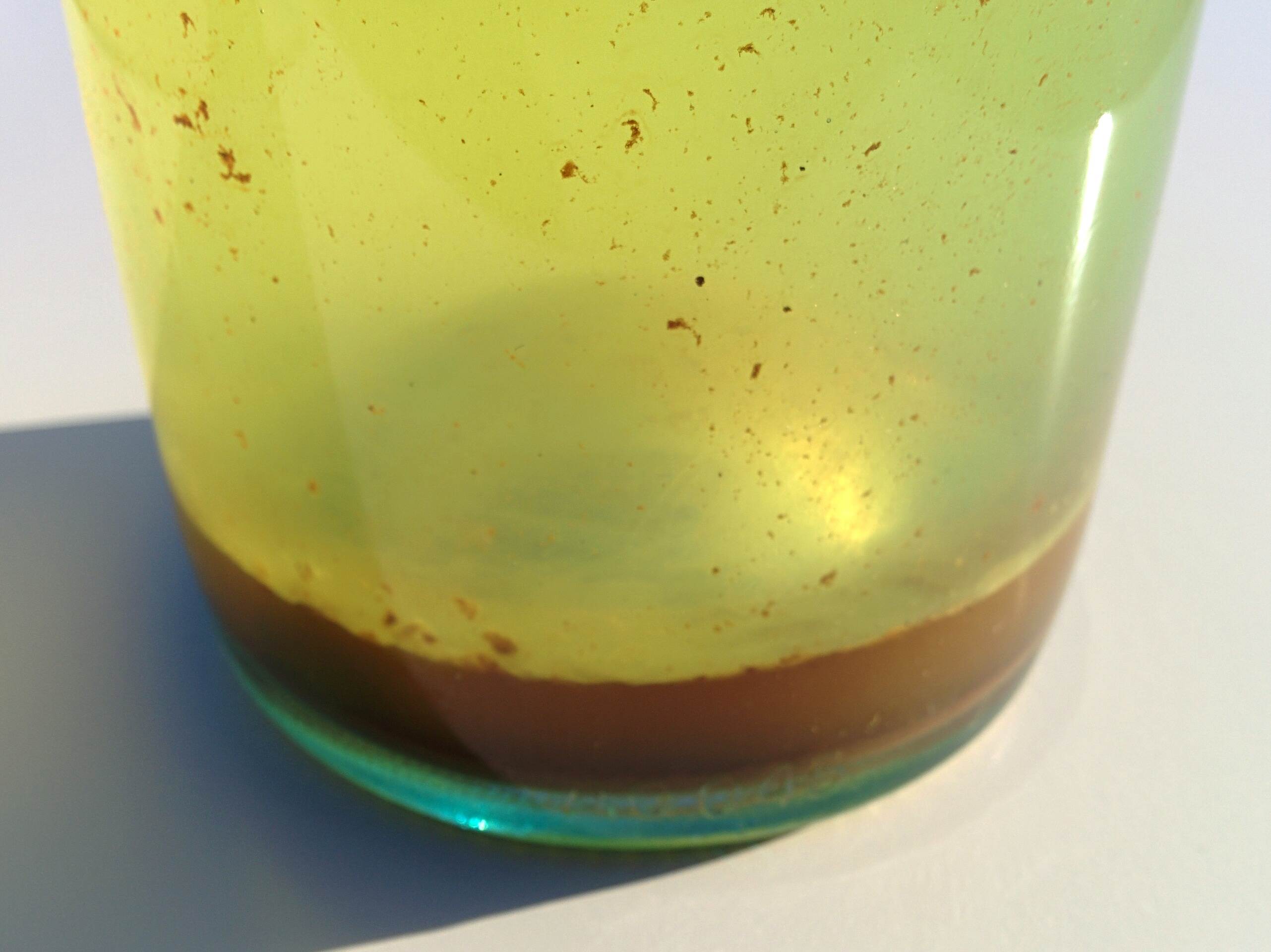
Keep in mind that you can still have fuel contaminants without "diesel bug". Diesel breaks down over time into debris that creates a sludge. I've attached a photo of the sludge I found in my tank the first time I cleaned it. Prior to that, my boat had been a charter boat operating out of Airlie Beach. I seriously doubt they ever cleaned the tanks, so this likely accumulated over 3 years. Regardless of its origns, you don't want sludge clogging up your filters.


Crusoe
Crusoe
QLD
1197 posts
QLD, 1197 posts
17 Jun 2014 1:52pm
All diesel fuel that I put in my tanks is filtered. I don't trust any fuel supplier. I use a special funnel that filters out water and anything bigger than the water molecule. The brand name for the funnel is "Mr Funnel". They are made overseas but there are Australian suppliers. There are probably other funnel filters brands out there as well. I also add fuel treatment. The draw point for my keel tank is about 2mm from the bottom. This is to ensure that if anything gets in the tank, that shouldn't be there, then it comes straight back out. I don't think having a draw point 50mm from the bottom of the tank and saving the crap up for a rough day on the water (so it mixes with the rest) would work for me. Any fuel I carry in containers has treatment added and is regularly turned over by being put in to the keel tank (via the water filter funnel). Touch Wood, so far I have not had any diesel associated problems with my trusty Yanmar.

Ramona
Ramona
NSW
7754 posts
NSW, 7754 posts
17 Jun 2014 7:51pm
I add roughly half a percent of TW3 outboard oil to my diesel.
LooseChange
LooseChange
NSW
2140 posts
NSW, 2140 posts
18 Jun 2014 12:19am
Ramona said...
I add roughly half a percent of TW3 outboard oil to my diesel.


ok, you have my attention, I'm guessing that it's because the diesel these days is more refined and and not as "oily" as the older slightly heavier distilate used to be and therefore you are increasing the lubricity of the fuel.

Any other reason in case I'm guessing wrong?
Ramona
Ramona
NSW
7754 posts
NSW, 7754 posts
18 Jun 2014 9:35am
LooseChange said...

Ramona said...
I add roughly half a percent of TW3 outboard oil to my diesel.


ok, you have my attention, I'm guessing that it's because the diesel these days is more refined and and not as "oily" as the older slightly heavier distilate used to be and therefore you are increasing the lubricity of the fuel.

Any other reason in case I'm guessing wrong?


Your smarter than you look! The drier diesel is more likely to cause wear on injector pump parts. It apparently makes the engines quieter and easier to start as well. My engine starts easily anyway so I can't say if its improved or not. We all usually have outboards so those of us who have two strokes will have TW3 handy and adding half a percent is not costing a lot.

When we used to have that yellow bio diesel for sale in town it felt very slippery between your fingers compared to road diesel. The old Gardner loved it. People on the Wharf didn't like the fish and chip smell though!
echunda
echunda
VIC
765 posts
VIC, 765 posts
18 Jun 2014 3:09pm
Ramona said...

LooseChange said...


Ramona said...
I add roughly half a percent of TW3 outboard oil to my diesel.


ok, you have my attention, I'm guessing that it's because the diesel these days is more refined and and not as "oily" as the older slightly heavier distilate used to be and therefore you are increasing the lubricity of the fuel.

Any other reason in case I'm guessing wrong?


Your smarter than you look! The drier diesel is more likely to cause wear on injector pump parts. It apparently makes the engines quieter and easier to start as well. My engine starts easily anyway so I can't say if its improved or not. We all usually have outboards so those of us who have two strokes will have TW3 handy and adding half a percent is not costing a lot.

When we used to have that yellow bio diesel for sale in town it felt very slippery between your fingers compared to road diesel. The old Gardner loved it. People on the Wharf didn't like the fish and chip smell though!


I'd prefer a chip shop smell to diesel fumes any day
Ramona
Ramona
NSW
7754 posts
NSW, 7754 posts
18 Jun 2014 7:35pm
Except when the pensioners fishing off the wharf are feeling peckish!
Please Register, or first...
Topics Subscribe Reply

Return To Classic site 😭
Or... let us know if a problem, so we can tweak! 😅