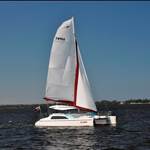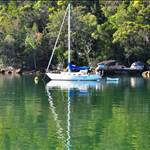


broughton island has a good anchorage for southerly winds with a courtesy mooring ,stopped there last june its on the north western side
After this thread and considering currents and where they are etc , ive decided to go pittwater - Broughton,(weather permitting) Broughton to Laurieton. Id have to put in long days to do this. All this sounds great from the comfort of my couch in front of the fire. see what happens once out there, but it would be very early starts for a few days. At least theres loads of places to stop.
BM it would be great to catch up. I was the guy who was going to get you to deliver , but this was because time was an issue as we were only gonna have a month or 2 and i was considering getting the boat delivered the whole way north and flying up but we are taking 6-9 months so we got the time now.
I am looking forward to hearing your stories as i know you get up and down the coast a bit on your tophat and would love to chat about lord howe next year in 1 or 2 tophats! Still yet to do an offshore passage and lord howe or tassie could be the ones. We are tentatively thinking of tassie this year between nov-march as we will still be living aboard(in theory!) who know whats gonna happen.
Select to expand quoteSectorsteve said..
After this thread and considering currents and where they are etc , ive decided to go pittwater - Broughton,(weather permitting) Broughton to Laurieton. Id have to put in long days to do this. All this sounds great from the comfort of my couch in front of the fire. see what happens once out there, but it would be very early starts for a few days. At least theres loads of places to stop.
BM it would be great to catch up. I was the guy who was going to get you to deliver , but this was because time was an issue as we were only gonna have a month or 2 and i was considering getting the boat delivered the whole way north and flying up but we are taking 6-9 months so we got the time now.
I am looking forward to hearing your stories as i know you get up and down the coast a bit on your tophat and would love to chat about lord howe next year in 1 or 2 tophats! Still yet to do an offshore passage and lord howe or tassie could be the ones. We are tentatively thinking of tassie this year between nov-march as we will still be living aboard(in theory!) who know whats gonna happen.
Hi Steve, I enjoy hearing of your plans.
Two comments:
A Fleming Minor or Navik windvane would be a good addition to your Tophat. I've owned two boats with wind vanes and cruised them. Their best suit is heavy weather with no power consumption and axe proof construction. (try that with an st1000.)
Ive only single handed a few passages and some years ago now. Back then I drew rhumblines on my charts from all major cities (incl NZ) and made sure I stayed away from those or set my alarm to 20 minutes. On the NSW coast a prudent single hander may need to be as much as 40nm or more off the coast, but will find considerably less traffic. You'd only do that if you were doing several days at sea though.
I have a Brolga and it's bullet proof. Your Tophat is the same. Baker built a solid boat.

Sam,
Back to your original question.
If you heave too on the NSW north coast for 8 hours to sleep you will find yourself some 30 to 40 nautical miles to the south when you wake up. You will be out in the current because to be close in out of SOME of the current you would end up ashore in that time.
Day hops are enjoyable and the only way north for the small yachty, just remember the jump from Yamba to the Seaway is the longest and always overnight of about 30 hours. [Unless you are lucky enough to be able to anchor offshore at Byron Bay]
Noticed a couple of yachts have said they are heading north, please post your vessels name as I'm sure we will all look after you on the way north if we know who you are!
Select to expand quotenswsailor said..
Sam,
Back to your original question.
If you heave too on the NSW north coast for 8 hours to sleep you will find yourself some 30 to 40 nautical miles to the south when you wake up. You will be out in the current because to be close in out of SOME of the current you would end up ashore in that time.
Day hops are enjoyable and the only way north for the small yachty, just remember the jump from Yamba to the Seaway is the longest and always overnight of about 30 hours. [Unless you are lucky enough to be able to anchor offshore at Byron Bay]
Noticed a couple of yachts have said they are heading north, please post your vessels name as I'm sure we will all look after you on the way north if we know who you are!
Ah yes, I never gave a thought to drifting in the current. There you see. that's what experience gives you, the
knowledge of how things work. I'm still going to daydream about sailing North.....it's just that it'll be a whole
lot more complicated now.
Its not complicated Sam, just planning and one step at a time
Keep asking question we are here to help
We have just this minute arrived at Southport from Yamba - apart from the in and out sailed all the way. 25hrs in our compass 28. Absolutely knackered! Still, saw a whale leaping all over the place and dodged most of the rain.
Talked to a guy who said Ballina is worth making the effort with the bar which would make this jump a bit easier.
Mostly had to hand steer as conditions too heavy for tiller pilot.
Fair wind to all those heading North.
Bristle
Thats good time! Which tiller pilot do you have?
Would it have been unfavourable weather to stop in the lee of cape byron?
Heaving to is a good strategy if you need to have a rest, make a coffee/tea, prepare lunch or make some repairs.
However, heaving to is different on different yachts. All yacht masters should practise it in varying conditions as a drill so that when the occasion arises, no matter the conditions, all is predictable and simple.
From experience on IOR style fin keelers (my preference) it is a very simple matter, if you are pointing efficiently with correct sail power for the conditions, you just haul the tiller (also my preference up to 40 odd footers) to windward, ie steer to leeward and hold it there, do not touch the sheets, let the main flick through the gybe, the yacht will stop in her tracks, creep to windward at about 1/2 a knot, lash the helm and go do whatever you gotta do.
If you are off the wind it will be a bit different. You will most likely have more sail up than you would if on the wind.
I have not tried it off the wind but I suggest the action would be to luff to windward, tightly sheet the main and drop the head sail.
I am interested to hear others opinions on that.
Heaving to is a way to stop a yacht and maintain a position approximately to enable the crew to do a function ranging from recovering a man overboard to having a sleep.
However, doing it in an open roadstead without a watch on deck is foolishness.
Bristolfashion said:
Talked to a guy who said Ballina is worth making the effort with the bar which would make this jump a bit easier.
I have been in once and was lucky enough to get out the next day... have heard of yachts trapped in Ballina for up to three weeks before getting out!!!
Select to expand quotenswsailor said..
I have been in once and was lucky enough to get out the next day... have heard of yachts trapped in Ballina for up to three weeks before getting out!!!
Blowen Bowen can be like that. 
We stopped at both Ballina and Tweed heads last June with no problems at all ,brunswick heads is also a usefull stop over in good weather
Hi Sectosteve. We've got the ST2000 tillerpilot. The odd swell /gust seemed to be giving it a hard time and we got better course and speed by hand.
Cape Byron would have been fine but the weather was too good not to keep going. We made it to Southport in the light which was nice.
Nswsailor - our thoughts exactly. You can get stuck in Ballina for a long time.
Cheers
Bristle
Hi yes i notice a lot of the old hands are suggesting short 20 minute naps if anything.I remember saiiling to fraser island from Bundaberg and under full sail i went below for maybe 2 minutes come back up and the village idiot with a tinny ripped over in front of me and stopped so i could admire his tinny gave me a big wave and all .Emergency tack ensued just missed him it was close i never forget that amusing moment i day hop or have company anytime i sail now. When it happens it happens quick stay alert is my advice.
Right...I've looked back over the thread to revise how I'm going to do this trip. I don't want
to day hop, I want to go out, up and in. I've decided I can handle 20 min sleeps and I can heave to briefly
if needed. There seems to be two big factors, heavy coastal traffic, and the East Coast Current.
Is there a way I can get around both these problems by going way offshore, Ringle suggests 40nm.
Does the current lessen the further off shore you are. Is this scenario doable ??.
good luck with that plan Sam ,I always day hop north for the simple reason I like my sleep ,keeps a clear head and mind
also there is so much to see when you hug the coast ,we day hopped all the way to Darwin last winter with the gulf crossing the only night sail in 2500 nm and had a ball ,all the best to you with your trip
The nsw coast is the worst of it in relation to easy places to stop, if you really want to just go for it so to speak I would suggest finding another sailor to come with you until wide bay bar then the day hopping is easy. that's basically what I'm doing to make it safer and easier on myself.
Select to expand quotesamsturdy said..
Right...I've looked back over the thread to revise how I'm going to do this trip. I don't want
to day hop, I want to go out, up and in. I've decided I can handle 20 min sleeps and I can heave to briefly
if needed. There seems to be two big factors, heavy coastal traffic, and the East Coast Current.
Is there a way I can get around both these problems by going way offshore, Ringle suggests 40nm.
Does the current lessen the further off shore you are. Is this scenario doable ??.
The worst of the traffic is always the amateur fishermen close inshore. The current varies all the time so you will basically have to check the Bom pages or listen out on the professional fisherman's frequencies as you head North. Trawler operators are always discussing the "tide" at the surface and at the bottom, often it's going the opposite way on the bottom.
Usually the East Coast current runs South and the strength or speed varies, picks up about 6 or 7 miles out and strongest at the shelf. Sometimes it eases off past the shelf but can run still far wider. When the current is fresh down there is often current running North in close so yachts going North can take advantage of that.
Watch what the large commercial vessels are doing. If the current is fresh down they will often hug the coast going North to save fuel.
Off the South coast at the moment there is no current at all!
Select to expand quotecisco said..
Heaving to is a good strategy if you need to have a rest, make a coffee/tea, prepare lunch or make some repairs.
However, heaving to is different on different yachts. All yacht masters should practise it in varying conditions as a drill so that when the occasion arises, no matter the conditions, all is predictable and simple.
From experience on IOR style fin keelers (my preference) it is a very simple matter, if you are pointing efficiently with correct sail power for the conditions, you just haul the tiller (also my preference up to 40 odd footers) to windward, ie steer to leeward and hold it there, do not touch the sheets, let the main flick through the gybe, the yacht will stop in her tracks, creep to windward at about 1/2 a knot, lash the helm and go do whatever you gotta do.
If you are off the wind it will be a bit different. You will most likely have more sail up than you would if on the wind.
I have not tried it off the wind but I suggest the action would be to luff to windward, tightly sheet the main and drop the head sail.
I am interested to hear others opinions on that.
Heaving to is a way to stop a yacht and maintain a position approximately to enable the crew to do a function ranging from recovering a man overboard to having a sleep.
However, doing it in an open roadstead without a watch on deck is foolishness.
On this I have to disagree with Cisco. Using a gybe to get to a heave to position is only ok in very light winds. In anything fresh this is a crash gybe and bloody dangerous in most circumstances. You will have the main crash across if you have any slack in the sheet or if the main is sheeted in you will need to ease the mainsheet out very rapidly to avoid a broach. Extremely unwise for all but the most experienced who know how their boat will react to such a manoeuvre.
To heave to the safest and easiest manoeuvre is to tack through leaving the head sail sheets where they were I.e. With the headsail backed.
Ease the mainsheet as required to get the desired angle to the wind/sea.
Select to expand quoteMorningBird said..cisco said..
Heaving to is a good strategy if you need to have a rest, make a coffee/tea, prepare lunch or make some repairs.
However, heaving to is different on different yachts. All yacht masters should practise it in varying conditions as a drill so that when the occasion arises, no matter the conditions, all is predictable and simple.
From experience on IOR style fin keelers (my preference) it is a very simple matter, if you are pointing efficiently with correct sail power for the conditions, you just haul the tiller (also my preference up to 40 odd footers) to windward, ie steer to leeward and hold it there, do not touch the sheets, let the main flick through the gybe, the yacht will stop in her tracks, creep to windward at about 1/2 a knot, lash the helm and go do whatever you gotta do.
If you are off the wind it will be a bit different. You will most likely have more sail up than you would if on the wind.
I have not tried it off the wind but I suggest the action would be to luff to windward, tightly sheet the main and drop the head sail.
I am interested to hear others opinions on that.
Heaving to is a way to stop a yacht and maintain a position approximately to enable the crew to do a function ranging from recovering a man overboard to having a sleep.
However, doing it in an open roadstead without a watch on deck is foolishness.
On this I have to disagree with Cisco. Using a gybe to get to a heave to position is only ok in very light winds. In anything fresh this is a crash gybe and bloody dangerous in most circumstances. You will have the main crash across if you have any slack in the sheet or if the main is sheeted in you will need to ease the mainsheet out very rapidly to avoid a broach. Extremely unwise for all but the most experienced who know how their boat will react to such a manoeuvre.
To heave to the safest and easiest manoeuvre is to tack through leaving the head sail sheets where they were I.e. With the headsail backed.
Ease the mainsheet as required to get the desired angle to the wind/sea.
Thats how i do it for sail changes, dropping main etc. Works well. Not really understanding ciscos method?
Lately ive been thinking to try it another way :
Say youre sailing to windward stbd tack and its blowing like mad. im thinking rather than having the boat turn right around(tacking through the heave to) , ease main slightly turn into wind slightly, winch the jib over to port. Adjust main to balance.
Pretty sure skip novak says to do this way if conditions are bad. If done right boat should stop without coming about and no sudden forces on gooseneck/boom
Winching jib to port would be the hardest part but I'd say its do able. 2 people would be good for this. 1 to ease the load off the jib. 1 winding on new winch.
I think youd be lashing tiller after the sails were sorted too to avoid coming about and stuffing the manouver up.
Have been watching the wind pretty closely since around march this year as we were planning to head north last year but it never eventuated. I'd have to say the wind has looked very favourable with the dominate winds being south west and true south.
For some reason last year I seem to remember the predominance of north westerly winds, maybe that comes further into winter.
Select to expand quoteSectorsteve said..
Not really understanding ciscos method?
If you are sailing hard on the wind and not over canvassed your head sail will be sheeted in and flat, your mainsail will be sheeted in hard and your traveller will be midships or close to it and locked both ways.
The method is to haul the tiller to windward and hold it there. You don't gradually steer to leeward. You haul it over quickly and deliberately.
Head sheets and main sheet should already be cleated off. DO NOT TOUCH THEM. Just keep the tiller hard over.
The boat will bear away to leeward and come to the point of the gybe. It will NOT be a "crash gybe". The end of the boom will only swing over about 300 mm and the main sail will just flick through the gybe.
The boat will stop dead in it's tracks, the head sail will back and aeronautically speaking the rig and sails are stalled and the boat will creep to windward at 1/2 to 1 knot.
Everybody is saying it will be a crash gybe and gear is going to break and people will be injured. Rubbish!!
I am telling you all, if you do it exactly as I have described above, NOTHING WILL HAPPEN except that you will stop the boat dead in it's tracks and everything will be peaceful and calm.
When you are ready to go again, DO NOT TOUCH THE SHEETS, just simply steer the yacht back onto your original course.
Capt. Armstrong of the Gold Coast Marine Academy took me through the maneuver for the first time on my 42 foot IOR 2 tonner and I was quite astounded at the result.
If you are trucking along on a beam reach with slack sheets and you gybe, yes you are going to break something. As I said, to do this you need to be hard on the wind, not over canvassed and sheeted in reasonably hard.
The first person here who takes their boat out in say 7 to 10 knots, does the maneuver, videos it and posts it here, I will send $100 towards any breakage they suffer. That does not include the Rum bottle falling over and breaking.
well thats how i do it cisco. it starts with tightening the jib a bit, then turning into the wind, with one hand on the main sheet ready to let it out. im always really careful not to let the boom crash across and for the heave to to be balanced you need to let it out. i prefer to let it out after the tack not before.in fact i let the main sheet off the moment i feel the wind on it after the tack. ive got cam cleats on my tiller for sheet to tiller and this is when i use them also - when heaving to to lock the tiller in place. ive done this in a 30 kn nor easter. same rules apply heaving to as sailing in regards to how much sail you have up. I heave to to stow main, shorten down jib. usually down wind as never had a AP and my sheet to tiller is really only good on a beam reach or heading into the wind. Its a must know thing to do. a huge help - especially when you have no Auto Pilot.
Select to expand quoteSectorsteve said..
well thats how i do it cisco. it starts with tightening the jib a bit, then turning into the wind, with one hand on the main sheet ready to let it out. im always really careful not to let the boom crash across and for the heave to to be balanced you need to let it out. i prefer to let it out after the gybe not before. ive got cam cleats on my tiller for sheet to tiller and this is when i use them also - when heaving to to lock the tiller in place. ive done this in a 30 kn nor easter. same rules apply heaving to as sailing in regards to how much sail you have up. I heave to to stow main, shorten down jib. usually down wind as never had a AP and my sheet to tiller is really only good on a beam reach or heading into the wind.
You have contradicted yourself Steve. If you turn into the wind you will tack, not gybe.
If you don't want to heave to by tacking and leave the heady sheets as they were to back the sail, you can just pull the heady to the backed position with the sheets. In stronger winds this will be very difficult to achieve but you won't endanger the boat as you try.
The problem with Cisco's method is if you do have the main and heady sheeted in hard on the wind and then gybe the boat you will have the boat pointing down wind with a hard sheeted main. The heady could be still on the sheeted in side as the main blanks it. Serious risk of a gybe if you don't get the main out quick smart. Get a rope tangle and your day will be seriously spoilt.
Ciscos method does work in lighter air, the 7-10 kts he says to try it at is fine. Try it in 20kts plus and it becomes high risk.
I dare say that having done it once in controlled conditions is probably not the basis for recommending it for general use.
In a similar situation I broke the gooseneck gybing MB with the main sheeted in hard at Lord Howe in 2014. Wind was about 30kts when we gybed. The main travelled about 300 mm and the force broke the mainsheet block and the gooseneck broke as the boom got to the shrouds.
On Yendys in 2005 we gybed in 20-25kts, we were frantically easing the main to avoid a broach.
Lots of power in a gybing main in 20 plus kts.
Trust me, gybing in stronger winds can be really bad and in my view only for the experienced crewed boat.
My view is that you are best to use the same method in all conditions so you are practised and familiar and won't cock it up when fatigued. Gybing in strong winds is dangerous, especially for us short handed sailors.
If you want to heave to, tack through or if in light airs pull the heady across if you can.
just words mate. i tack through it never gybe. made a boo boo there - wordwise. my heave tos are successful every time in heavy weather and in the harbour. i dont do the crashing boom thingo. ill change the word gybe to tack above cause thats what i meant. Heaving to is that bloody easy , i taught the mrs to do it in 5 minutes and she can do it on her own. for people wanting to do it - GO DO IT and stop reading about it etc. Anytime you want to learn any of this stuff you actually need to bite the bullet and go do it.
I still want to try the skip novak method for REAL heavy weather which is in my post above. Its still heaving to - just without turning the boat. I practice all this stuff alot first in all different winds, with reefs in etc. then use it outside because thats what its for.
Talking about it on here is pointless for anyone reading this. Go do it.
Select to expand quoteSectorsteve said..
just words mate. i tack through it never gybe. made a boo boo there - wordwise. my heave tos are successful every time in heavy weather and in the harbour. i dont do the crashing boom thingo. ill change the word gybe to tack above cause thats what i meant. Heaving to is that bloody easy , i taught the mrs to do it in 5 minutes and she can do it on her own. for people wanting to do it - GO DO IT and stop reading about it etc. Anytime you want to learn any of this stuff you actually need to bite the bullet and go do it.
I still want to try the skip novak method for REAL heavy weather which is in my post above. Its still heaving to - just without turning the boat. I practice all this stuff alot first in all different winds, with reefs in etc. then use it outside because thats what its for.
Talking about it on here is pointless for anyone reading this. Go do it.
Keep it safe and you'll be fine! Let me know when you plan to get away.
Select to expand quoteSectorsteve said..
im always really careful not to let the boom crash across and for the heave to to be balanced you need to let it out.
If the main is sheeted right in as it would be for pointing high and the traveller is locked amidships, how could the boom "crash across"?
Remember, I am talking about how an IOR fin keeler will behave which is all about Centre of Effort and Centre of Lateral Resistance.
i prefer to let it out after the tack not before.in fact i let the main sheet off the moment i feel the wind on it after the tack.
Different hulls forms will behave differently and yes, if you have a mainsail powered yacht as opposed to a headsail powered yacht, after performing the "heave to", ie heaving the tiller to windward, you may have to ease the mainsheet a little to achieve balance. The whole idea is to put the yacht into a balance between C of E and C of LR.
ive got cam cleats on my tiller for sheet to tiller and this is when i use them also - when heaving to to lock the tiller in place. ive done this in a 30 kn nor easter. same rules apply heaving to as sailing in regards to how much sail you have up. I heave to to stow main, shorten down jib.
That is not "heaving to". That is "shortening sail".
usually down wind as never had a AP and my sheet to tiller is really only good on a beam reach or heading into the wind. Its a must know thing to do. a huge help - especially when you have no Auto Pilot.
If you know your boat well, as you obviously do, you know how to stop it, tie what you need to off, let the boat look after itself and go do whatever you need to do.
The general principle of "heaving to", with a sloop at least, is to have the headsail backed, mainsail sheeted hard and the traveller and/or rudder adjusted to positions resulting in the yacht gently creeping to windward at 1/2 to 1 knot.
At whatever wind speed you are sailing in you should only have as much sail area up as the yacht can handle and that will be the right amount of sail area for heaving to.
Select to expand quoteMorningBird said..
The problem with Cisco's method is if you do have the main and heady sheeted in hard on the wind and then gybe the boat you will have the boat pointing down wind with a hard sheeted main.
You are still not getting what I am saying mate.
When you "heave to" as I described, what you say as "you will have the boat pointing down wind with a hard sheeted main." is not a problem, BECAUSE it is a hard sheeted main. The boat will only be in that position for a couple of seconds anyway because the tiller is held hard over and the boat will turn through an almost U turn of some 270 degrees and coming back up into the wind on the other tack but depowered because of the backed headsail.
OK, so what I am describing is a gybe "heave to" by the simple act of hauling the tiller to windward and tying it off.
Let's say it is blowing 20 knots steady and we have 2 reefs in the main and a No3 genoa or No4 working jib up, pointing high and trucking along at 6.5 knots and Joe Blow decides to fall overboard.
STOP THE BOAT!!!! Gybe or tack????
Let's tack and see what happens. Lee ho. You thrust the tiller to leeward and hold it there, you don't touch the sheets, it is an efficient sailing yacht, so it comes through the eye of the wind, you expose the full sail area beam on to the wind so she will heel well over and still holding the tiller over she will go through a gybe, heel well over the other way, round up, climb to windward again, tack and do it all again and probably do it all day, round and round if you do not pull the tiller the other way.
Do you see it now??
You could tack her until the headsail backs but then you have to put the tiller over to the other side to stall her into the wind. It is a lot simpler and quicker to haul the tiller to windward, tie it off, let the boat do what it is going to do and get busy rescuing Joe Blow.
As I said before, this is what I know works for IOR type fin keelers which tend to be headsail powered. Different boats will behave differently.
I think it is very important for all crew on any yacht knowing how to "heave to" the yacht they are sailing on. Lives may depend on it.