Solved it!
visionmarinetechnologies.com/e-motion/180e
Canadian-based Vision Marine Technologies is making a new electric outboard engine, the E-Motion 180E, and is taking reservations for the first production run. "We finally achieved the balance we sought between power, functionality and autonomy," said Alexandre Mongeon, CEO and co-founder of Vision in a statement. "Our engine has surpassed our expectations in every aspect with 180 hp and 350 Nm of torque, we have the most powerful electric outboard engine available on the market."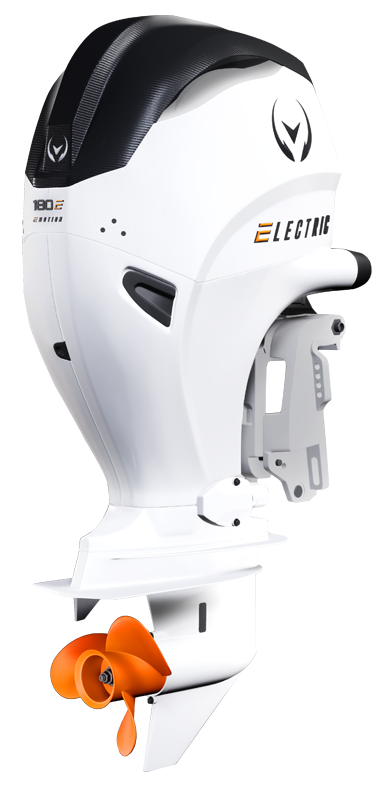
Select to expand quotejulesmoto said..
Anyone replaced diesel with electric propulsion? ....
I had a diesel that I couldn't fix, due to my lack of mechanical skills in the face of a number of possible problems. Then the problem was that I didn't want to pay $3 or $4k to overhaul it without any guarantee.
I eventually settled on a 9.8HP OB for $1300 second hand, rather than a new diesel for $9 or $10k. I put an outboard well into my 28' yacht. I can get 3 hours from a 10 litre tank at full throttle, just the same 3 hours as that brand new electric outboard link above. I have carried 120 litres of petrol once.
Select to expand quoteFabulousPhill said..julesmoto said..
Anyone replaced diesel with electric propulsion? ....
I had a diesel that I couldn't fix, due to my lack of mechanical skills in the face of a number of possible problems. Then the problem was that I didn't want to pay $3 or $4k to overhaul it without any guarantee.
I eventually settled on a 9.8HP OB for $1300 second hand, rather than a new diesel for $9 or $10k. I put an outboard well into my 28' yacht. I can get 3 hours from a 10 litre tank at full throttle, just the same 3 hours as that brand new electric outboard link above. I have carried 120 litres of petrol once.
I had an outboard on a reasonably heavy 28 foot yacht once with an XXL shaft which I don't think is even available anymore. It was fine in relatively calm water but no good in rough stuff as it came out of the water due to it's placement behind the transom. Also not really a solution for anything bigger than 28 ft unless it's a super lightweight racer. It was really nice not to have that dirty smelly thing inside with associated hull penetrations and also occupying and ton of space. Theft is a problem however and I lost it at least once
 Bringing the OB into a well brings it about 70cm more forward, away from where it may pitch out of the water. The motor above is only a long shaft, Tohatsu 2 stroke 9.8 HP weighing only 28 kg. Theft need not be a real concern because I can lock it with the 2 transom screw things (with a padlock), which is all inaccessible under a locking hatch over the OB well. The bracket arms of the windvane have since been moved aft, to allow the OB motor to be raised and not interfere with the windvane.
  I took at least 2 years to think of doing it, after reading about it on AtomVoyages.com website . No leaks, plenty of epoxy, a little bit of courage in cutting the hull, and marine ply - voila. Just geometry and measuring well. 28 foot yacht, 3 500 kg displacement.
"If you think you can or you can't, you're right"
Select to expand quoteFabulousPhill said..Bringing the OB into a well brings it about 70cm more forward, away from where it may pitch out of the water. The motor above is only a long shaft, Tohatsu 2 stroke 9.8 HP weighing only 28 kg. Theft need not be a real concern because I can lock it with the 2 transom screw things (with a padlock), which is all inaccessible under a locking hatch over the OB well. The bracket arms of the windvane have since been moved aft, to allow the OB motor to be raised and not interfere with the windvane. I took at least 2 years to think of doing it, after reading about it on AtomVoyages.com website . No leaks, plenty of epoxy, a little bit of courage in cutting the hull, and marine ply - voila. Just geometry and measuring well. 28 foot yacht, 3 500 kg displacement.
"If you think you can or you can't, you're right"
Works well with that type on rudder setup and my father owned a folkboat with a similar set up with outboard well in lazarette but no good for modern style rudder where hull is too deep forward of rudder and no room behind
I recerntly looked at costs for an outboard style electric engine for my 24' but it's still at least triple the cost of a petrol outboard.
Interestingly I was approached by an electric boat engine manufacturer 4 years ago who wanted to launch in Australia. They had been powering and testing their electric engines for the past 8 years on a number of 40' tourist boats which are used several hours every day 365 days a year. I visited their office and went for a ride on one of the boats. I can't really give a technical view as its not my field but was impressed to learn that all data is fed back to HQ (300km away) as part of their ongoing research and development. They can even steer and run the boats remotely if need be. They also visited Australia and we went to the Sydney boatshow to see an electric powered sailboat there.
The engines cost nothing with the peripherals, batteries and installation responsible for most of the cost. Still they were going to be less than half the price of what was available in Australia. I tried to convince them to aim for the smaller boat engine market (from 14ft putputs to 40' yachts) to build a presence and for turnover and had a shipwright begging for one of their engines for a 18' putput style boat. Unfortunately they wanted to aim for the 50'+ market probably as they intended to send an engineer out each time for the installation.. Anyway after about 3 months they decided the market was to small and I think there was some dispute between the two companies acting in partnership and who knows what else.
Select to expand quotejulesmoto said..
Anyone replaced diesel with electric propulsion? If so have you found an economical supplier of quality lithium batteries?
Hi Julesmoto - I see you posted this in February, so if you haven't already solved your problem there are sure to be some new developments in this market. I've been researching the e-propulsion pod drive (9.9hp equivalent) and the torqeedo cruise 4.0 fixed pod, which has about the same power. Both systems installed with serious lithium battery capacity come out around $12k to $14k. The advantage of pod-drives is that they are passively cooled by the water around them (improves efficiency) and are direct-drive, so no gears, thrust bearings or cooling systems to go wrong. Like electric cars, the figures to keep in mind are the 'cost of ownership' over a period of time - and there is some overlap with the rest of the boat's electrical system because a huge battery bank (9kWh) covers all that too. The lithium batteries will almost certainly last a decade, and the motor etc too if the quality is what the manufacturers claim. So to get a comparison 'cost of ownership' I would take off around $500/year for professional servicing of a diesel (including parts), perhaps $100/year in fuel, a couple of sets of sealed lead acid batteries for starting and house purposes (let's say $600 x 2). When all those costs are factored in, the electric comes out ahead of a new diesel installation. Based on these very rough figures, a new pod-drive system would, conservatively, be $15,000 spread over ten years while a new smallish diesel would be $15,000 (motor and installation), $5000 servicing and parts, $1200 batteries, $1000 diesel ... total approx $22,000. Granted, the diesel could keep going for another ten years, so it's not a strict like-for-like comparison. The big downside of electric is range, but as the Sailing Uma people have pointed out, they never sail in a way that requires long passages of steaming. The systems above could cover about 27nm (50km) at 3 knots in flat water - perhaps not enough for weekend sailors who have to get back to the office for Monday, but plenty for long-term cruisers. (Let's not forget that just a couple of decades ago sailing with NO motor was a badge of honour for some cruisers.)The big upside of electric is the lack of servicing, parts, engine fumes, oil and coolant leaks, water in fuel, making detours to re-fuel, polluting oil pumped out with bilge water, clogged injectors etc etc. On my boat (if I actually make the switch) a big plus with be huge amounts of storage where engine used to go (my boat has no quarter berths, so it's a cavern back there). I've been using electric bikes for about five years now - one of the most cost-effective, healthy ways of getting around ever devised. But you have to think about your transport needs in a different way. I think the same will be true for yacht auxiliary power. That's what I've found - I'd be keen to hear if you've found anything else worth looking at ...
Select to expand quoteBluewaterBound said..julesmoto said..
Anyone replaced diesel with electric propulsion? If so have you found an economical supplier of quality lithium batteries?
Hi Julesmoto - I see you posted this in February, so if you haven't already solved your problem there are sure to be some new developments in this market. I've been researching the e-propulsion pod drive (9.9hp equivalent) and the torqeedo cruise 4.0 fixed pod, which has about the same power. Both systems installed with serious lithium battery capacity come out around $12k to $14k. The advantage of pod-drives is that they are passively cooled by the water around them (improves efficiency) and are direct-drive, so no gears, thrust bearings or cooling systems to go wrong. Like electric cars, the figures to keep in mind are the 'cost of ownership' over a period of time - and there is some overlap with the rest of the boat's electrical system because a huge battery bank (9kWh) covers all that too. The lithium batteries will almost certainly last a decade, and the motor etc too if the quality is what the manufacturers claim. So to get a comparison 'cost of ownership' I would take off around $500/year for professional servicing of a diesel (including parts), perhaps $100/year in fuel, a couple of sets of sealed lead acid batteries for starting and house purposes (let's say $600 x 2). When all those costs are factored in, the electric comes out ahead of a new diesel installation. Based on these very rough figures, a new pod-drive system would, conservatively, be $15,000 spread over ten years while a new smallish diesel would be $15,000 (motor and installation), $5000 servicing and parts, $1200 batteries, $1000 diesel ... total approx $22,000. Granted, the diesel could keep going for another ten years, so it's not a strict like-for-like comparison. The big downside of electric is range, but as the Sailing Uma people have pointed out, they never sail in a way that requires long passages of steaming. The systems above could cover about 27nm (50km) at 3 knots in flat water - perhaps not enough for weekend sailors who have to get back to the office for Monday, but plenty for long-term cruisers. (Let's not forget that just a couple of decades ago sailing with NO motor was a badge of honour for some cruisers.)The big upside of electric is the lack of servicing, parts, engine fumes, oil and coolant leaks, water in fuel, making detours to re-fuel, polluting oil pumped out with bilge water, clogged injectors etc etc. On my boat (if I actually make the switch) a big plus with be huge amounts of storage where engine used to go (my boat has no quarter berths, so it's a cavern back there). I've been using electric bikes for about five years now - one of the most cost-effective, healthy ways of getting around ever devised. But you have to think about your transport needs in a different way. I think the same will be true for yacht auxiliary power. That's what I've found - I'd be keen to hear if you've found anything else worth looking at ...
To tell you the truth I have had so many other projects on the boat I bought early March (all of which have now been halted for a while because of flu lockdown) that I have not researched the electric propulsion much at all since I first bought the boat. My plan now is to use the diesel until it clapps-out which may not be that long since it is 33 years old. I just wanted to know which way to jump when that happens and start familiarising myself with what is available. The pod system sounds interesting although it sounds like it might create some drag and also 9.9 horsepower wouldn't cut it for my boat which is 38 ft. How big is your boat?
Select to expand quotejulesmoto said..BluewaterBound said..julesmoto said..
Anyone replaced diesel with electric propulsion? If so have you found an economical supplier of quality lithium batteries?
Hi Julesmoto - I see you posted this in February, so if you haven't already solved your problem there are sure to be some new developments in this market. I've been researching the e-propulsion pod drive (9.9hp equivalent) and the torqeedo cruise 4.0 fixed pod, which has about the same power. Both systems installed with serious lithium battery capacity come out around $12k to $14k. The advantage of pod-drives is that they are passively cooled by the water around them (improves efficiency) and are direct-drive, so no gears, thrust bearings or cooling systems to go wrong. Like electric cars, the figures to keep in mind are the 'cost of ownership' over a period of time - and there is some overlap with the rest of the boat's electrical system because a huge battery bank (9kWh) covers all that too. The lithium batteries will almost certainly last a decade, and the motor etc too if the quality is what the manufacturers claim. So to get a comparison 'cost of ownership' I would take off around $500/year for professional servicing of a diesel (including parts), perhaps $100/year in fuel, a couple of sets of sealed lead acid batteries for starting and house purposes (let's say $600 x 2). When all those costs are factored in, the electric comes out ahead of a new diesel installation. Based on these very rough figures, a new pod-drive system would, conservatively, be $15,000 spread over ten years while a new smallish diesel would be $15,000 (motor and installation), $5000 servicing and parts, $1200 batteries, $1000 diesel ... total approx $22,000. Granted, the diesel could keep going for another ten years, so it's not a strict like-for-like comparison. The big downside of electric is range, but as the Sailing Uma people have pointed out, they never sail in a way that requires long passages of steaming. The systems above could cover about 27nm (50km) at 3 knots in flat water - perhaps not enough for weekend sailors who have to get back to the office for Monday, but plenty for long-term cruisers. (Let's not forget that just a couple of decades ago sailing with NO motor was a badge of honour for some cruisers.)The big upside of electric is the lack of servicing, parts, engine fumes, oil and coolant leaks, water in fuel, making detours to re-fuel, polluting oil pumped out with bilge water, clogged injectors etc etc. On my boat (if I actually make the switch) a big plus with be huge amounts of storage where engine used to go (my boat has no quarter berths, so it's a cavern back there). I've been using electric bikes for about five years now - one of the most cost-effective, healthy ways of getting around ever devised. But you have to think about your transport needs in a different way. I think the same will be true for yacht auxiliary power. That's what I've found - I'd be keen to hear if you've found anything else worth looking at ...
To tell you the truth I have had so many other projects on the boat I bought early March (all of which have now been halted for a while because of flu lockdown) that I have not researched the electric propulsion much at all since I first bought the boat. My plan now is to use the diesel until it clapps-out which may not be that long since it is 33 years old. I just wanted to know which way to jump when that happens and start familiarising myself with what is available. The pod system sounds interesting although it sounds like it might create some drag and also 9.9 horsepower wouldn't cut it for my boat which is 38 ft. How big is your boat?
Mine is 30ft, weighing 3000kg (before cruising supplies and gear). There are plenty of systems for the bigger boats, including pod systems, but the price seems to go up a lot. For example, there is a Torqeedo pod that is rated for boats up to 10,000kg, but the motor kit alone is $17,930. Add in a huge battery bank and it's getting really pricey. I have long thought that one day I would move up to a 36-38ft boat, but I must say the prospect of having a self-contained, solar and wind powered boat makes me want to stay in the pocket-cruiser range. We'll see! As for drag, there are pods that can take feathering props, so it's not much different to any other sail drive.
ecoboats.com.au/products/electric-motors/torqeedo-outboard-motors/torqeedo-cruise-10-0-fixed-pod/
Select to expand quoteBluewaterBound said..julesmoto said..BluewaterBound said..julesmoto said..
Anyone replaced diesel with electric propulsion? If so have you found an economical supplier of quality lithium batteries?
Hi Julesmoto - I see you posted this in February, so if you haven't already solved your problem there are sure to be some new developments in this market. I've been researching the e-propulsion pod drive (9.9hp equivalent) and the torqeedo cruise 4.0 fixed pod, which has about the same power. Both systems installed with serious lithium battery capacity come out around $12k to $14k. The advantage of pod-drives is that they are passively cooled by the water around them (improves efficiency) and are direct-drive, so no gears, thrust bearings or cooling systems to go wrong. Like electric cars, the figures to keep in mind are the 'cost of ownership' over a period of time - and there is some overlap with the rest of the boat's electrical system because a huge battery bank (9kWh) covers all that too. The lithium batteries will almost certainly last a decade, and the motor etc too if the quality is what the manufacturers claim. So to get a comparison 'cost of ownership' I would take off around $500/year for professional servicing of a diesel (including parts), perhaps $100/year in fuel, a couple of sets of sealed lead acid batteries for starting and house purposes (let's say $600 x 2). When all those costs are factored in, the electric comes out ahead of a new diesel installation. Based on these very rough figures, a new pod-drive system would, conservatively, be $15,000 spread over ten years while a new smallish diesel would be $15,000 (motor and installation), $5000 servicing and parts, $1200 batteries, $1000 diesel ... total approx $22,000. Granted, the diesel could keep going for another ten years, so it's not a strict like-for-like comparison. The big downside of electric is range, but as the Sailing Uma people have pointed out, they never sail in a way that requires long passages of steaming. The systems above could cover about 27nm (50km) at 3 knots in flat water - perhaps not enough for weekend sailors who have to get back to the office for Monday, but plenty for long-term cruisers. (Let's not forget that just a couple of decades ago sailing with NO motor was a badge of honour for some cruisers.)The big upside of electric is the lack of servicing, parts, engine fumes, oil and coolant leaks, water in fuel, making detours to re-fuel, polluting oil pumped out with bilge water, clogged injectors etc etc. On my boat (if I actually make the switch) a big plus with be huge amounts of storage where engine used to go (my boat has no quarter berths, so it's a cavern back there). I've been using electric bikes for about five years now - one of the most cost-effective, healthy ways of getting around ever devised. But you have to think about your transport needs in a different way. I think the same will be true for yacht auxiliary power. That's what I've found - I'd be keen to hear if you've found anything else worth looking at ...
To tell you the truth I have had so many other projects on the boat I bought early March (all of which have now been halted for a while because of flu lockdown) that I have not researched the electric propulsion much at all since I first bought the boat. My plan now is to use the diesel until it clapps-out which may not be that long since it is 33 years old. I just wanted to know which way to jump when that happens and start familiarising myself with what is available. The pod system sounds interesting although it sounds like it might create some drag and also 9.9 horsepower wouldn't cut it for my boat which is 38 ft. How big is your boat?
Mine is 30ft, weighing 3000kg (before cruising supplies and gear). There are plenty of systems for the bigger boats, including pod systems, but the price seems to go up a lot. For example, there is a Torqeedo pod that is rated for boats up to 10,000kg, but the motor kit alone is $17,930. Add in a huge battery bank and it's getting really pricey. I have long thought that one day I would move up to a 36-38ft boat, but I must say the prospect of having a self-contained, solar and wind powered boat makes me want to stay in the pocket-cruiser range. We'll see! As for drag, there are pods that can take feathering props, so it's not much different to any other sail drive.
ecoboats.com.au/products/electric-motors/torqeedo-outboard-motors/torqeedo-cruise-10-0-fixed-pod/
As far as I can ascertain inboard electric motors (both water and air cooled) are relatively cheap even if upsized to one suitable for a 38 foot boat although I wouldn't source it from Australia as they all seem to be rip offs (maybe USA) .
I don't really like the idea of a pod even though it doesn't involve two changes of drive direction like a saildrive does. I would probably keep my existing propeller shaft and propeller if possible and avoid additional alloy corrosion and possible Ingress of water to motor problems.
All the money is in the batteries but I believe that if you are prepared to make up your own batteries from say 4x3.2v cells per bms controller making each 280ah battery then enormous savings are made and you can come out somewhere near the cost of an inboard diesel Apparently the motor doesn't have to be the same kilowatt rated as a diesel due to the increased torque. Anyway apart from these pointers I don't have much more input at this stage and of course the batteries are only going to get cheaper and possibly even better chemistry than presently available lithium iron phosphates. There are hundreds of YouTube videos about cheap DIY lithium iron phosphate batteries but perhaps start with this guy. He says @ about 11 minutes 20 seconds that you can get 16 of these 3.2 volt cells for less than $1,200 US dollars. I would need more than that so probably even a bigger volume discount would apply.
Select to expand quotejulesmoto said..BluewaterBound said..julesmoto said..BluewaterBound said..julesmoto said..
Anyone replaced diesel with electric propulsion? If so have you found an economical supplier of quality lithium batteries?
Hi Julesmoto - I see you posted this in February, so if you haven't already solved your problem there are sure to be some new developments in this market. I've been researching the e-propulsion pod drive (9.9hp equivalent) and the torqeedo cruise 4.0 fixed pod, which has about the same power. Both systems installed with serious lithium battery capacity come out around $12k to $14k. The advantage of pod-drives is that they are passively cooled by the water around them (improves efficiency) and are direct-drive, so no gears, thrust bearings or cooling systems to go wrong. Like electric cars, the figures to keep in mind are the 'cost of ownership' over a period of time - and there is some overlap with the rest of the boat's electrical system because a huge battery bank (9kWh) covers all that too. The lithium batteries will almost certainly last a decade, and the motor etc too if the quality is what the manufacturers claim. So to get a comparison 'cost of ownership' I would take off around $500/year for professional servicing of a diesel (including parts), perhaps $100/year in fuel, a couple of sets of sealed lead acid batteries for starting and house purposes (let's say $600 x 2). When all those costs are factored in, the electric comes out ahead of a new diesel installation. Based on these very rough figures, a new pod-drive system would, conservatively, be $15,000 spread over ten years while a new smallish diesel would be $15,000 (motor and installation), $5000 servicing and parts, $1200 batteries, $1000 diesel ... total approx $22,000. Granted, the diesel could keep going for another ten years, so it's not a strict like-for-like comparison. The big downside of electric is range, but as the Sailing Uma people have pointed out, they never sail in a way that requires long passages of steaming. The systems above could cover about 27nm (50km) at 3 knots in flat water - perhaps not enough for weekend sailors who have to get back to the office for Monday, but plenty for long-term cruisers. (Let's not forget that just a couple of decades ago sailing with NO motor was a badge of honour for some cruisers.)The big upside of electric is the lack of servicing, parts, engine fumes, oil and coolant leaks, water in fuel, making detours to re-fuel, polluting oil pumped out with bilge water, clogged injectors etc etc. On my boat (if I actually make the switch) a big plus with be huge amounts of storage where engine used to go (my boat has no quarter berths, so it's a cavern back there). I've been using electric bikes for about five years now - one of the most cost-effective, healthy ways of getting around ever devised. But you have to think about your transport needs in a different way. I think the same will be true for yacht auxiliary power. That's what I've found - I'd be keen to hear if you've found anything else worth looking at ...
To tell you the truth I have had so many other projects on the boat I bought early March (all of which have now been halted for a while because of flu lockdown) that I have not researched the electric propulsion much at all since I first bought the boat. My plan now is to use the diesel until it clapps-out which may not be that long since it is 33 years old. I just wanted to know which way to jump when that happens and start familiarising myself with what is available. The pod system sounds interesting although it sounds like it might create some drag and also 9.9 horsepower wouldn't cut it for my boat which is 38 ft. How big is your boat?
Mine is 30ft, weighing 3000kg (before cruising supplies and gear). There are plenty of systems for the bigger boats, including pod systems, but the price seems to go up a lot. For example, there is a Torqeedo pod that is rated for boats up to 10,000kg, but the motor kit alone is $17,930. Add in a huge battery bank and it's getting really pricey. I have long thought that one day I would move up to a 36-38ft boat, but I must say the prospect of having a self-contained, solar and wind powered boat makes me want to stay in the pocket-cruiser range. We'll see! As for drag, there are pods that can take feathering props, so it's not much different to any other sail drive.
ecoboats.com.au/products/electric-motors/torqeedo-outboard-motors/torqeedo-cruise-10-0-fixed-pod/
As far as I can ascertain inboard electric motors (both water and air cooled) are relatively cheap even if upsized to one suitable for a 38 foot boat although I wouldn't source it from Australia as they all seem to be rip offs (maybe USA) .
I don't really like the idea of a pod even though it doesn't involve two changes of drive direction like a saildrive does. I would probably keep my existing propeller shaft and propeller if possible and avoid additional alloy corrosion and possible Ingress of water to motor problems.
All the money is in the batteries but I believe that if you are prepared to make up your own batteries from say 4x3.2v cells per bms controller making each 280ah battery then enormous savings are made and you can come out somewhere near the cost of an inboard diesel Apparently the motor doesn't have to be the same kilowatt rated as a diesel due to the increased torque. Anyway apart from these pointers I don't have much more input at this stage and of course the batteries are only going to get cheaper and possibly even better chemistry than presently available lithium iron phosphates. There are hundreds of YouTube videos about cheap DIY lithium iron phosphate batteries but perhaps start with this guy. He says @ about 11 minutes 20 seconds that you can get 16 of these 3.2 volt cells for less than $1,200 US dollars. I would need more than that so probably even a bigger volume discount would apply.
Very useful - thanks. I'll watch that when I get a mo. One thing I'll be looking for is what kind of max amperage they can deliver. My new electric outboard - 34 ftlb of thrust - draws between 7.5A and 35A, but my smallish lithium battery is only rated to deliver 18A continuously, so I can only use the bottom two or three power setting. I'm guessing that if you rig the batteries in parallel the current adds up? Hmm. Not a genius with electrical circuits (yet).
Correct bluewater, parallel connection increases available amps, volts remain the same.
Select to expand quotewoko said..
Correct bluewater, parallel connection increases available amps, volts remain the same.
Thanks woko!
Select to expand quoteBluewaterBound said..julesmoto said..BluewaterBound said..julesmoto said..BluewaterBound said..julesmoto said..
Anyone replaced diesel with electric propulsion? If so have you found an economical supplier of quality lithium batteries?
Hi Julesmoto - I see you posted this in February, so if you haven't already solved your problem there are sure to be some new developments in this market. I've been researching the e-propulsion pod drive (9.9hp equivalent) and the torqeedo cruise 4.0 fixed pod, which has about the same power. Both systems installed with serious lithium battery capacity come out around $12k to $14k. The advantage of pod-drives is that they are passively cooled by the water around them (improves efficiency) and are direct-drive, so no gears, thrust bearings or cooling systems to go wrong. Like electric cars, the figures to keep in mind are the 'cost of ownership' over a period of time - and there is some overlap with the rest of the boat's electrical system because a huge battery bank (9kWh) covers all that too. The lithium batteries will almost certainly last a decade, and the motor etc too if the quality is what the manufacturers claim. So to get a comparison 'cost of ownership' I would take off around $500/year for professional servicing of a diesel (including parts), perhaps $100/year in fuel, a couple of sets of sealed lead acid batteries for starting and house purposes (let's say $600 x 2). When all those costs are factored in, the electric comes out ahead of a new diesel installation. Based on these very rough figures, a new pod-drive system would, conservatively, be $15,000 spread over ten years while a new smallish diesel would be $15,000 (motor and installation), $5000 servicing and parts, $1200 batteries, $1000 diesel ... total approx $22,000. Granted, the diesel could keep going for another ten years, so it's not a strict like-for-like comparison. The big downside of electric is range, but as the Sailing Uma people have pointed out, they never sail in a way that requires long passages of steaming. The systems above could cover about 27nm (50km) at 3 knots in flat water - perhaps not enough for weekend sailors who have to get back to the office for Monday, but plenty for long-term cruisers. (Let's not forget that just a couple of decades ago sailing with NO motor was a badge of honour for some cruisers.)The big upside of electric is the lack of servicing, parts, engine fumes, oil and coolant leaks, water in fuel, making detours to re-fuel, polluting oil pumped out with bilge water, clogged injectors etc etc. On my boat (if I actually make the switch) a big plus with be huge amounts of storage where engine used to go (my boat has no quarter berths, so it's a cavern back there). I've been using electric bikes for about five years now - one of the most cost-effective, healthy ways of getting around ever devised. But you have to think about your transport needs in a different way. I think the same will be true for yacht auxiliary power. That's what I've found - I'd be keen to hear if you've found anything else worth looking at ...
To tell you the truth I have had so many other projects on the boat I bought early March (all of which have now been halted for a while because of flu lockdown) that I have not researched the electric propulsion much at all since I first bought the boat. My plan now is to use the diesel until it clapps-out which may not be that long since it is 33 years old. I just wanted to know which way to jump when that happens and start familiarising myself with what is available. The pod system sounds interesting although it sounds like it might create some drag and also 9.9 horsepower wouldn't cut it for my boat which is 38 ft. How big is your boat?
Mine is 30ft, weighing 3000kg (before cruising supplies and gear). There are plenty of systems for the bigger boats, including pod systems, but the price seems to go up a lot. For example, there is a Torqeedo pod that is rated for boats up to 10,000kg, but the motor kit alone is $17,930. Add in a huge battery bank and it's getting really pricey. I have long thought that one day I would move up to a 36-38ft boat, but I must say the prospect of having a self-contained, solar and wind powered boat makes me want to stay in the pocket-cruiser range. We'll see! As for drag, there are pods that can take feathering props, so it's not much different to any other sail drive.
ecoboats.com.au/products/electric-motors/torqeedo-outboard-motors/torqeedo-cruise-10-0-fixed-pod/
As far as I can ascertain inboard electric motors (both water and air cooled) are relatively cheap even if upsized to one suitable for a 38 foot boat although I wouldn't source it from Australia as they all seem to be rip offs (maybe USA) .
I don't really like the idea of a pod even though it doesn't involve two changes of drive direction like a saildrive does. I would probably keep my existing propeller shaft and propeller if possible and avoid additional alloy corrosion and possible Ingress of water to motor problems.
All the money is in the batteries but I believe that if you are prepared to make up your own batteries from say 4x3.2v cells per bms controller making each 280ah battery then enormous savings are made and you can come out somewhere near the cost of an inboard diesel Apparently the motor doesn't have to be the same kilowatt rated as a diesel due to the increased torque. Anyway apart from these pointers I don't have much more input at this stage and of course the batteries are only going to get cheaper and possibly even better chemistry than presently available lithium iron phosphates. There are hundreds of YouTube videos about cheap DIY lithium iron phosphate batteries but perhaps start with this guy. He says @ about 11 minutes 20 seconds that you can get 16 of these 3.2 volt cells for less than $1,200 US dollars. I would need more than that so probably even a bigger volume discount would apply.
Very useful - thanks. I'll watch that when I get a mo. One thing I'll be looking for is what kind of max amperage they can deliver. My new electric outboard - 34 ftlb of thrust - draws between 7.5A and 35A, but my smallish lithium battery is only rated to deliver 18A continuously, so I can only use the bottom two or three power setting. I'm guessing that if you rig the batteries in parallel the current adds up? Hmm. Not a genius with electrical circuits (yet).
Volts x amps = Watts. Watts is power so you can get the same power with large volts x small amps or large amps x small volts. Large amps require very thick cables which are very expensive and impractical for travelling more than a foot or two. Therefore if you want any reasonable sort of power out of your yacht motor you need to go to 48 volt systems which means four 12 volt batteries connected in series not in parallel.
This is why the 240 volt system in your house can use thin cables whereas the 12-volt system in your car has very thick cables going to the starter motor.