Antifouling Paint

> 10 years ago
Reply
Register to post, see what you've read, and subscribe to topics.
Yoti
Yoti
2 posts
2 posts
10 Feb 2013 6:13am
Can anyone recommend an antifouling paint for my new yacht? I do not race and intend to keep it in Middle Harbour. What is the difference between "hard" and "soft" paint?
keensailor
keensailor
NSW
702 posts
NSW, 702 posts
10 Feb 2013 10:24am
would like to know as well, with any details on how to apply it
LooseChange
LooseChange
NSW
2140 posts
NSW, 2140 posts
10 Feb 2013 11:02am
Any of the well known and represented brands will stand you in good stead eg. Hempel, International etc; since the demise of TBT based paints the organic chemists have had to work a bit harder to make their products more efficient.

"Soft" paint is as its name says softer when it dries and as your boat moves through the water the top layer of the paint erodes, exposing a new layer of chemically active ingredients to discourage the critters from living on your hull.
"Hard" paints on the other hand do not ablate and as a consequence are slightly more toxic as there is no "wearing" of the layers.

As mentioned, TBT based paints are now banned globally, there is now also legislation being drafted to ban copper based paints globally. It's going to get to the stage where you pays your money and you takes your chances.
riverider
riverider
TAS
1112 posts
TAS, 1112 posts
10 Feb 2013 11:20am
Hard antifouling is better suited to raceing boats that are scrubbed every couple of weeks as the antifouling wil stay on longer.
Soft antifouling is better suited to boats that are only scrubbed every couple of months as it leeches off buy its self and comes off when scrubbed.
Best way is to put it on is with a roller, starting at the bottom of the keel and working up as you get less paint on your self than starting at the water line and working down.
MorningBird
MorningBird
NSW
2707 posts
NSW, 2707 posts
10 Feb 2013 8:07pm
I use a hard antifoul on my cruising yacht. As it doesn't ablate you can scrub it as often as you need.
Pro divers in Sydney often won't scrub a boat with soft antifoul as it is illegal to put any bloom in the water from the paint, you can get 'booked'.
Ablative anti foul last about a year, maybe a bit more, without a scrub. I get 2 years by having it cleaned or doing it myself every few months from 12 months after the antifoul.
Ramona
Ramona
NSW
7754 posts
NSW, 7754 posts
11 Feb 2013 9:01am
Jotun Seaqueen 36 ablative is supposed to last 36 months, I got 18 months on my fishing boat, working every day.
Have had Hempel hard on my yacht for 2 years and have just bought Altex No5 which goes on in a couple of weeks.
Disralei
Disralei
NSW
127 posts
NSW, 127 posts
12 Feb 2013 10:26pm
Hi Ramona

Interested in the fact that you use a hard antifoul, have been considering doing the same, any reason for you moving over to Altex No 5...?
Ramona
Ramona
NSW
7754 posts
NSW, 7754 posts
13 Feb 2013 8:40am
Disralei said...
Hi Ramona

Interested in the fact that you use a hard antifoul, have been considering doing the same, any reason for you moving over to Altex No 5...?


I used Resene Devoe ablative and Jotun for about 22 years on my fishing boat and Micron on a previous fishing boat before that. Mainly because that is what the fish coop stocked. My yacht came with Altex No5 which is the amateur mariners version of Resene Devoe No5. I thought I would try the new Hempel hard when it first came out because I could get it in red quickly and it came in 5 litre tins for the same money as the others in 4. Locally only black and blue were stocked. Jotun is generally good, I did have some poor performance some years, whether that's just poor quality control or water conditions I can not say, but after a visit to the factory in Sydney I think the former. The hard scrubs up ok and I dive under the boat regularly. The ablative suits boats that are used regularly and I sail once a week all year round and moor in a strong tidal estuary.
kjones744
kjones744
1 posts
1 posts
18 Feb 2013 7:38am
If trailering the boat you'll want an ablative. Once a hard paint is exposed to air for 72 hours it will oxidize and lose its antifouling properties. Hard paint usually has more copper content for a lower price that ablative (in my research). Most are meant to roll right out of can.
keithw
keithw
NSW
190 posts
NSW, 190 posts
18 Feb 2013 12:36pm
If you are trailering a boat would you really need to paint antifoul wouldn't it be better to hi ptresure clean when out of the water?
rumblefish
rumblefish
TAS
824 posts
TAS, 824 posts
18 Feb 2013 4:54pm
kjones744 said...
If trailering the boat you'll want an ablative. Once a hard paint is exposed to air for 72 hours it will oxidize and lose its antifouling properties. Hard paint usually has more copper content for a lower price that ablative (in my research). Most are meant to roll right out of can.


If you're trailering a boat and leaving out of the water for more than 12 hours, most antifouling will not work at all, especially NOT ablative as it goes hard.

As for what works and where, after selling most brands over a 10 year career in chandleries, ask around your marina as to what people are using. Fouling conditions far outweigh brand when it comes to performance, eg. if the boats around you always have dirty bums then it will be far harder to keep the growth off yours.
keensailor
keensailor
NSW
702 posts
NSW, 702 posts
19 Feb 2013 10:59am
Disralei said...
Hi Ramona

Interested in the fact that you use a hard antifoul, have been considering doing the same, any reason for you moving over to Altex No 5...?


I have just put 2 coats of Altex no. 5 on a Northshore 27, apparently it is one of the best for yachts, not sure why though.
Disralei
Disralei
NSW
127 posts
NSW, 127 posts
20 Feb 2013 9:35pm
Ramona, thank you for your reply, I have Altex No 5 on currently, she has been in the water for just on one year now and need to consider how long a life the Altex has left.
Would like to go to a hard anti foul but no many diver are keen to dive in our marina (Bull Sharks) hence why I am staying with the soft.

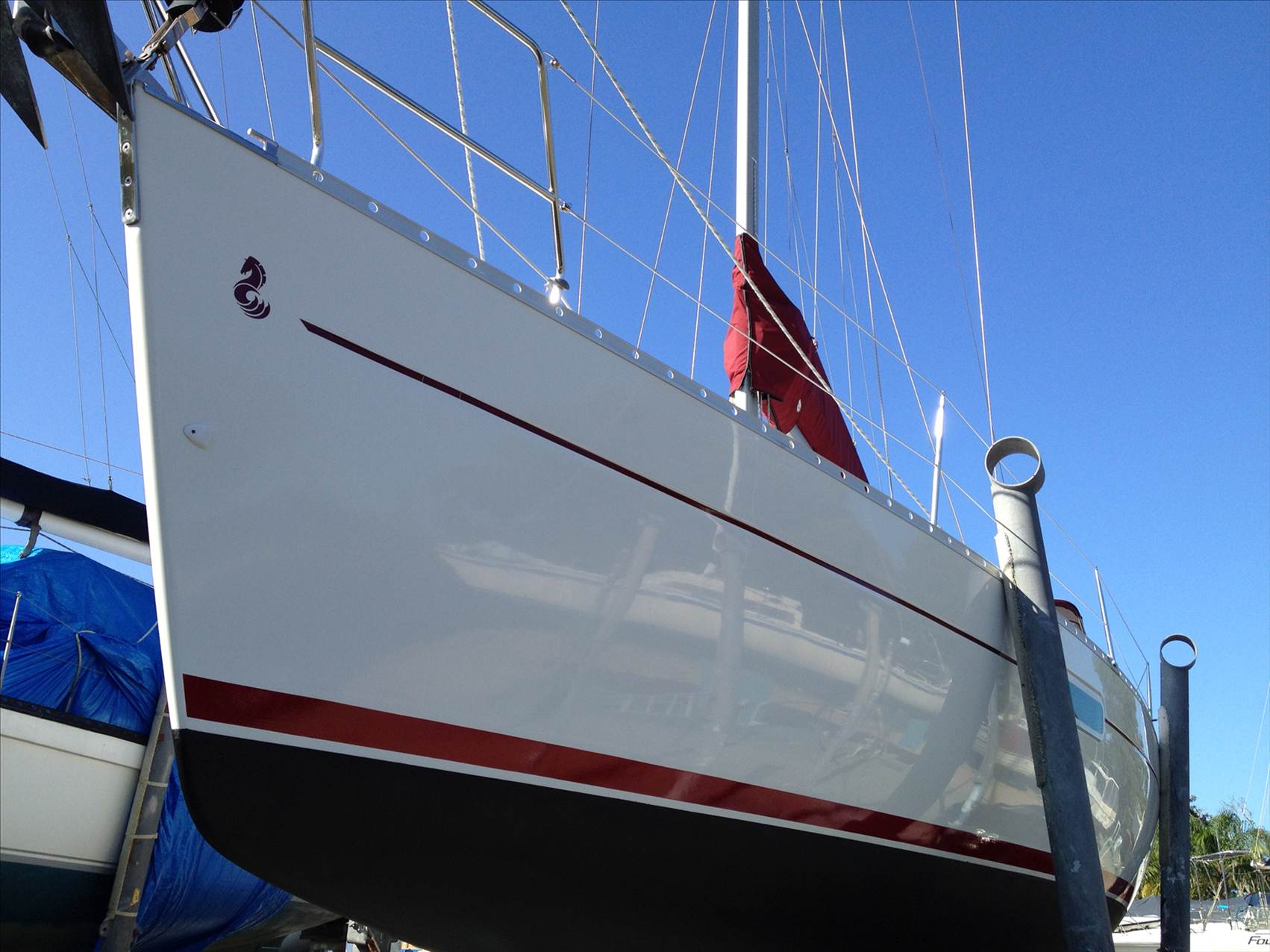
My other concern is that to date I have slipped yearly, it allows me the opportunity to address any thing untoward, buff the hull and replace the anode which is rather small on my Beneteau so am considering slipping in the next few months and will probably use the good old No 5.

The previous owner used Micron extra and apparently got 3 years of life from the product...?

Anyway thank you also Keensailor for your comment and look forward to any other advice or comment on this topic

Ramona
Ramona
NSW
7754 posts
NSW, 7754 posts
21 Feb 2013 9:11am
Really we should slip our boats annually. The cost of antifoul is fairly minor compared to the other "stuff". Anode changes especially on sail drives should be kept up with. Keeping that gelcoat polished annually is going to be one of the best investments you can make on that boat.
Locally the reason owners go past 12 months slipping is simply not enough slips available for the yachts in the area.
Please Register, or first...
Topics Subscribe Reply

Return To Classic site 😭
Or... let us know if a problem, so we can tweak! 😅