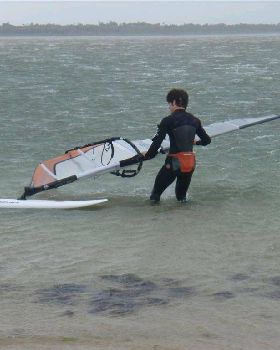
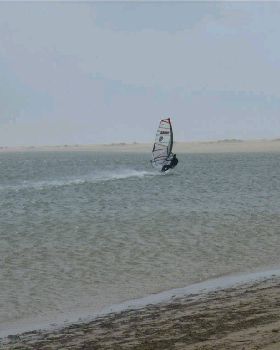
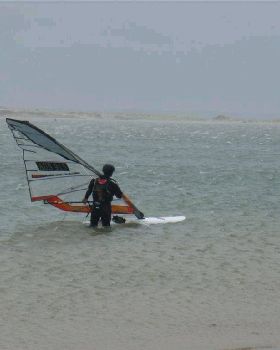
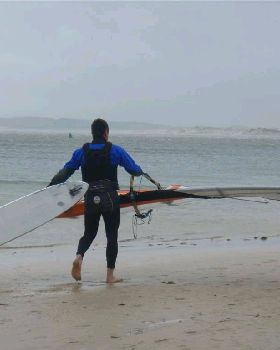
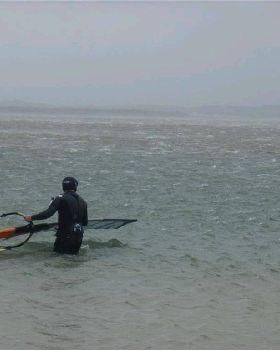
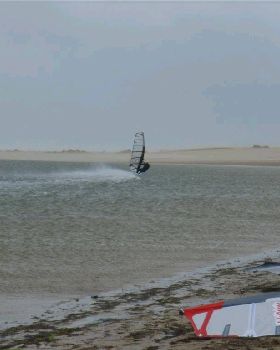
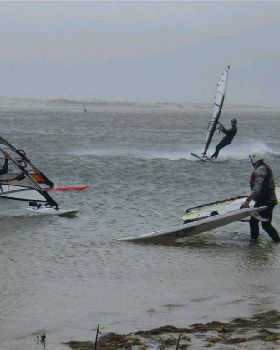
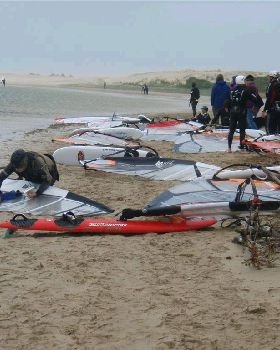
Uploaded together

Discussed in these Forum posts:

water depth rule
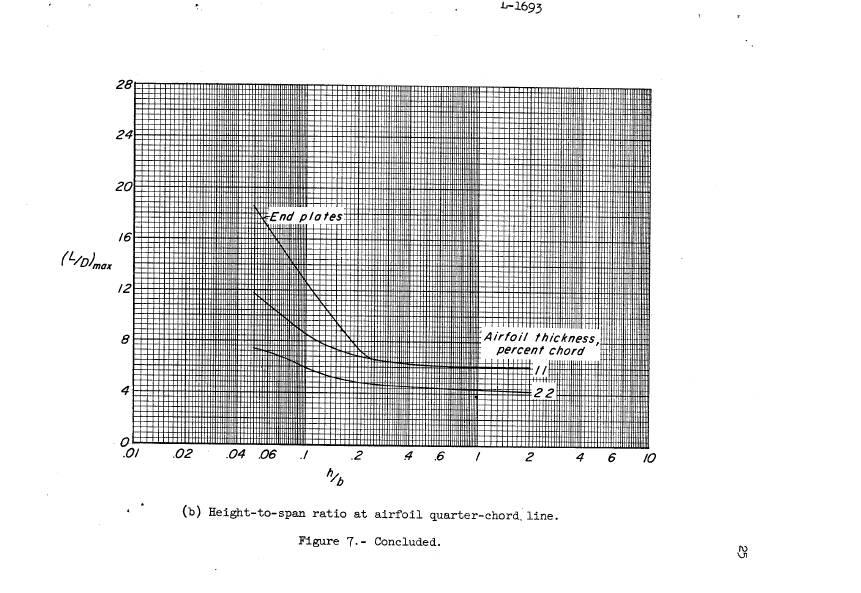
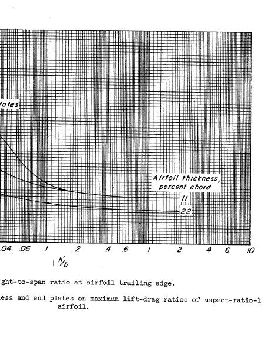
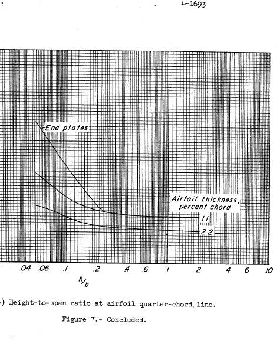
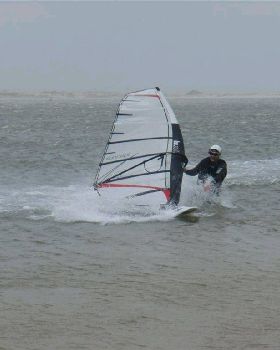
am not really into speed all the time but check this out looks like the 'ground effect' thing is a fact

The WSSR Council announces an amendment to WSSR Rule 3.

3rd paragraph is amended as follows:

"For every record attempt on natural courses in every class, there must be a minimum depth of water, which is defined as follows.

At the time of the run in question, the shallowest part of the course must be covered by water with a depth of at least half the static immersed beam of the craft involved, or 10cm, whichever is the greater.

(Guidance note) To define the depth requirement, the craft or board involved should be afloat and the widest part of the hull or hulls touching the water should be measured. In the case of a multihull, the widest hull is measured or hydrofoil if fitted. In the case of an event involving a number of competing craft, the WSSRC Observer can announce at the commencement of the event what the minimum depth requirement will be"

Reason:

The WSSR Council had introduced the "50 cm minimum depth rule" after having commissioned an investigation from Southampton University's Wolfson Unit into the ramifications of "ground effect" on craft sailing in shallow water. This report had concluded that ground effect can indeed have a marked effect in reducing the drag of craft sailing in very shallow water, that it became significant at a depth factor of half the beam of a planing surface and that in general a minimum water depth of 50 cms would be more than deep enough to avoid this shallow water effect. In general, the sport had welcomed this ruling as it posed little or no practical problems.

Kitesurfers and Windsurfers however had a major difficulty in administering this new rule, to such an extent that it threatened to bring their attempts on records to a complete halt. These craft have traditionally used tidal courses, close to the shore since the 1980s, when the Weymouth Inshore course was established, Subsequent venues around the world - all verified by the WSSRC - had adopted this format of which the greatest advantage had been the ability to sail in smooth water. But by the physical nature of these courses and due to geographical and tidal effects, the depth of water varied considerably along the 500 metre length and thus complying with the 50cm rule overall could make it impossible to set courses, without ending up well out to sea, in conditions adverse to high speed.

All accept that "ground effect" exists and are unanimous that it should not be a factor in setting records. There was a danger that artificial courses might be created which could take advantage of this aid to higher speed but this was a separate issue which the WSSRC would address presently. However, in considering the Wolfson Report, the measurement at which ground effect came into effect was at half the beam of the board. As the average width of a board was 20 cms, it seemed reasonable to establish 10 cms as being the absolute minimum depth for natural courses - as opposed to manufactured courses - at the shallowest point.
View topic
New Rule From Wssrc - Minimum Water Depth Of 50Cm
an extract from the WSSRC site (www.sailspeedrecords.com/content/view/88/3):

"
The WSSR Council announces an addition to WSSR Rule 3 The Course

Insert new paragraph 3:

"Record claims will not be ratified when, in the opinion of the WSSR Commissioner, the minimum water depth over the whole course is below 50 cms"

This rule to take immediate effect.

John Reed
Secretary to the WSSR Council


Explanatory notes on the WSSR Newsletter No 155..

There has been much debate about the attempting of sailing records in very shallow water. The controversy has only recently come to light because up until now the need for skegs on windsurfers made water depth self-limiting. However the high speeds being claimed by kite surfers has circumvented this as although they need to "edge" their boards somewhat to generate lift, at 50 knots and at deep wind angles, the edge doesn't run very deep. There was a real concern that unless some sensible ruling was brought in, a world record claim using water only as a lubricant was a possibility. For example, creating a record course by covering a large car park with a plastic sheet and then wetting it to a few mm depth. There was a general feeling that this stretched the aim of breaking records on "water" too far.

"

This is absurd.

The speed strip next to the channel at Sandy Point is 50cm or less for much of the time it's covered by water. So you can kiss goodbye to that.

Wouldn't be surprised if the Canal at Les Saintes Maries de la Mer in France was <50cm in depth ALL OF THE TIME.

Does this mean that the records held by windsurfers are now invalid?

I.e. how on earth do you prove, long after the fact, that Antoine Albeau's and Finian Maynard's records were done in water that was >50cm depth FOR THE ENTIRE LENGTH OF THE COURSE?

This ruling is for a course specification that would require (at a place like Sandy Point which is tide-affected and relatively shallow) that a detailed survey (to probably millimeter accuracy) be made of the entire course prior any runs being taken. And that only when the tide level is above a certain watermark.

Dunno about you lot, but I reckon getting decent wind, and from the right direction, AND only on a high tide is going to be pretty hard to nail.

If someone does break the record again, this is a rule that can be SO easily challenged by their competitor's to prevent them from being officially recognised as the new record-holder.

Come to think of it, the only way you can guarantee you meet these specifications is to do almost exactly what this rule supposedly prevents; i.e. you find yourself a 500+ metre long carpark, cover it with plastic sheeting and fill it to 50.1cm depth with water.

Like I said, this is an absolutely absurd rule.

And I guess someone had better tell the French to give their Canal a top-up.

Sounds like this is just something to prevent the kiters from blowing everyone else away - this year was shaping up to be the one they would do it in. Heck, they only just missed doing it last year by a bee's todger.

View topic

More like this

Return To Classic site 😭
Or... let us know if a problem, so we can tweak! 😅