Bolted on Fin Keels.
The subject is being discussed in other threads, particularly "Boat construction for blue water cruising" so I thought the subject deserved a thread of it's own to be more definitive.
We must keep in mind that that the reliability of a bolt on keel depends entirely on the design and construction of the hull to which it is to be attached.
The joint of keel to hull is the highest stress point of the yacht.
There are several types or ways of bolting keels onto yachts described below.
1. A hull of any material, with the keel bolted on with a single row of stainless steel bolts that are parallel.
Any yacht constructed this way is inherently unsafe. There will always be some flexing of the bolts and stainless steel will very locally, work harden, become brittle and fail. Add in different metals such as cast iron, the danger becomes higher.
2. A hull of any material, with the keel bolted on with a double row of bolts that are parallel.
This format is quite reliable providing the keel to hull joint is suitably insulated in the case of metal hulls and the bolts tightened when necessary. This format prevents flexing at the join.
3. A hull of any material where the keel bolts are staggered and angled.
This format is what I found on the British built S&S 34 I had a while ago. From an engineering point of view this configuration would appear to be the best. Whether Swarbricks followed that in their S&S 34s, I do not know. I have yet to hear of a keel falling off an S&S 34.
Mention has been made in the other thread that the best attachment is by using monel bolts/studs with bronze nuts. I agree because monel is a more malleable metal than stainless steel and bronze non reactive to it.
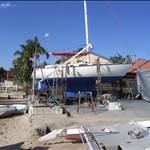
Lucky for me that is the way the keel is attached to my fair "Second Wind". Kiwi designed and built to the highest standards and very much capable of "Blue Water Cruising".
Hopefully she will get her bum wet this year.
View topic