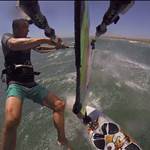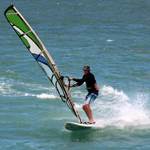


So getting planing upwind and on small kit needs a high boom and long lines... But I borrowed some gear on Sunday and the boom was at nipple height...
Just need some reassurance that Chris is wrong here
Yes a high boom seems to help get you planing sooner but I have found it also takes pressure off your front foot and makes your foot feel less secure in the strap which is not nice when jumping.
I find shoulder height about right for me.
I found that I get a heck of a lot more control in over powered conditions, not sure if making you stand more upright is right or wrong.
Select to expand quoteginger pom said..
So getting planing upwind and on small kit needs a high boom and long lines... But I borrowed some gear on Sunday and the boom was at nipple height...
Just need some reassurance that Chris is wrong here
I have always run my boom really high.. until we were on a trip 2 years ago and Ricardo Campello said I had it way to high and to try it low... when someone as good as him gives you a tip you listen! so I tried it a lot lower and took a bit to get used to but now I would have to say it's a lot easier to control the sail. So I am converted to a lower boom now!
I run mine in the middle of the cut out now.. which I guess would be about nipple height?
I do run 28" lines.. and my biggest sail I use is a 5.0, I think bigger sails might be a bit different
I run my boom just above the middle of the sail cutout. I did have it lower for a few years and recently moved it up a few cm. I think it comes down to personal preference but certainly it's interesting to look at how the pros set up their gear. I used someones sail a few months ago where the boom was really high and it felt harder to control doing freestyle
I've been bringing mine down last 6 months. Normally I run it 3/4 or higher in cutout. Having lots of front foot issues (wanting to come out of front straps). Have settled on about 2/3 up the cutout which I think is around shoulder or slightly lower for me. Has given me more of a balanced feel in my stance.
I'll have a bit of a play.. I do drop it if it's rough.
It was cribby who originally made me change.
I'll measure where I have it and come back
Select to expand quoteginger pom said..
I'll have a bit of a play.. I do drop it if it's rough.
It was cribby who originally made me change.
I'll measure where I have it and come back
your a nerd mate! ya pomy! do you drive a volvo ???
Select to expand quoteginger pom said..
I'll have a bit of a play.. I do drop it if it's rough.
It was cribby who originally made me change.
I'll measure where I have it and come back
Cribby is correct Ginger pom
There is nothing wrong with setting your boom slightly higher or lower around the average chest to chin region. It's knowing when to move it up or down to get the desired result, unless you want it specifically low for example for advanced wave riding and tricks like a pro as Joel mentioned about Ricardo.
In general higher for light wind where more mast foot pressure and slightly more upright stance is used. This also results in less leeward mast bend being produced as the boom is gripping it higher up and hence a slightly tighter leech for better light wind power.
Set lower for rougher overpowered conditions where your stance is less upright and further out from the rig. Thus you get maximum leverage over it and the mast bends to leeward more, the leech is more active and opens up spilling excess power. Moving boom down to the lower clew eyelet also helps open up the leech in heavy conditions to help make the sail more manageble.
Either way you may need to adjust harness line length slightly and or mast foot position, adjustable lines are good for experimenting and using between differant sized sails. Sails these day have a much wider wind range of use if you take the time to play around with your boom height, harness line length, downhaul, outhaul. The trick is learning the effect all these variables have and how and when to adjust them to get the desired effect or change the feel of the rig.
Re going upwind you want to be leaning forward applying lots of mast foot pressure, hence the higher boom, back leg straight, front bent, more leeward rail engaged for extra bight and tracking. As some would say "Truckin upwind".
Select to expand quoteSpotty said..
ginger pom said..
I'll have a bit of a play.. I do drop it if it's rough.
It was cribby who originally made me change.
I'll measure where I have it and come back
Cribby is correct Ginger pom
There is nothing wrong with setting your boom slightly higher or lower around the average chest to chin region. It's knowing when to move it up or down to get the desired result, unless you want it specifically low for example for advanced wave riding and tricks like a pro as Joel mentioned about Ricardo.
In general higher for light wind where more mast foot pressure and slightly more upright stance is used. This also results in less leeward mast bend being produced as the boom is gripping it higher up and hence a slightly tighter leech for better light wind power.
Set lower for rougher overpowered conditions where your stance is less upright and further out from the rig. Thus you get maximum leverage over it and the mast bends to leeward more, the leech is more active and opens up spilling excess power. Moving boom down to the lower clew eyelet also helps open up the leech in heavy conditions to help make the sail more manageble.
Either way you may need to adjust harness line length slightly and or mast foot position, adjustable lines are good for experimenting and using between differant sized sails. Sails these day have a much wider wind range of use if you take the time to play around with your boom height, harness line length, downhaul, outhaul. The trick is learning the effect all these variables have and how and when to adjust them to get the desired effect or change the feel of the rig.
Re going upwind you want to be leaning forward applying lots of mast foot pressure, hence the higher boom, back leg straight, front bent, more leeward rail engaged for extra bight and tracking. As some would say "Truckin upwind".
This. This is exactly right! During my experience speaking to a whole bunch of international riders, and coaching people of different ages this is exactly what i tell my guests about boom height.
When your sail is rigged up, stand next to it, your boom should comfortable rest underneath your armpit, because when you attach it to your board, the UJ bumps it up a few inches. This is your optimum setting. But you should adjust it, exactly the same as changing your downhaul and outhaul for the wind.
Stronger wind go DOWN a few inches
Lighter wind go UP a few inches.
WARNING - When ever you change your boom height, it changes the angle of the boom to the clew, which changes your outhaul... always re-rig your sail.
 - good job spotty -
ginger what sort of harness do you use,
a seat to a waist harness will also have a different boom height and setup.
I run all Koncepts and have my boom at the very bottom of the cutout with 24 lines, always use lower clew ring,
sometimes i would like to go even lower but its not possible to modify the opening because the cam is right there.
I use a dakine race seat with a very low hook like real low.
Have tried a waist harness but they are just not for me being mainly a blaster and speed sailor.
I find gybing control easier with lower boom and have no trouble upwind.
Oh yeh I sail at lake george so the wind is normally fairly decent.
Select to expand quotejimbob SA said..
Oh yeh I sail at lake george so the wind is normally fairly decent...........
and the water is incredibly choppy with it sometimes getting as big as 5cm
Jimbob, IMHO you shouldn't set your boom height depending on what type of harness you wear (seat or waist) but rather adjust the length of the harness lines i.e. longer lines for seat harness but can go shorter for waist as hook is closer to boom.
PS - this thread would be good in the general forum as there's some valuable advice.