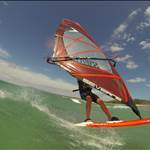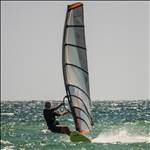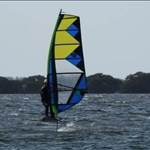


For those who sail Port Phillip bay over winter (i.e. now until October) what wetsuit thickness do you tend to use. I only have a 3/2 and looking for something thicker to keep warm over winter. I only want to buy one additional suite but unsure whether to go with a 4/3 or a 5/4. Alternatively, buy the thinner suite and then complement with a wetsuit beanie and maybe some gloves. I'd prefer to keep my feet nude if possible.
I've checked the temperatures there in the web. I would suggest to have a 3/2 and a 5/3. The water is relatively warm over the year, from web data I'm sure you do not need gloves.
You can go back by years from this site: www.baywx.com.au/temps.html.
Essentially, 22 deg C in summer to 10 deg C in winter, with August being the coldest and don't forget the wind chill caused by the cold air rushing over your 5/4 or 4/3 wet suit. Various opinions can be offered by others regarding single sided vs. double sided wet suits.
Other options could be a 4/3 single-sided wet suit with a long sleeved titanium-lined vest underneath ( dunesinternational.com/product/mens-titanium-wetsuit-vest-long-sleeve-black, or similar) OR a 4/3 single-sided wet suit with a spray jacket on top (www.theboatwarehouse.com.au/apparel-clothing-wetsuits-accessories/jackets/burke-evolution-dinghy-smock-red, or similar). The spray jacket has the advantage of being easily removed as we get closer to warmer temps.
Might also go for a Ripcurl hood, www.ripcurl.com/au/mens/wetsuits/booties-gloves-hoods/dawn-patrol-hood.html#754=1408.
Hope this helps.
Select to expand quotecleverku said..
...I'd prefer to keep my feet nude if possible.
Good luck! I tried to put my toes in the water down there and lost all feeling. That was in December so I can't imagine what winter would be like. Even though I have lived in some very cold places, I am much more at home in the warmer climates. With this in mind, I think you will need to consider your own personal tolerance to cold water. As such, the choice of thickness would vary according to your comfort level. The idea of having more than one wetsuit makes sense and increases you time on water. Being uncomfortable can be avoided nowadays with some pretty decent wetsuits out there. Try to get one custom made so that you get maximum insulation with the thinest material. Being free to move your body and feel warm is the aim. Check out Seventh Wave wetsuits from New Zealand. I would use them if I ever got crazy enough to get into the water down there.
I find a good quality lined 4/3 to be adequate. Yes a beanie or Helmut and booties if you don't hate them. I had a European lined 5/4 until it wore out and found I only was comfortable on the super cold days' I would actually overheat when exerting myself. If you are a porker you don't need as thicker suit as a skinny bloke.
Select to expand quotemr love said..
. If you are a porker you don't need as thicker suit as a skinny bloke.
Yep, first ask yourself what you natural level of insulation is. A skinny bloke like me needs that extra insulation to be comfortable, so I need more than 4mm. If you've got a few mm of natural insulation and don't otherwise feel the cold too bad, go for a 4/3 .
Wearing a hood makes a massive difference-if your bonce is warm, the rest of the body seems to be happy too. I tend to pull the hood over my head if I'm feeling cold (or getting blasted from a rain or hail squall), then pull it back off my head so I wear it like a neck warmer if I'm getting too hot. A 2mm hood can feel like upgrading a 4/3 to a 5/4. The effectiveness of the suit to keep out water makes a huge difference, but wearing a hood.
As for booties- if you can sail the Bay at its coldest without them, you're a harder man than me (which might not be saying much).
I use a 4/3 with an impact vest with booties on the bay from now until October. Makes a big difference if it has a fluffy lining and sealed seams like a rip curl flash bomb for instance. If its a sunny 15 degree day that's toasty warm and I'm 70kg, so lacking natural insulation. if its an 11 degree day, I add gloves and hood.
Your head accounts for a huge degree of heat loss (I've heard up to 50%), hence hood makes such a big difference. Yeah posting from sunny Qld, but used to live in Vic and sailed ppb regularly. 4-3 plus hood minimum requirement. Gloves and booties only if they make you feel better, you don't lose much body heat through the extremities
Select to expand quotemusorianin said..
Your head accounts for a huge degree of heat loss (I've heard up to 50%), hence hood makes such a big difference. Yeah posting from sunny Qld, but used to live in Vic and sailed ppb regularly. 4-3 plus hood minimum requirement. Gloves and booties only if they make you feel better, you don't lose much body heat through the extremities
It's not 50% if you're sitting at a desk. I think the 50% is if you're out in the cold and all rugged up elsewhere but no head protection.
www.livescience.com/34411-body-heat-loss-head.html#:~:text=Even%20the%20U.S.%20Army%20Field,exposed%20subjects%20to%20frigid%20temperatures.
In Vancouver BC we have ocean and air temps around 7C in winter. Most people use 5/4 wetsuits. We need booties and try to avoid gloves. Looking at Port Phillip, I don't think you'll need booties. The web says the water is 14.5 C in winter, that's what we have in summer. We also sail in the estuary of a glacial fed river which results in water around 5C.
My guess is that with winter highs of 15C for both water and air, 4/3 is fine. Our current (mid May) temps are 12 C water and maybe 18 C air, and I assume most people are using 4/3 now, including me.
Maybe have another layer for extra cold days, like a neoprene impact vest.
For 10-12 c in Oregon, Cannon beach and Oswald West state park I used a 4/3 with titanium lining, was good for surfing where my legs were in the water between sets. Would get a suit that has rubber on the outside covering the chest/back, makes a big difference in wind chill/evaporative heat loss, and on a sunny day absorbs more heat than neoprene, so take into account how much sun exposure you get during that time of the year.
Select to expand quoteeffgee said..musorianin said..
Your head accounts for a huge degree of heat loss (I've heard up to 50%), hence hood makes such a big difference. Yeah posting from sunny Qld, but used to live in Vic and sailed ppb regularly. 4-3 plus hood minimum requirement. Gloves and booties only if they make you feel better, you don't lose much body heat through the extremities
It's not 50% if you're sitting at a desk. I think the 50% is if you're out in the cold and all rugged up elsewhere but no head protection.
www.livescience.com/34411-body-heat-loss-head.html#:~:text=Even%20the%20U.S.%20Army%20Field,exposed%20subjects%20to%20frigid%20temperatures.
Yeah, like when your windsurfing in winter... Isn't that the point?
50% of what? The reporting of that study is useless as it does not include any explanation of the method.
Is that 50% of your total body heat  Well, then you would be hypothermic or dead!
Is that 50% of your loss at any in any given moment .
It is the latter that I assume it means and that makes sense only in specific contexts.
There is a course, no way that a naked body will lose heat from the head area at a massive rate above it's proportion of body surface area. But Naked is not how we normally roll in cold conditions.
So on a body that is well insulated by clothing and shoes, or a steamer wetsuit, it is perfectly plausible that most of the heat loss occurring will be from the uncovered, uninsulated part of the body, be that hands and feet or head.
Heat loss from hands and feet is lowered by the body's own reflexes. Blood flow to the peripherals is reduced to protect the core. Hands and feet are considered 'expendable' in the context of your survival, but this does not apply to your head, which is obviously a vital organ and supplied with much higher blood flow, and hence potential for heat loss.
So, it is entirely plausible that a surfers body (and feet) enclosed in an insulating layer of wetsuit, will have quite a low heat loss per unit of area, and the exposed head will have quite a high heat loss that could indeed amount to around 50% of the total loss. In that situation, insulating the head with neoprene or hat/helmet will have a significant affect on body heat retention. Covering the face will help too, but the face does have a heat retention reflex to some extent. That is why your face goes so pale when you get cold. I can attest though, that also covering your face (and neck) with goggles and face/neck muff does definitely significantly reduce body heat loss when skiing. 
Your personal experience of 'comfortable' or 'cold' will vary with you environmental experience. 
When the Queensland sailors come to Victoria or South Australia in Summer, they complain about the cold. We locals, think it is warm!
It also depends on your type and intensity of windsurfing activity. If your activity is quite strenuous, and includes less immersion in the water, you will be warmer. if you are immersed a lot and not so active you will be colder and need more insulation. When surfing in winter I have started wearing gloves as my hands are constantly immersed and that make s a big difference to me. But when windsurfing, even on the most severe days, I don't wear gloves.
A good example is when you stop for a rest on a very cold and windy day, especially of you are standing around in the wind. In this situation it is very easy to get cold quite quickly compared with continuous activity.
In cold, windy conditions, it is better to err on the side of caution. Go for the 5/4mm rather than the 4/3mm, the thick booties and hat/helmet, and just stay toasty warm. I also wear my very thick neoprene ProLimit weight vest with no weight in it as it adds a huge amount of insulation around my body core. Not to mention protection for my old, fragile ribs. 
PP Bay in mid winter? Definitely minimum 4/3mm GBS steamer, booties, and hat for me!!
Thinking a bit more about this, the water temp is not a problem. It's the air temp. 13C is a hinge point between 5/4 and 4/3. You'd just have to try it and see what you're comfortable with.
Select to expand quotesailquik said..
When the Queensland sailors come to Victoria or South Australia in Summer, they complain about the cold. We locals, think it is warm!
Very true Daffy, I only bought my first 3:2 steamer after freezing to death sailing 25-30 kt SWers at Sandy Point and Lake George in November and February! I can't imagine what it would be like in the middle of winter.
Select to expand quotesailquik said..
A good example is when you stop for a rest on a very cold and windy day, especially of you are standing around in the wind. In this situation it is very easy to get cold quite quickly compared with continuous activity.
This can happen in relatively warm environments as I recently experienced at Burrum Heads Windfest. The wind switched off at 2.00pm. I got very cold standing around in 10kts of breeze for 20 minutes on the bank 5kms out to sea. I was wearing a spring suit, booties and helmet. Air and water temps were around 20 deg.
Sailing in Melbourne in Winter is not so much about the water temp but the wind chill. In those big fronts the air is being sucked up from way down in the southern ocean so its cold. So protecting from wind chill is really important.
i tried gloves once and forearms got extra tight - anyone experienced this before -
effectively your hands are hanging on to a thicker boom ?
Normster,
Try the NP Open Palm mitts, or equivalent (www.neilpryde.com/products/split-finger-mitt-open-palm).
The bottom material is thinner than the upper, so less fatigue AND you can slip your fingers out of the mitt if you need to.
Hope this helps
At very cold temperatures below 10dC water we use open palm mitten and below 5dC water and minus degrees air we are using closed palm mitten from Dakine or Prolimit. Both closed mitten have the same construction. You can also try a combination of dishwashing gloves with open mittens above or Mtb gloves below. No joke! Vileda super grip works best. You have much better grip with the dishwashing gloves compared to the closed mittens but they last only 2-3 sessions. Booms used have always smallest diameter possible.
Consider one of these:
www.shq.com.au/products/2019-mystic-wind-barrier-kite
A couple of years ago I managed to get through winter with one of those and a (top of the range) 3/2 wetsuit + hood. Although I didn't fall in much ("avoiding falling in" is not great for your skill development long term, lol. So I'll stick with a 4/3 this winter).
Chest zips are the way to go. Get one where you don't need to thread the zip. I was considering changing from Xcel to something lighter and stretchier, but everything else seems to have small fiddly zips that need to be threaded.
As long as your core and head are warm, you can get away with much thinner, lighter boots. O'Neill Ninja boots are warm enough.
It was mentioned earlier, I also highly recommend the Rip Curl Flash Bomb 4/3mm wetsuit (that fuzzy lining makes it extra warm and toasty) and wear booties and helmet you'll be fine for winter in Port Phillip Bay.
Select to expand quoteKokopelli said..
It was mentioned earlier, I also highly recommend the Rip Curl Flash Bomb 4/3mm wetsuit (that fuzzy lining makes it extra warm and toasty) and wear booties and helmet you'll be fine for winter in Port Phillip Bay.
Fiddly front zip.
Also available in back zip:
www.ripcurl.com/au/mens/wetsuits/steamers/flashbomb-4-3mm-back-zip-wetsuit-steamer.html#754=1408
My favourite wetsuit of all time is the needEssentials 4mm thermal.
needessentials.com/collections/mens-wetsuits/products/4-3-liquid-taped-thermal-chest-zip-wetsuit
When combined with the vest/hood it is toasty warm in the worst weather.
needessentials.com/collections/accessories/products/balaclava-and-vest
Your internal thermostat and what you're doing makes a big difference. Standing on a foil uses very little energy and rare falls result in a flushing every time. It can get cold. For that, and for days when there's snow showers in the nearby hills I really like the 6mm suit. Fear of cold water has become a thing of the past.
needessentials.com/collections/mens-wetsuits/products/6-4-3mm-ultra-premium-thermal-hooded-chest-zip-wetsuit
needEssentials give very good customer support and the price is hard to beat. It's easy to buy another wetsuit just because you can.
Windman V comment of a sailing spray jacket like Burke have is on the money. Stopping the wind direct hitting the neoprene makes a serious difference. Wetsuits work well under the water but out of the water in 20 knot wind at 15C is chilling. We are not prone surfers. You can still swim enough and if you use a pfd it will reduce flap and keep the harness hook clear . Just try standing in your wetsuit then put a nylon parka or raincoat on and try it. Got to be tight and watch out for sleeves fill up! A merino tee shirt or 2mm vest underlayer is good too. Thin polar fleece cap under helmet. Head make very thin slip on shoes for $20 ish. Saves shell cuts on jumping off. Dive shops sell them.