Paducah said..
So, why is this a "wing" not a winglet like commonly found on airplane wings which works (largely - ignoring thrust aspect) by reducing tip vortex?
The surface area of that wing alone wouldn't seem to be providing much lift unless you are going insane board speeds, at which point, the drag of the extra surface underwater would seem to be a bit noticeable. I'm wondering if the improved upwind performance is because it effectively lengthens the fin rather than any "lifting" properties much as a winglet is designed to give a shorter jet wing the performance of a longer one that, because of gate space requirements, isn't practical.
I think the innovation is a good idea but just questioning the reasoning why it seems to offer an advantage.
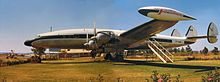
You are right, technically it is a winglet, because one of its benefits is reducing the tip vortex of the fin, increasing the slope of the lift curve and increasing the effective aspect ratio (i.e. it feels like a deeper, more vertical fin). It also results in a net reduction in drag. This part of the design is not in question, with both data from aircraft wing research over the past 40 years as well as actual tank testing more than 30 years ago of fins with winglets confirming this (see photo below).
However Neil's fins also have a couple of other effects that aren't immediately obvious. One is that they dampen both pitching and heaving motions, meaning that the board rides more smoothly and slams less.
The other is that because the wings are set at a neutral (or even negative) angle of attack, they don't tend to make the tail rise out of the water at speed, you actually get a net reduction in tail walking behaviour in chop at speed. If this seems counter-intuitive, keep in mind that the rear wing on a foil board is intended to produce neutral or negative lift, it's purpose is to keep the main lifting surface tracking at the correct angle of attack.
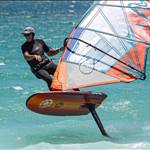
It's important not to think of Neil's wings as hydrofoils providing a constant upward force. While they may produce upward force when the board is at a reasonably high trim angle (such as sub-planing and early planing conditions), most of the time the upward lift component is fairly neutral. This means the winglets probably help a little bit getting the board on the plane and help to glide through lulls better. But the major benefits are increased efficiency for a given fin depth, and reduction in pitch and heave motions, allowing the board to be pushed harder at speed.


 [/URL]