Firstly: The basic definition as per what actually is a displacement hull. There seems to be much confusion. As per a basic google search and from the Boat US site
www.boatus.org/courses/Planing Hulls--Planing hulls are designed to ride on top of the water, regardless of the weight of the boat. The flatter the bottom, the easier it is to get on plane. Also, less power is needed to attain high speeds with a flatter hull. The trade off is in handling. Flat hulls do not do well in rough water. Many planing boats use a shallow "V" shape to ride better in rough waters. (Sounds like us eh?)
Displacement Hulls-- Displacement hulls typically have a rounded bottom with a tear drop shape running bow to stern. Displacement hulls "displace" or move, an amount of water equal to the weight of the boat. Displacement hulls are very efficient-- most long range cruising boats such as trawlers and many sailboats use this type of hull. But because of their design, displacement hulls are restricted in their speed to the square root of their waterline length times 1.34. Therefore, a 64 foot boat can realistically only expect a top end speed of a little over 10 knots. (Displacement Hulls do not plane!)
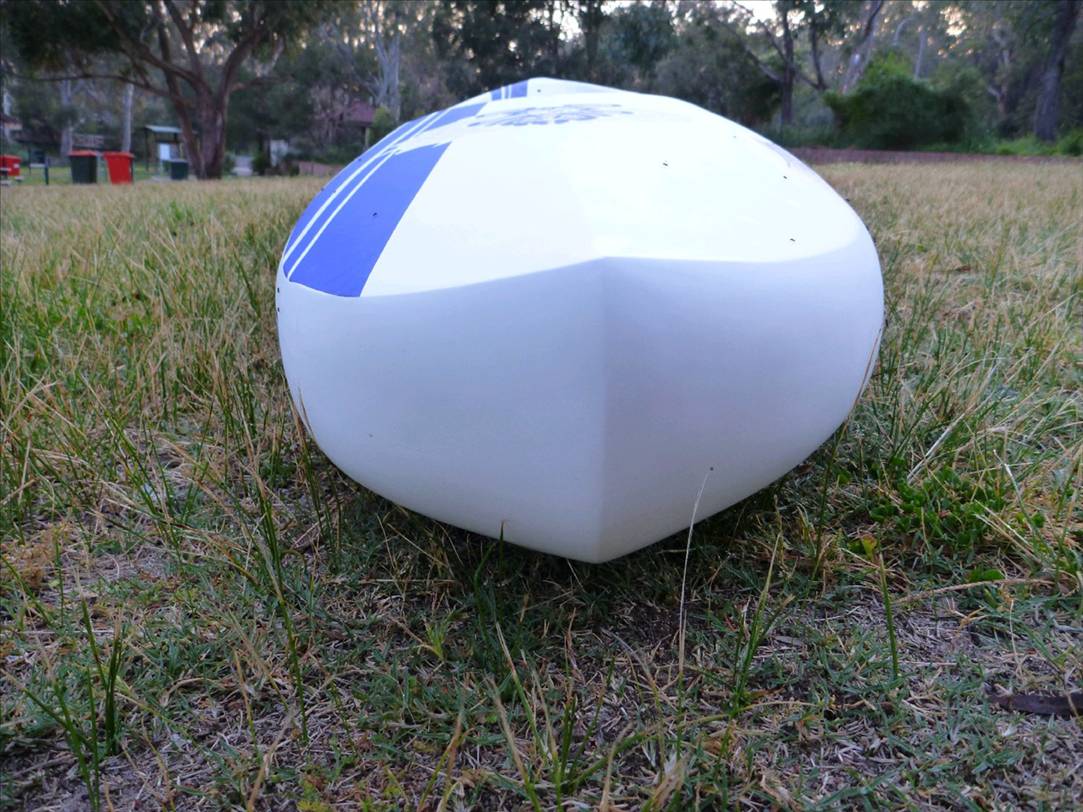
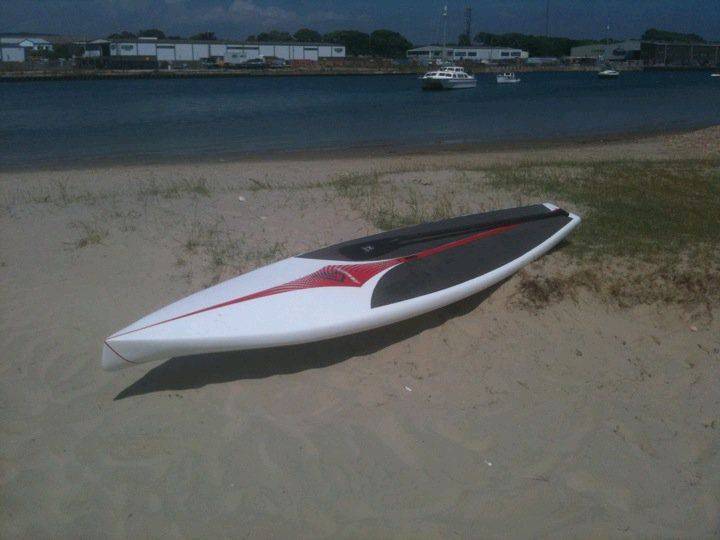
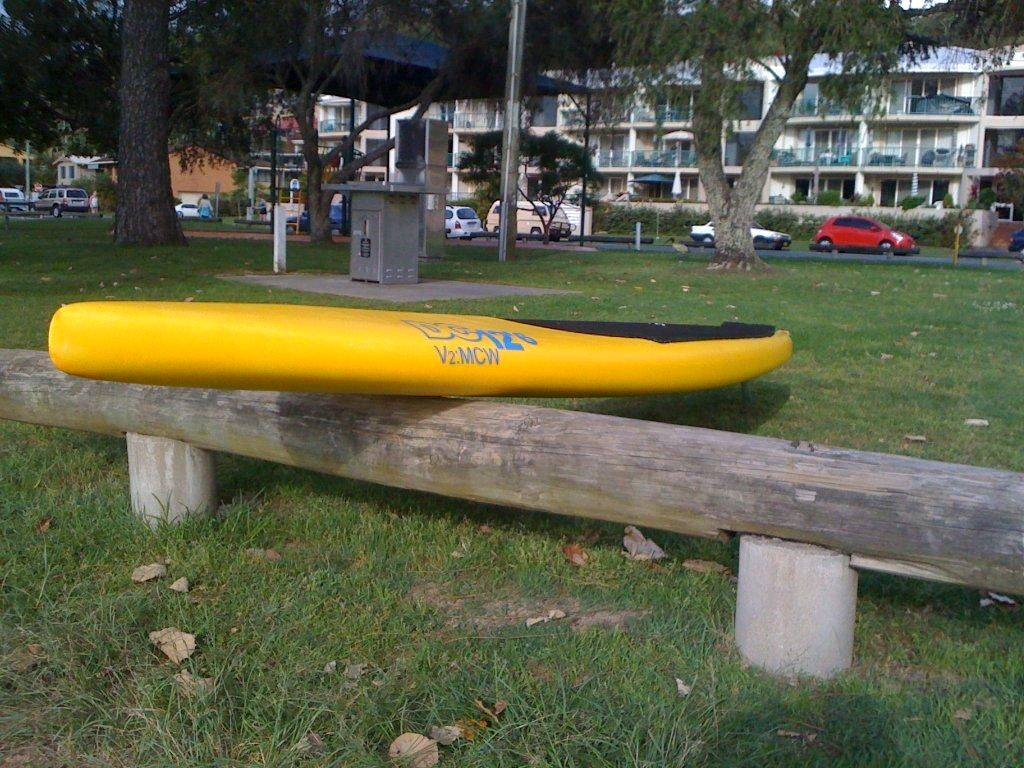
SUP do not have displacement hulls. Some boards have a displacement style canoe inspired nose which is usefull for cutting through chop up wind and also to help the board to not stall and to pop back up when poked into the wave in front. These mostly dissapear to flat 12 to 18 inches back from the nose.
Some designs may overcome the poke thing by adding a whole lot of rocker (ie Naish 14" Glide, F16 etc) but these boards from what I understand are slow in the flat and very hard upwind. Pretty much only true downwind boards. (perhaps why SIC made the bullet, a planing hull with a displacement style nose, for more mixed conditions like Australia)
I think of SUP Bottom design to be more like a speed boat, Veed nose to help it onto a plane easily where it becomes more like a surfboard and planes. No doubt true displacement hulls would be faster than what we have now in flat water but until someone works out how to stand on one to paddle impossible.
I think the conspiracy is that the word displacement itself is thrown around as a marketing term rather than an indication of the boards actual design.