

today I removed the varnish on the companionway steps. What is the hardest wearing stuff to put on them? The colour does need to be darker than what they are without the varnish.
More info needed as there are 2 questions there - so you want the hardest wearing stuff and a darker colour. So what is the timber you are coating? Assume teak or mahogany? How old are the steps and what was the prior coating? A hard wearing coating would be an epoxy resin 2 coats and then a 2 pack polyurethane satin varnish 3 coats on top of that - with white non skid tread strips stuck on top of the lot. For example
www.whitworths.com.au/non-skid-tape-white-50mm-x-5m
+1 with r13.
would add that it is worth thinning the epoxy to get it to penetrate ( ie the initial coat over the bare timber). The epoxy may darken the timber by itself; try a bit underneath out of sight to check. I recently did some teak in epoxy and ran out so did a small component in straight oil based varnish, and the epoxy finished parts were somewhat darker , glossier and smoother as the epoxy fills the grain. Then finish it with 2/3 coats of UV stabilised 2pak varnish over the epoxy as epoxy doesn't like UV.
Or you could visit a reputable paint store and find the hardest wearing floor clear available, stain the timber with product of choice and be done with it for the next few years. A couple of coats of clear will last as well as anything given the relative little use it will get.
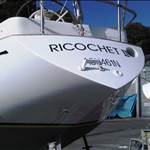
The interior of Ricochet is done in this stuff.
www.bunnings.com.au/cabot-s-4l-gloss-cabothane-clear-cfp-floor-polyurethane_p1520586?store=7220&gclid=Cj0KCQjwr-SSBhC9ARIsANhzu16cErB-2O8AxnYlLafriSDe1SRVpthBdaX6fX3fo6BAtN541JTtyjsaAnTpEALw_wcB&gclsrc=aw.ds
Agree with Unclebob. And go water based. So much easier and quicker. Less chemicals etc. Most you can over coat without sanding.
I know guys that do super yacht interiors. They just use water based floor products. Use a good one that has UV protection.
Its milky and looks like **** when you apply it. Come back 30 mins later and it looks great.
Need new companionway steps. Cheap skateboard decks with clear grip tape set into 2 pieces of ply.
Select to expand quotekjman55 said..
+1 with r13.
would add that it is worth thinning the epoxy to get it to penetrate ( ie the initial coat over the bare timber). The epoxy may darken the timber by itself; try a bit underneath out of sight to check. I recently did some teak in epoxy and ran out so did a small component in straight oil based varnish, and the epoxy finished parts were somewhat darker , glossier and smoother as the epoxy fills the grain. Then finish it with 2/3 coats of UV stabilised 2pak varnish over the epoxy as epoxy doesn't like UV.
How do you thin epoxy resin, is there a special additive?
The thinning epoxy so it penetrates is an interesting one. West in particular says in most cases it doesn't help or only makes a very small difference. Teak may be one of those woods it helps with I can't remember. West has done plenty of reports on it. They say warming the wood and epoxy will allow it to penetrate better without compromising the epoxy.
Select to expand quotecammd said..kjman55 said..
+1 with r13.
would add that it is worth thinning the epoxy to get it to penetrate ( ie the initial coat over the bare timber). The epoxy may darken the timber by itself; try a bit underneath out of sight to check. I recently did some teak in epoxy and ran out so did a small component in straight oil based varnish, and the epoxy finished parts were somewhat darker , glossier and smoother as the epoxy fills the grain. Then finish it with 2/3 coats of UV stabilised 2pak varnish over the epoxy as epoxy doesn't like UV.
How do you thin epoxy resin, is there a special additive?
Or if you feel it necessary, use everdure.
Regards thinning epoxy resin, I have just applied the Norglass MEK thinner to Norglass resin. I'm not sure I did it right, because it seemed to me that the thinner evaporated quickly, leaving the liquid resin in it's usual gooey state. By "quickly" I mean less than the time to mix a batch, stir it and paint it onto timber with a brush, which took a couple of minutes or so. So, based on this very limited experience, it seems a waste of thinner.
I have been using the MEK thinner to wipe off surfaces before applying the epoxy, to wipe off the oils from the timber, and to remove any last remnants of dust or dirt.