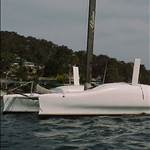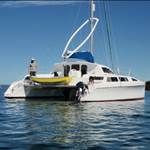


Anyone catch how it works at about 38 minutes or what the supposed advantages might be?
Not too impressive that the headsail furler broke free either.
agree, needing 2,3 or even 4 able bodied persons to put a reef in would surely not have been in their original brief? less you tubey and more sailing focus maybe
Interesting. I have a few friends that have used this system and love it.
From a technical point of view it's a much more positive locking in of the reef point, but if it doesn't work for you then it doesn't work for you?
Not a fan of the videos (the bikini type sailing videos disappoint me) but a couple of things are interesting.
The lack of a proper forestay is one - it seems that are using a Code 0 furler for the 100% headsail (staysail). It don't understand why you would do this on a cruising boat.
The steering wheel looks strange - perched way out the backwith lines leading to it, it keeps the cockpit clear I guess but seems a little unprotected.
The noise of the windward float (at about 28 minutes) brings back memories of sailing an ORMA 60. I was amazed with how the windward float would slam in a beam reach, the boat needed to be pushed hard to stop the slamming. If you look at classic trimaran designs, starting with Piver but going through Newick tris and Chamberlin's Cirros, you can see that cruising tris have very veed floats. This stops the slamming and reduces accelerations. It seems that some lessons from sailing classic tris have been forgotten.
I love tris, (I had two, lived on one) but am not much of a fan of the Rapido setup. THe Chris White Hammerhead series is much more of a seaboat. The guys who have this boat are real sailors/builders and they made this choice after having a 40ft ex racing tri.
We use this reefing set up on Brindabella but our hooks are stainless and hook into a stainless thimble which is lashed to the sail. Generally works well but requires a bit of finness to get right. Usually need the leech to be slack so that the hook drops in rather than being dragged in with force. Getting the hook out is always easy. Doesnt work well if the sail piles up on top of the hook and this is the main issue that might occurr 50% of the time. Good part is once its in theres not much that can chafe.
Is the advantage that they don't chafe? What else? I get that long reef lines can chafe. A cheap alternative is to use a normal system and then a velcro clew strap, or just a length of short sheet rope end and then ease the reefing line. I like the idea of putting a double clutch on the boom near the end (above the cockpit) where the reef lines are cleated (its sort of what my wishbone does) as this shortens the tensioned part of the line I understand a maxi needs big gear but are these a thing for normal folk?
Select to expand quoteKankama said..
Is the advantage that they don't chafe? What else? I get that long reef lines can chafe. A cheap alternative is to use a normal system and then a velcro clew strap, or just a length of short sheet rope end and then ease the reefing line. I like the idea of putting a double clutch on the boom near the end (above the cockpit) where the reef lines are cleated (its sort of what my wishbone does) as this shortens the tensioned part of the line I understand a maxi needs big gear but are these a thing for normal folk?
Ok I totally agree with this. It seems that the hook is pretty much in addition to the normal reefing line which still has to be there. Yes a velcro clew strap can be used but then you might also want to change the normal outhaul to the new reefed clew so that you have proper control over foot tension. This is what I have done on my trailer sailer on a couple of occasions.
This hook idea with yet further ropes on the side of the boom and clutches and the hooks banging about when not in use doesn't appeal to me.
Select to expand quoteKankama said..
Not a fan of the videos (the bikini type sailing videos disappoint me) but a couple of things are interesting.
The lack of a proper forestay is one - it seems that are using a Code 0 furler for the 100% headsail (staysail). It don't understand why you would do this on a cruising boat.
The steering wheel looks strange - perched way out the backwith lines leading to it, it keeps the cockpit clear I guess but seems a little unprotected.
The noise of the windward float (at about 28 minutes) brings back memories of sailing an ORMA 60. I was amazed with how the windward float would slam in a beam reach, the boat needed to be pushed hard to stop the slamming. If you look at classic trimaran designs, starting with Piver but going through Newick tris and Chamberlin's Cirros, you can see that cruising tris have very veed floats. This stops the slamming and reduces accelerations. It seems that some lessons from sailing classic tris have been forgotten.
I love tris, (I had two, lived on one) but am not much of a fan of the Rapido setup. THe Chris White Hammerhead series is much more of a seaboat. The guys who have this boat are real sailors/builders and they made this choice after having a 40ft ex racing tri.
cheers
Phil
I wasn't suggesting the video for any other reason but to review the reefing system which I hadn't previously come across but yes I noticed the noise of the outrigger and made a mental note at the time that it could become annoying. The boat has a very high speed potential however so maybe they wanted to provide a lot of flotation as you wouldn't want to bury it at speed.
Select to expand quoteKankama said..
Is the advantage that they don't chafe? What else? I get that long reef lines can chafe. A cheap alternative is to use a normal system and then a velcro clew strap, or just a length of short sheet rope end and then ease the reefing line. I like the idea of putting a double clutch on the boom near the end (above the cockpit) where the reef lines are cleated (its sort of what my wishbone does) as this shortens the tensioned part of the line I understand a maxi needs big gear but are these a thing for normal folk?
I think at least for maxis the high loads involved would mean a lot of chafe or the need for a very big block hanging off the leech. Would slso need very solid sheaves in the boom. The hook with webbing "nappy" around the boom means a lot less loaded parts to fail or chafe.
on Brinda we have fixed dyneema outhaul strops and achieve foot tension with the hydraulic cunno.
Select to expand quotejulesmoto said..Kankama said..
Not a fan of the videos (the bikini type sailing videos disappoint me) but a couple of things are interesting.
The lack of a proper forestay is one - it seems that are using a Code 0 furler for the 100% headsail (staysail). It don't understand why you would do this on a cruising boat.
The steering wheel looks strange - perched way out the backwith lines leading to it, it keeps the cockpit clear I guess but seems a little unprotected.
The noise of the windward float (at about 28 minutes) brings back memories of sailing an ORMA 60. I was amazed with how the windward float would slam in a beam reach, the boat needed to be pushed hard to stop the slamming. If you look at classic trimaran designs, starting with Piver but going through Newick tris and Chamberlin's Cirros, you can see that cruising tris have very veed floats. This stops the slamming and reduces accelerations. It seems that some lessons from sailing classic tris have been forgotten.
I love tris, (I had two, lived on one) but am not much of a fan of the Rapido setup. THe Chris White Hammerhead series is much more of a seaboat. The guys who have this boat are real sailors/builders and they made this choice after having a 40ft ex racing tri.
cheers
Phil
I wasn't suggesting the video for any other reason but to review the reefing system which I hadn't previously come across but yes I noticed the noise of the outrigger and made a mental note at the time that it could become annoying. The boat has a very high speed potential however so maybe they wanted to provide a lot of flotation as you wouldn't want to bury it at speed.
Non worries about linking the video, that point was that what seems like a good fast design, round bottom and low floats, can in the end be slower. Racers are used to boats banging about but cruisers rarely go full throttle, easing off when accelerations become too great. So having these low and full floats can make the crew want to back off as the accelerations get too high. Whereas if the designer had made the floats "slower" by increasing rocker, increasing the vee on the bottom and reducing beam a little, you can have the same flotation statics but much nicer dynamics. When we cruised our fast tri we went much slower ocerall as it gave us such a shake that we were throttling back a lot, whereas our current "slower" boat can carry us along at a nice continual clip without shaking fillings out, so we strangely go much faster when cruising. Like going along a dirt road on a Porsche vs a Falcon - the family goes faster in the family sedan because it just cruises along.
I can't find the best shots, but I built a 38ft Newick tri and spent a fair bit of time talking with the designer about reducing float slamming. He designed great sailing boats. First one is the one I built the shell of - other guys finished it off. Notice the rocker and veed floats. We could have easily gone straighter keel line and more rounded sections but the designer wanted a proper sea boat that cared for the crew.

Cirro tri
The designers of both the Cirros and Newick have done serious miles and these boats were developed before the ORMA influence. BUt they are great offshore boats, and don't slam.