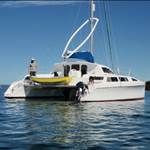


Quite a long interview with some details on what went wrong on sail from New Zealand to Australia.
Thanks for that John. Excellent lessons there. Probably one of the most important ropes on a modern boat is the furling line. It seems as though it was under tension as the genoa was reefed in the storm. When it chafed through it started the whole nasty process, ripping out stanchions and somehow removing the solar arch and disabling the rudder. A fully furled genoa with a separate inner forestay and storm jib would be much more secure as the chafe on the furling line would be solved. Also interesting was the problem of having electric only water pumps. The crew had no way of using the boat tanks once the electrical system was down.
A really interesting demonstration of the swiss cheese model of disaster modelling. Totally furled genny, storm jib on inner forestay, secondary hand pump for water and small solar arch on stern would all have helped, but I will go and check the furling line (but I have the inner forestay and storm jib for it already - my genny is almost never reefed)
cheers
Phil
Was it the furling line or the sheet itself?
Edit..sounds like the furler line then the sheet.
Sounds furling line snapped and let the Genoa unfurl, I don't think furlers are designed to be used that way in a storm, if they were the furling line would be at least as big as the sheet.
Where was the navy?
Who goes to sea in a yacht that size with out manual bilge pumps? They had all the electronic toys, probably should have taken a seamanship manual.
Not sure how the reefing line for the furler could chafe through, would be 8mm at least on that size of yacht and be more than capable of handling the load.
Interestingly one of the Golden Globe racers has a similar problem with a headsail furler but they suspect a halyard wrap in their case might be the problem.
Select to expand quoteJolene said..
they had manual bilge pumps
They actually lowered the water using the manual pumps.
I suppose hard to make a boat indestructible in all scenarios.
Securing pin in furler drum or security shackle and turnbuckle off to the toe rail look like a good modifications.
One other item I picked up was all the stanchions being ripped out. I suppose the genoa sheet was attached to them with some fairleads and at the other end cleated. I'd say the holes left by the ripped out stanchions were the primary reason for calling for help and abandoning the ship. In calmer seas they may have been able to get the rudder sorted or jury rigged. Having a holy boat would dent your confidence that a jury rigged system could make it back.
When I look at my boat, the stanchions are held in place with most inadequate washers and nuts without a backing plate. Perhaps their boat was the same. I find it hard to believe that multiple stanchions could be lost if the stanchion area was reinforced and with a good backing plate. When I get around to fixing the leaks around my stanchions I will certainly be improving the installation.
I suppose one could consider dropping and stowing the genoa immediately on learning of approaching bad weather. Perhaps fit the storm jib (if on a furler) - or perhaps not since it too could unfurl if you're unlucky. It might depend on whether your boat needs to it to properly heave to.
Re the ripped-out stanchions, I got the impression that it was caused by the sheets getting entangled in the lifelines due to flailing around in the wind.
Quite a change to get accurate sensible information like this after a rescue.
Cheers, Graeme
Select to expand quoteMadmouse said..Jolene said..
they had manual bilge pumps
They actually lowered the water using the manual pumps.
I suppose hard to make a boat indestructible in all scenarios.
They mention pumping with manual pumps but it sounds like they relied on buckets to get the level down.
I wonder how long the Genoa sheets flailed around before they caught the lifelines and ripped the stanchions out? Possibly if one immediately headed downwind and ditched the halyard and cut the Genoa sheets (or undid the figure of 8 knots if possible) the whole lot should have been flying in front of the boat rather than destroying the lifelines. Maybe you could then hack the sail off or pull it down if you were game to go forward but meanwhile you might be over running.it.
Locking pin for the furler drum seems like a very good idea as suggested by garyalmgren. Will look carefully at my furler to consider this possibility although with my 7/8 rig and giant main I usually only have 105% jib up unless very light winds are forecast.
James of sailing Zingaro YouTube fame had the forestay part under the furler drum resulting in the forestay with drum sail and sheets flailing around all over the place in a stiff breeze but somehow managed to save the rig (and video the action
Checked my furler today for a locking mechanism.
It is a Plastimo and the drum is plastic.
The amount of torque that close to the axis of rotation makes a pin in my setup too dicey.
It would wear an oval at least or shatter the drum in a worst case.
Looking at a wire strop with a splice at each end.
One shackled to the tack shackle.
The other connected to the anchor cleat somehow.
Maybe a short length of stainless chain and a shackle.
gary
Makes me think carrying a spare start battery in a waterproof box is a good idea in case of a flooding so you can get the engine operational again after the storm passes.
I like reading and watching Christian Williams. He wrote about sailing to windward with a rolled up genoa in a blow that became a big problem when the furling line chafed through on a slightly bad lead. He says that this line is incredibly important IF you use the genoa furled when in a big blow. There would be far less chafe if the genoa is totally furled - same as on the mooring - so bugger all.
Select to expand quotecammd said..
Makes me think carrying a spare start battery in a waterproof box is a good idea in case of a flooding so you can get the engine operational again after the storm passes.
One of those little jump starters can get a yacht diesel started a few times, and being so tiny (and cheap) you could easily have one in a waterproof box. I've taken the one from the campervan onto the boat when I had an alternator issue and it was great, so we plan to take one for passages.
In the old boat I had a motorcycle battery high up as a radio battery, which is something I'd do again if we didn't already have an engine battery at knee height. A couple of jump leads to connect the radio straight to the battery are on the list, so that you would struggle to lose the radio.
One very different thing that I didn't realise is that on the Yanmar 3GM20 the alternator belt apparently drives an internal water circulation pump, so if the alternator is off or the belt breaks the donk starts overheating. I've got to get a jury setup ready for that issue.
Select to expand quotewongaga said..
I suppose one could consider dropping and stowing the genoa immediately on learning of approaching bad weather. Perhaps fit the storm jib (if on a furler) - or perhaps not since it too could unfurl if you're unlucky. It might depend on whether your boat needs to it to properly heave to.
Re the ripped-out stanchions, I got the impression that it was caused by the sheets getting entangled in the lifelines due to flailing around in the wind.
Quite a change to get accurate sensible information like this after a rescue.
Cheers, Graeme
The other thing that seems to work is to just grab a spare halyard and wrap it around the furled jib in a long spiral, from top to bottom. If you get a dozen turns around the sail it's well controlled.
This discussion just made me realise that my new setup for the storm jib won't leave any halyards spare for that role, so I'll have to rig up another line, perhaps leading through the storm jib halyard shackle.
Select to expand quotejulesmoto said..
James of sailing Zingaro YouTube fame had the forestay part under the furler drum resulting in the forestay with drum sail and sheets flailing around all over the place in a stiff breeze but somehow managed to save the rig (and video the action @13mins) with the benefit of a keel stepped mast and inner forestay on his Oyster 49. That's got to be worse than a jib sheet flailing around!
Back when I 'twere but a lad we had the mast of a 43 footer break under the deck level at about 2 am on the inevitable dark and stormy night. It was encased in furniture so no one realised what had happened when the top section slid down beside the broken stump, letting the rigging go slack and allowing the masthead to roll (or rather, crash) from side to side. We pulled the sails off, led halyards down to the gunwale and tightened them up to hold the mast steady. Of course, after a couple of rolls the top section would drop further down the stump, the jury stay/halyard would go slack and then snap (and old-style wire halyards snapping under tension are scary things to be near), and then we tried it again, and again, with those of us on the front trying to tell the guys down the back that the mast was sinking.
We broke a bunch of halyards until we got to the last one left, and found that the exit box had vanished under the deck as the top section slid ever further down alongside the stump. That finally convinced the afterguard, so we started to cut it free.
It was an interesting time - rolling around like mad with a mast normally 54' above the deck swinging around in vast jagged swoops as we hacked at the standing rigging, which was alternately going slack and then snapping tight as the mast crashed back and forth across an arc of about 20 ft relative to the deck. It took a bit of the deck with it when it finally went. Fun times! We weren't the only entrant to lose a mast that night.
Select to expand quotegarymalmgren said..
Checked my furler today for a locking mechanism.
It is a Plastimo and the drum is plastic.
The amount of torque that close to the axis of rotation makes a pin in my setup too dicey.
It would wear an oval at least or shatter the drum in a worst case.
Looking at a wire strop with a splice at each end.
One shackled to the tack shackle.
The other connected to the anchor cleat somehow.
Maybe a short length of stainless chain and a shackle.
gary
It's always wise to have some sort of redundancy.
Think of what could cause a disaster if the primary fails and back it up with a simple solution even if the simple solution is inconvenient .
.
Select to expand quoteJolene said..garymalmgren said..
Checked my furler today for a locking mechanism.
It is a Plastimo and the drum is plastic.
The amount of torque that close to the axis of rotation makes a pin in my setup too dicey.
It would wear an oval at least or shatter the drum in a worst case.
Looking at a wire strop with a splice at each end.
One shackled to the tack shackle.
The other connected to the anchor cleat somehow.
Maybe a short length of stainless chain and a shackle.
gary
It's always wise to have some sort of redundancy.
Think of what could cause a disaster if the primary fails and back it up with a simple solution even if the simple solution is inconvenient .
.
I went to a talk by Lisa Blair (Antarctic solo sailor) on Saturday afternoon, very interesting afternoon, anyway part of her preparation for the trip was imagining emergency situations and thinking of solutions so that she could take action, if one ocurred, based on pre thought out plans plus have the spares on board.
Select to expand quoteChris 249 said..wongaga said..
I suppose one could consider dropping and stowing the genoa immediately on learning of approaching bad weather. Perhaps fit the storm jib (if on a furler) - or perhaps not since it too could unfurl if you're unlucky. It might depend on whether your boat needs to it to properly heave to.
Re the ripped-out stanchions, I got the impression that it was caused by the sheets getting entangled in the lifelines due to flailing around in the wind.
Quite a change to get accurate sensible information like this after a rescue.
Cheers, Graeme
The other thing that seems to work is to just grab a spare halyard and wrap it around the furled jib in a long spiral, from top to bottom. If you get a dozen turns around the sail it's well controlled.
This discussion just made me realise that my new setup for the storm jib won't leave any halyards spare for that role, so I'll have to rig up another line, perhaps leading through the storm jib halyard shackle.
On Morning Bird I had a couple of lengths of rope with a loop on the end secured on the pulpit. On the one occasion I needed to in very strong winds I just tied them around the furled sail. It wasn't going anywhere and the load is taken off the furling line.
I heard a story ages ago about a solo sailing a small boat across one of the oceans (can't remember which) but he made it but not without getting a few hidings, the main thing I took from it was he said that he wished he had a sump in his bilge where all the water would go to, my current boat is my first boat so I don't know how other boats are set up, are sumps common in most bilges?
Select to expand quotebullrout said..
I heard a story ages ago about a solo sailing a small boat across one of the oceans (can't remember which) but he made it but not without getting a few hidings, the main thing I took from it was he said that he wished he had a sump in his bilge where all the water would go to, my current boat is my first boat so I don't know how other boats are set up, are sumps common in most bilges?
Not in all boats. S&S34s had a deepish sump under the engine mounted midships aft of the mast. Many modern boats don't so even a small amount of water sloshes everywhere.