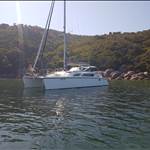
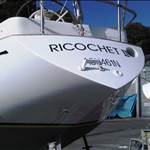
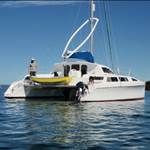
Hi All, long time reader first time poster looking for some advice.
I have a second hand 33ft catamaran I need to sail from Brisbane to Sydney sometime over the next month, I have quite a bit of day/weekend sailing around Sydney and even a couple of Port Jackson to Pittwater coastal cruises under my belt.
What tips can you give me to prepare? I don't know the boat at all, so would be learning as I go. I have a couple potential crew to help, but may end up having to sail single handed if that falls through. If that does happen perhaps putting the call out here for crew is better than going single handed.
I've been watching the weather maps lately and it's been blowing southerlies pretty much consistently for weeks now, and i'd rather not beat into that all the way down. Not to mention the East coast low building right now. So hopefully the weather improves.
Mate , how often have you sailed and or motored her? You need a couple of shake downs before the trip, as many as possible . What does the engine look like ? Are there spares for the engine , do you know anything about engines ect ect . If you've done the above and are asking for specific passage advice , best ports , anchorages ect then there are many people on this forum who will no doubt respond soon who have a wealth of experience. Give yourself as large a departure window as possible. 
I recently sailed a 33 year old (maybe even third hand!) 26ft Cat from Vic to Sydney with new owner. Realistically the list you ask for is endless, but most of it is summarised as Know Your Boat. What are thru hull fitting like. Has the motor been serviced? How old is the rigging? What are the sails like? What condition is steering system in and hat emergency tiller does it have? Is the hull in good shape and does it leak into the cabin? What type of bilge pumps does it have and are they all serviceable? Check/service winches. Are halyards likely to fail? Condition of batteries, charging systems and electrics? Fire extinguishers in date? All reqd safety equipment? Are the fuel tank(s) clean and free of contamination (check all filters) Does the boat have a working vhf radio, chartplotter (though tablet & Navionics will work) Do you have paper charts of area to be sailed? If solo or 2 up an auto pilot will be handy. Have you looked at your planned travel and identified safe anchorage's, risky river bars, and options for food and fuel? Others will add to this list. It'd help if you identify the boat. Someone will know it and comment about its likely state of preparation. And then there's your own preparation. Do you enjoy night sailing or are you planning day hops up the coast? How experienced are your sailing companions. Your asking questions is a good start
Thanks, some good advice there. It'll be my first time on the boat. I'm hoping just sailing south down the Brisbane broadwater will suffice as a shakedown sail.
Good suggestion to check through hulls and extinguishers etc. I'll do that.
I have the cruising guides, happy to jump from port to port as I head south, if the weather is favourable maybe even do a bit of night sailing too.
Check your halyards and run a mouse if you can. Nothing worse than the closest safe water being a long beat sans sail/s as you:
- stare forlornly up the mast wondering how on earth you're going to rig a new one;
- turn off the wind display as the TWA is now depressing;
- turn off the log because you're better off not knowing;
- sneak a peek at the gps and realise the current is against you and ripping along; and
- notice how little the fuel tank really is and how many revs you're doing. 
Select to expand quoteshaggybaxter said..
Check your halyards and run a mouse if you can. Nothing worse than the closest safe water being a long beat sans sail/s as you:
- stare forlornly up the mast wondering how on earth you're going to rig a new one;
- turn off the wind display as the TWA is now depressing;
- turn off the log because you're better off not knowing;
- sneak a peek at the gps and realise the current is against you and ripping along; and
- notice how little the fuel tank really is and how many revs you're doing.
And the engine area is covered in a fine mist of oil from an unknown source
and the fan belt is loose
and there's a whisp of smoke from a tangled wiring loom
and the engine temp warning light/alarm starts
and the sun is going down.
Do not leave harbour if the wind is in the Southerly quadrant with a catamaran. Friends did this trip with a large catamaran with the wind on the nose and it was a nightmare. Sold the boat shortly after! Personally I never motor at sea. I use the motor to get on and off the mooring and will motor sail down to the bar but if there is no wind offshore I don't go. If the wind drops off I heave to or drop the sails. Set aside plenty of time for this trip and be prepared to stay in harbour till the right conditions appear.
To be fair and with much respect, Ramona, that definitely depends on the cat in question. Or perhaps whether it's a catamaran or a roomaran.
If you are totally new to the boat and unaware of what issues the boat may have, hire a four man life raft and take it with you and have a throw bag handy with safety gear and EPIRB. A Satellite phone and good VHF radio wouldn't go astray as well.
Gday Nick,
Lots of good info above - of your boat is a Seawind 1000 it will be a little different from a Windspeed 31 stretched to 33ft. Let is know the boat and we can help some more.
Some general notes - cats are fabulous bar running boats. We don't usually play the tides like mono sailors do when coming into or leaving bars. We have been kept in a bar a few times - Camden Haven and Moruya come to mind, but most reasonable bars, in a reasonable seaway are easy to cross in a cat. If you have not sailed fast boats before you will need to be on your A game when bar crossing and head straight down the wave - don't get diagonal on the nasty part of the bar - straight in is key. A good cat will easily get up to 15 knots in perfect control as it sits on a wave crossing the bar. I like to have full sail up and have the motor ready to run if required, or down and ready to go as we near the break walls.
Coming back out can be more problematic - be prepared to wait. Maybe a day or two. I have often just sat inside a bar looking for up to 20 minutes - just observing and then when all looks good - we blast out of there and into the safety of the deep ocean.
Be flexible with your timing. The best deliveries are the ones where you get to have choices. Get ready to put some extra hours in when conditions are good and wait when conditions are not good. And never, ever tell someone you will be somehere at a specific time. You can meet them at a place at a range of times, or at a time in a range of places but NEVER make a timetable.
Let us know the boat and we can help some more
Phil
Select to expand quoteJode5 said..
If you are totally new to the boat and unaware of what issues the boat may have, hire a four man life raft and take it with you and have a throw bag handy with safety gear and EPIRB. A Satellite phone and good VHF radio wouldn't go astray as well.
Better to make sure the boat is 100% up to the task first. Never go to sea with safety gear and expecting others to risk their lives rescuing you, as your backup plan.
Select to expand quotestray said..Jode5 said..
If you are totally new to the boat and unaware of what issues the boat may have, hire a four man life raft and take it with you and have a throw bag handy with safety gear and EPIRB. A Satellite phone and good VHF radio wouldn't go astray as well.
Better to make sure the boat is 100% up to the task first. Never go to sea with safety gear and expecting others to risk their lives rescuing you, as your backup plan.
Safety gear is everybody's last backup plan no matter what. No body can guarantee their boat and crew are 100% up to the task, the sea will make sure of that. I believe my boat is in excellent condition but I still carry a vast array of safety equipment including a life raft, personal EPERBs and even personal AIS location beacons
Select to expand quoteJode5 said..stray said..Jode5 said..
If you are totally new to the boat and unaware of what issues the boat may have, hire a four man life raft and take it with you and have a throw bag handy with safety gear and EPIRB. A Satellite phone and good VHF radio wouldn't go astray as well.
Better to make sure the boat is 100% up to the task first. Never go to sea with safety gear and expecting others to risk their lives rescuing you, as your backup plan.
Safety gear is everybody's last backup plan no matter what. No body can guarantee their boat and crew are 100% up to the task, the sea will make sure of that. I believe my boat is in excellent condition but I still carry a vast array of safety equipment including a life raft, personal EPERBs and even personal AIS location beacons
Sorry Jode5 it sounded like you were saying that it's ok to set of without knowing the condition of the boat, and without a lot of experience, as long as you increase your odds for a successful rescue should the worst happen.
Thanks Ramona, yeah if it's blowing strong from the south i'll probably just wait. Although lately its been nothing but southerlies!
Good tips, thanks Kankama, yeah the bar crossings do worry me. "Keep it straight", gotcha. If there's a decent swell I may opt to skip any sketchy looking bars (assuming I have the energy/crew to continue through the night)
Renting a life raft is an interesting option, hadn't thought of that.
If it was me sailing Kankama, my 38 foot cat.
On Windy
Tuesday looks good for a midnight or 2 am Monday departure from Southport and make it all the way to Yamba in daylight with a following northerly. As long as the boat is swift enough (You still haven't told us what she is - it makes a big big difference)
Friday could be okay for a motor session down to the marina at Coffs to wait out a southerly
Monday and Tuesday look good for making hay and motor sailing to get down to Port Stephens. Newcastle or Sydney.
Jump when the weather is good, don't be shy of motoring, leave really early if you have to, try not to enter a harbour at night because you didn't get up early enough. It is always heaps easier to leave a port you have already seen in daylight, in the dark, rather than trying to make out what is happening in a dark new port so leave early and come in in the day, cats don't care too much about tides on the bar, as long as the swell is not too high. Visibility is more important to me than tide flow.
You will have almost no moon, so night sailing will be really dark.
Cheers
Phil
Good advice Kankama, the boat is a Seawind 1000. Been sailing it for a few days already. Seems to be an endless parade of fronts racing up the coast preventing us from getting a good window of opportunity. We've only been managing 30NM a day so far, but we are starting late etc.
Midnight start sounds like the only way to smash out a 96NM leg.