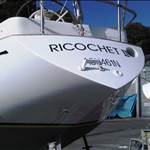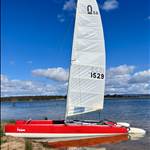


Not a nice subject line to have to write at the best of times...
Am grateful for any thoughts about how to tackle this. Bilge water pumps out orange..a hand down there brings up rusty muck. Depressing.
What I was planning asap: clean and clear as best I can then bolt a magnesium anode on top to try and arrest the situation while I work out next steps. Which I am wondering is: cut out the fibreglass cabin floor to expose the extent, then clean, dry and apply a thick/multiple coats of epoxy accross the whole surface to try and seal the iron keel from on top, shutting out oxygen and therefore the ability for the iron to form oxide. Keep at least one sacrificial anode engaged.
Hi Tsukuru san
Do you have a wooden or glassfibre Folkboat?
Also I would direct questions to the Folkboat Association. www.folkboat.com/
I am sure that you will get very experienced information there.
gary
Select to expand quoteTsukuruTazaki said..
Not a nice subject line to have to write at the best of times...
Am grateful for any thoughts about how to tackle this. Bilge water pumps out orange..a hand down there brings up rusty muck. Depressing.
What I was planning asap: clean and clear as best I can then bolt a magnesium anode on top to try and arrest the situation while I work out next steps. Which I am wondering is: cut out the fibreglass cabin floor to expose the extent, then clean, dry and apply a thick/multiple coats of epoxy accross the whole surface to try and seal the iron keel from on top, shutting out oxygen and therefore the ability for the iron to form oxide. Keep at least one sacrificial anode engaged.
Not sure what the anodes would do. The cast iron is rusting and expanding making the damage worse. If the exterior of the keel is still intact then opening up through the cabin floor is about your only option. Remove as much of the flaking rust and dry it out. Then use a phosphoric acid to stop the rust. When dry reseal with epoxy and filler so that it is completely water tight.
I have never done this so wait till someone who has comes up with a brighter idea.
Select to expand quotegarymalmgren said..
Hi Tsukuru san
Do you have a wooden or glassfibre Folkboat?
Also I would direct questions to the Folkboat Association. www.folkboat.com/
I am sure that you will get very experienced information there.
gary
Thanks Gary. I have a fibreglass Folkboat, and I think my timber brethern on that official site are not too interested in us mutant fibreglass off-shoots, however I will try!
Select to expand quoteRamona said..TsukuruTazaki said..
Not a nice subject line to have to write at the best of times...
Am grateful for any thoughts about how to tackle this. Bilge water pumps out orange..a hand down there brings up rusty muck. Depressing.
What I was planning asap: clean and clear as best I can then bolt a magnesium anode on top to try and arrest the situation while I work out next steps. Which I am wondering is: cut out the fibreglass cabin floor to expose the extent, then clean, dry and apply a thick/multiple coats of epoxy accross the whole surface to try and seal the iron keel from on top, shutting out oxygen and therefore the ability for the iron to form oxide. Keep at least one sacrificial anode engaged.
Not sure what the anodes would do. The cast iron is rusting and expanding making the damage worse. If the exterior of the keel is still intact then opening up through the cabin floor is about your only option. Remove as much of the flaking rust and dry it out. Then use a phosphoric acid to stop the rust. When dry reseal with epoxy and filler so that it is completely water tight.
I have never done this so wait till someone who has comes up with a brighter idea.
I've had it on the slip this year. Hull is fine, and no blisters. Thanks for the suggestion; I'll chase this up and see what other thoughts I can gather and report back.
Select to expand quoteRamona said..TsukuruTazaki said..
Not a nice subject line to have to write at the best of times...
Am grateful for any thoughts about how to tackle this. Bilge water pumps out orange..a hand down there brings up rusty muck. Depressing.
What I was planning asap: clean and clear as best I can then bolt a magnesium anode on top to try and arrest the situation while I work out next steps. Which I am wondering is: cut out the fibreglass cabin floor to expose the extent, then clean, dry and apply a thick/multiple coats of epoxy accross the whole surface to try and seal the iron keel from on top, shutting out oxygen and therefore the ability for the iron to form oxide. Keep at least one sacrificial anode engaged.
Not sure what the anodes would do. The cast iron is rusting and expanding making the damage worse. If the exterior of the keel is still intact then opening up through the cabin floor is about your only option. Remove as much of the flaking rust and dry it out. Then use a phosphoric acid to stop the rust. When dry reseal with epoxy and filler so that it is completely water tight.
I have never done this so wait till someone who has comes up with a brighter idea.
Would it be helpful to fill the section with oil when the above is complete. A past yacht I owned had a keel that was lead encapsulated by steel and that section was filled with oil to deprive the area of oxygen I guess.
if its a glass hull more than likly it will be the keel bolts or steel framework might pay to drop the bolts out
Select to expand quoteboty said..
if its a glass hull more than likly it will be the keel bolts or steel framework might pay to drop the bolts out
The Marieholme Folkboats are encapsulated cast iron keels. Hopefully the OP rust is only on the top.
Obviously a tough situation here. Numerous forums and sites on the web discuss this eg
www.sailnet.com/threads/bolt-on-keel.101931/page-2
www.cruisersforum.com/forums/f55/water-from-bilge-infiltrating-keel-with-encapsulated-ballast-154603.html
One site included description of a bloke removing all the encapsulated ballast on a 40yr old yacht with "minijackhammer" and renewing it - can't find it now sorry.
Maybe a rust converter could be useful also before epoxying closed over the top.
www.thedrive.com/reviews/27943/best-rust-converters-and-removers
Wonder if there is a nondestructive examination technique which can be used to check the extent of the rust. Expect not. When on the slips a rubber mallet could be used to dong the keel at a relevant location spacing grid, and the impact sound could indicate areas of delamination of the encapsulation grp from the ballast. Ultrasonics could also show such delamination but would need an experienced operator and probably setting up trial samples to try and calibrate the screen image. Drilling holes and epoxy re-filling could be done but this is not nondestructive.
Is it possible to remove all the steel and replace with lead shot? Damage to encapsulation happens when rust expands the metal so even if you can remove most of the rot and allow room, even some lead shot to replace some of the rusted iron it'll help.
If I recall correctly the cast iron keel in these folkboats is a one piece casting. Fairly long and shallow. It is only going to come out in one piece. If the outside of the encapsulated keel was fine last time on the slips then the water must have gotten in at the top at the sump if it has one. I should imagine the next move is a mini grinder and a cutting wheel and work your way down.
Select to expand quoteRamona said..
If I recall correctly the cast iron keel in these folkboats is a one piece casting. Fairly long and shallow. It is only going to come out in one piece. If the outside of the encapsulated keel was fine last time on the slips then the water must have gotten in at the top at the sump if it has one. I should imagine the next move is a mini grinder and a cutting wheel and work your way down.
Yes I think that's right. The deck fittings are not wonderful; I'm repairing and replacing them now. Worse, there are two holes in the cockpit lockers and whilst water shouldn't get in there (I'm still looking into that), it then just drops straight through to the bilge and top of keel.
I'm thinking I'll have to cut out the cabin grp floor (which will probably be my next post...how to best replace a floor!) so as to see the whole keel top. The magnesion alloy sacrificial anode has arrived, it's a 50 x 30 x 150mm cast piece with two metal tags with holes for bolting, and passing the galvanic effect along.
I'll try to post a photo, except I think newbie's can't.
Select to expand quoteRamona said..TsukuruTazaki said..
Not a nice subject line to have to write at the best of times...
Am grateful for any thoughts about how to tackle this. Bilge water pumps out orange..a hand down there brings up rusty muck. Depressing.
What I was planning asap: clean and clear as best I can then bolt a magnesium anode on top to try and arrest the situation while I work out next steps. Which I am wondering is: cut out the fibreglass cabin floor to expose the extent, then clean, dry and apply a thick/multiple coats of epoxy accross the whole surface to try and seal the iron keel from on top, shutting out oxygen and therefore the ability for the iron to form oxide. Keep at least one sacrificial anode engaged.
Not sure what the anodes would do. The cast iron is rusting and expanding making the damage worse. If the exterior of the keel is still intact then opening up through the cabin floor is about your only option. Remove as much of the flaking rust and dry it out. Then use a phosphoric acid to stop the rust. When dry reseal with epoxy and filler so that it is completely water tight.
I have never done this so wait till someone who has comes up with a brighter idea.
Sorry I neglected to answer: my research isn't complete but it seems there are some that hold that rust converters only manage to convert the upper rust not deeper in, and as they form their own surface you then can't see the damage occuring beneath. I'm going to have a look at the AS/NZ Standard on that. Also the folk at Practical Sailor seem to have some info.
The sacraficial anode should help arrest the corrosion currently occuring buy creating a galvanic cell and as the magnesium is more volatile than the iron it corrodes in its place. But I'll need to get a good "electrical" fixing between the two for it to work, and then there is the issue of the existing rust/FeO to get out, then try and seal off the oxygen.
I can attest that the rust converter ie phosphoric acid does only convert the upper rust level, the acid can be used to soften the rust for removal with a wire brush, wire brush while wet with acid if using a power wire brush say on a grinder it's best to wash the acid of with water 1st for obvious reasons, I've taken to using more acid and manual wire brush, I have considered mounting a wire brush on a reciprocating saw, finally I find sealing with epoxy resin effective
The acid is only to clean the surface rust off. It is not a converter. Once you get down to the top of the cast iron you will have to remove the flaky stuff, grind or wire brush as much as the rust as you can and acid treat the remainder. After about 10 minutes wash the surface with warm soapy water to get rid of the acid and dry it as quickly as possible. Hot air gun. After that it is up to you but I would be slopping an epoxy silica mix right over the lot [a bit runny] while the cast iron is still a bit warm. This will leave a flat smooth surface and be your new sump. Couple of layers of epoxy and cloth to finish off and set up your new cabin sole. Might be a good time to gain a bit more headroom by lowering the cabin sole.
I would not be attaching an anode anywhere near the keel. The keel is cast iron and should be sealed an isolated from water. Place the anode near the propeller shaft if you have one and ensure it's electrically connected to the bits it's there to protect. The anode has got nothing to do with the keel!
If this is one of the early Marieholme folkboats with an outboard well then I would suggest no anodes at all. An anode on the outboard leg would be ample.