

www.boatblurb.com/post/orcas-claim-another-boat-off-gibraltar?fbclid=IwAR2hm9J07RjoKpgRt-8Gj6wsTOS-nMZKHCTjGVqs5GE4Gb3NUtJiCAnRd18
It could easily spread to our doorstep however if the problem isn't solved as there are plenty around Australia.
seathegoldcoast.com.au/where-can-you-see-killer-whales-australia/
Seems the term killer whale used by mariners before the advent of greenies might have been a more appropriate name despite the fact that they are not whales.
My first plan would be to have a couple of special barges with double rudders of their favorite type towed across their path. The rudders would be made with a double skin with an insulator between the skins. High voltage/low power connected across the two skins. When the orca bites through the two skins they get a shock. May not work if the conductivity of the water shorts out first. Plan B is to have super hot chilli between the skins. But then, they might like the taste.....
Select to expand quoteYara said..
My first plan would be to have a couple of special barges with double rudders of their favorite type towed across their path. The rudders would be made with a double skin with an insulator between the skins. High voltage/low power connected across the two skins. When the orca bites through the two skins they get a shock. May not work if the conductivity of the water shorts out first. Plan B is to have super hot chilli between the skins. But then, they might like the taste.....
I vehemently disagree with the USA that average citizens should have access to guns but if I did have legal access to a gun I can guarantee that it would be on my boat and any aggressive Orca would be blown away. They say that it is learnt behaviour and that they are very clever. A pod might learn really quickly from such an experience thereby actually benefiting and preserving the remainder.
Select to expand quotejulesmoto said..
www.boatblurb.com/post/orcas-claim-another-boat-off-gibraltar?fbclid=IwAR2hm9J07RjoKpgRt-8Gj6wsTOS-nMZKHCTjGVqs5GE4Gb3NUtJiCAnRd18
It could easily spread to our doorstep however if the problem isn't solved as there are plenty around Australia.
seathegoldcoast.com.au/where-can-you-see-killer-whales-australia/
Seems the term killer whale used by mariners before the advent of greenies might have been a more appropriate name despite the fact that they are not whales.
I cant help but wonder why they have started doing this in recent history, there is much proof over the centuries of orcas working alongside man , could there be something upsetting them ????
LIKE THOUSANDS OF WIND GENERATORS HUMMING OUT SOME INSANE HIGH PITCH ???
Select to expand quoteMAGNESIUM said..julesmoto said..
www.boatblurb.com/post/orcas-claim-another-boat-off-gibraltar?fbclid=IwAR2hm9J07RjoKpgRt-8Gj6wsTOS-nMZKHCTjGVqs5GE4Gb3NUtJiCAnRd18
It could easily spread to our doorstep however if the problem isn't solved as there are plenty around Australia.
seathegoldcoast.com.au/where-can-you-see-killer-whales-australia/
Seems the term killer whale used by mariners before the advent of greenies might have been a more appropriate name despite the fact that they are not whales.
I cant help but wonder why they have started doing this in recent history, there is much proof over the centuries of orcas working alongside man , could there be something upsetting them ????
LIKE THOUSANDS OF WIND GENERATORS HUMMING OUT SOME INSANE HIGH PITCH ???
Windmills, wind generators etc have been around for ages. With absolutely non evidence, I can confirm that the Orcas are enraged at the increasing use of foils on sailing craft!
As to guns - they wouldn't work if the Orca is at all under water.
Why would you shoot when it's underwater?.
Most animals including predators have some sort of self preservation. They weigh up how hungry they are and the chances of getting injured while attacking to get food. Even apex predators get the idea that if they are injured they are most likely done in the wild wild world. It would probably only take a few injuries for them to stop.
I am following some friends on FB that are in Gibraltar looking for a weather window to set off for the Canaries at the moment. I know the Orcas are on their mind.
My two bobs worth, I recon that they are playing they like their smaller cousins have interacted with boatmen for eons. In many instances mutually beneficial. The act of disabling a vessel and turning it around would be the same characteristic as cutting a hump back out of the pod. No different from a dog fetching a ball or stick, they are acting out their instincts. Two solutions come to mind as previously suggested a deterrent, obviously if it was to be a firearm it would have to be a big one, which in turn would cause all sorts of onboard issues ( training, stowage etc). I like the idea of a deterring sound, perhaps a frequency that disturbs their communication, and thus break the cycle/ habit that's becoming, rewarded for a non intrusive interaction could also work. And it's just occurred to me that this game could have been inadvertently started by feeding the orca ? the second solution would be for boats to be built with a better rudder system, maybe something skeg mounted & a sturdy rudder post tube
Interesting discussion obviously, thanks for posting Jules. As far as I am aware ABS did the first structural engineering design guide for yachts in the early 90s as per here - so hull scantlings, keels and rudders.
ww2.eagle.org/content/dam/eagle/rules-and-guides/archives/special_service/37_offshoreracingyachts/pub37_ory_guide_op.pdf
ISO 12215-9 is the one normally used now, and is right now being revised. It includes keel grounding load cases as well as the normal beam on knocked down load case so keel out of the water, and fatigue damage issues of the latter or partial thereof cases but not the former as understandable.
www.sailing.org/tools/documents/OC4aiiWorkingPartiesKeelImprovements-[27597].pdf
Not sure how an Orca attack load case can be devised and included in the design guides............but a good idea obviously. Do the Orcas off the coast there attack all of the 4 common keel design variants or just some?
full keel and rudder hung off the full keel
or separate skeg and rudder configurations
or inboard rudders with stock and no skeg
or transom mounted rudders
Guess data would be difficult to find
Select to expand quoter13 said..
Interesting discussion obviously, thanks for posting Jules. As far as I am aware ABS did the first structural engineering design guide for yachts in the early 90s as per here - so hull scantlings, keels and rudders.
ww2.eagle.org/content/dam/eagle/rules-and-guides/archives/special_service/37_offshoreracingyachts/pub37_ory_guide_op.pdf
ISO 12215-9 is the one normally used now, and is right now being revised. It includes keel grounding load cases as well as the normal beam on knocked down load case so keel out of the water, and fatigue damage issues of the latter or partial thereof cases but not the former as understandable.
www.sailing.org/tools/documents/OC4aiiWorkingPartiesKeelImprovements-[27597].pdf
Not sure how an Orca attack load case can be devised and included in the design guides............but a good idea obviously. Do the Orcas off the coast there attack all of the 4 common keel design variants or just some?
full keel and rudder hung off the full keel
or separate skeg and rudder configurations
or inboard rudders with stock and no skeg
or transom mounted rudders
Guess data would be difficult to find
Hi R13, not so hard and an interesting read: www.orcaiberica.org/en/tipo-de-barcos-involucrados
Reading through this, the play/ sport theory seems more likely, there's some suggestion that those interactions that don't follow the; drop sails, don't start the motor protocols, seem to fair a bit worse (more sport for the Orcas).
Spade rudders seem to have a higher percentage of interactions, that could just be because there's a higher proportion of spade rudder sailboats in the region though so it skews the stats.
Select to expand quote2bish said..r13 said..
Interesting discussion obviously, thanks for posting Jules. As far as I am aware ABS did the first structural engineering design guide for yachts in the early 90s as per here - so hull scantlings, keels and rudders.
ww2.eagle.org/content/dam/eagle/rules-and-guides/archives/special_service/37_offshoreracingyachts/pub37_ory_guide_op.pdf
ISO 12215-9 is the one normally used now, and is right now being revised. It includes keel grounding load cases as well as the normal beam on knocked down load case so keel out of the water, and fatigue damage issues of the latter or partial thereof cases but not the former as understandable.
www.sailing.org/tools/documents/OC4aiiWorkingPartiesKeelImprovements-[27597].pdf
Not sure how an Orca attack load case can be devised and included in the design guides............but a good idea obviously. Do the Orcas off the coast there attack all of the 4 common keel design variants or just some?
full keel and rudder hung off the full keel
or separate skeg and rudder configurations
or inboard rudders with stock and no skeg
or transom mounted rudders
Guess data would be difficult to find
Hi R13, not so hard and an interesting read: www.orcaiberica.org/en/tipo-de-barcos-involucrados
Reading through this, the play/ sport theory seems more likely, there's some suggestion that those interactions that don't follow the; drop sails, don't start the motor protocols, seem to fair a bit worse (more sport for the Orcas).
Spade rudders seem to have a higher percentage of interactions, that could just be because there's a higher proportion of spade rudder sailboats in the region though so it skews the stats.
That's interesting because on an orca attack Facebook site I belong to they are saying that the stop the motor and turn off electronic equipment idea has been discredited now in flavour of turn the motor on and get out of there.
Apparently there has been a lot of data lodged including colour of antifouling , rudder in front of prop/ behind prop, catamaran or not all without any clear picture.
Select to expand quote2bish said..r13 said..
Interesting discussion obviously, thanks for posting Jules. As far as I am aware ABS did the first structural engineering design guide for yachts in the early 90s as per here - so hull scantlings, keels and rudders.
ww2.eagle.org/content/dam/eagle/rules-and-guides/archives/special_service/37_offshoreracingyachts/pub37_ory_guide_op.pdf
ISO 12215-9 is the one normally used now, and is right now being revised. It includes keel grounding load cases as well as the normal beam on knocked down load case so keel out of the water, and fatigue damage issues of the latter or partial thereof cases but not the former as understandable.
www.sailing.org/tools/documents/OC4aiiWorkingPartiesKeelImprovements-[27597].pdf
Not sure how an Orca attack load case can be devised and included in the design guides............but a good idea obviously. Do the Orcas off the coast there attack all of the 4 common keel design variants or just some?
full keel and rudder hung off the full keel
or separate skeg and rudder configurations
or inboard rudders with stock and no skeg
or transom mounted rudders
Guess data would be difficult to find
Hi R13, not so hard and an interesting read: www.orcaiberica.org/en/tipo-de-barcos-involucrados
Reading through this, the play/ sport theory seems more likely, there's some suggestion that those interactions that don't follow the; drop sails, don't start the motor protocols, seem to fair a bit worse (more sport for the Orcas).
Spade rudders seem to have a higher percentage of interactions, that could just be because there's a higher proportion of spade rudder sailboats in the region though so it skews the stats.
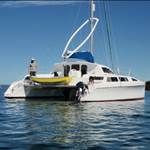
Interesting read, and no surprise that spade rudders are more vulnerable. What I took from that was that the rudders were bent to horizontal, from being pushed ( not bitten or otherwise targeted). Given the well documented over generations of interactions of orcas with harpoon boats ie pushing, turning and even grabbing the painter to get the whalers to expedite the hunt, I have to ponder if it's not the very same " learnt instinct " at play ? So an obvious question would be, was orca prey in the locality at the time of interaction ?( has anyone told the orca we don't hunt whale anymore? ) I'm sure that far smarter people than I would have already worked through that scenario. So it comes back to play, which brings to mind a yarn from a NZ dingy sailing club, were a adult male dolphin was known to pick up a dingy under sail and propel it along at a great rate of knots, not always in the competitors preferred direction
Select to expand quoteMAGNESIUM said..julesmoto said..
www.boatblurb.com/post/orcas-claim-another-boat-off-gibraltar?fbclid=IwAR2hm9J07RjoKpgRt-8Gj6wsTOS-nMZKHCTjGVqs5GE4Gb3NUtJiCAnRd18
It could easily spread to our doorstep however if the problem isn't solved as there are plenty around Australia.
seathegoldcoast.com.au/where-can-you-see-killer-whales-australia/
Seems the term killer whale used by mariners before the advent of greenies might have been a more appropriate name despite the fact that they are not whales.
I cant help but wonder why they have started doing this in recent history, there is much proof over the centuries of orcas working alongside man , could there be something upsetting them ????
LIKE THOUSANDS OF WIND GENERATORS HUMMING OUT SOME INSANE HIGH PITCH ???
Probably that there is so much fishing pressure along that coastline and its probable that coastal fisherman have started to attack/shoot at or have in the past tried to harm these animals. There's enough evidence from around the world of commercial fisherman harming seals, dolphins and other sea life that they deem to be a threat to their income. Now any small vessel represents a threat to them and they attack first with innate instinct.
Select to expand quotejulesmoto said..2bish said..r13 said..
Interesting discussion obviously, thanks for posting Jules. As far as I am aware ABS did the first structural engineering design guide for yachts in the early 90s as per here - so hull scantlings, keels and rudders.
ww2.eagle.org/content/dam/eagle/rules-and-guides/archives/special_service/37_offshoreracingyachts/pub37_ory_guide_op.pdf
ISO 12215-9 is the one normally used now, and is right now being revised. It includes keel grounding load cases as well as the normal beam on knocked down load case so keel out of the water, and fatigue damage issues of the latter or partial thereof cases but not the former as understandable.
www.sailing.org/tools/documents/OC4aiiWorkingPartiesKeelImprovements-[27597].pdf
Not sure how an Orca attack load case can be devised and included in the design guides............but a good idea obviously. Do the Orcas off the coast there attack all of the 4 common keel design variants or just some?
full keel and rudder hung off the full keel
or separate skeg and rudder configurations
or inboard rudders with stock and no skeg
or transom mounted rudders
Guess data would be difficult to find
Hi R13, not so hard and an interesting read: www.orcaiberica.org/en/tipo-de-barcos-involucrados
Reading through this, the play/ sport theory seems more likely, there's some suggestion that those interactions that don't follow the; drop sails, don't start the motor protocols, seem to fair a bit worse (more sport for the Orcas).
Spade rudders seem to have a higher percentage of interactions, that could just be because there's a higher proportion of spade rudder sailboats in the region though so it skews the stats.
That's interesting because on an orca attack Facebook site I belong to they are saying that the stop the motor and turn off electronic equipment idea has been discredited now in flavour of turn the motor on and get out of there.
Apparently there has been a lot of data lodged including colour of antifouling , rudder in front of prop/ behind prop, catamaran or not all without any clear picture.
That's interesting too, I'll have a look at that facebook group.
This tech looks promising: www.pbo.co.uk/news/sea-trials-of-new-acoustic-deterrent-device-to-keep-orcas-at-bay-80583?fbclid=IwAR1InWcQjdaUKb-42rdvV_3skk6wCmNu28I48hsBZO9MA4cq_2b8wk1tQaU
Select to expand quoteMAGNESIUM said..julesmoto said..
www.boatblurb.com/post/orcas-claim-another-boat-off-gibraltar?fbclid=IwAR2hm9J07RjoKpgRt-8Gj6wsTOS-nMZKHCTjGVqs5GE4Gb3NUtJiCAnRd18
It could easily spread to our doorstep however if the problem isn't solved as there are plenty around Australia.
seathegoldcoast.com.au/where-can-you-see-killer-whales-australia/
Seems the term killer whale used by mariners before the advent of greenies might have been a more appropriate name despite the fact that they are not whales.
I cant help but wonder why they have started doing this in recent history, there is much proof over the centuries of orcas working alongside man , could there be something upsetting them ????
LIKE THOUSANDS OF WIND GENERATORS HUMMING OUT SOME INSANE HIGH PITCH ???
Of course you've checked to see if there are any wind turbines in the area mentioned. It seems anyone with an agenda against wind turbines will blame them for anything and then carrying on about how the earth is flat too. 
Select to expand quotep3p4p5 said..MAGNESIUM said..julesmoto said..
www.boatblurb.com/post/orcas-claim-another-boat-off-gibraltar?fbclid=IwAR2hm9J07RjoKpgRt-8Gj6wsTOS-nMZKHCTjGVqs5GE4Gb3NUtJiCAnRd18
It could easily spread to our doorstep however if the problem isn't solved as there are plenty around Australia.
seathegoldcoast.com.au/where-can-you-see-killer-whales-australia/
Seems the term killer whale used by mariners before the advent of greenies might have been a more appropriate name despite the fact that they are not whales.
I cant help but wonder why they have started doing this in recent history, there is much proof over the centuries of orcas working alongside man , could there be something upsetting them ????
LIKE THOUSANDS OF WIND GENERATORS HUMMING OUT SOME INSANE HIGH PITCH ???
Probably that there is so much fishing pressure along that coastline and its probable that coastal fisherman have started to attack/shoot at or have in the past tried to harm these animals. There's enough evidence from around the world of commercial fisherman harming seals, dolphins and other sea life that they deem to be a threat to their income. Now any small vessel represents a threat to them and they attack first with innate instinct.
Any evidence ? Of fishermen mistreating this pod or are you just drawing a long bow ? In my experience dolphins revel in the company of fishing vessels. I will admit that seals have on occasion been nuisance trashing nets to get at the catch, but so do sharks. The modern sail vessel is generally flimsy in its construction & this contributes to the good sailing characteristics but there's a trade off