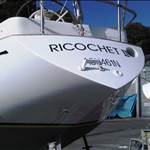


The first job for my new boat is to install a holding tank for the head, given it will be used on Sydney Harbour. On the Cavalier 28 this should be fairly simple as the head is in the rear port quarter and the plumbing runs through the bulkhead into the port cockpit locker.
The raw water seacock for the head is in this locker with pretty good access, so am assuming I should be able to install the holding tank in this locker and re-plumb the head to pass through the tank, or directly overboard with a y-valve.
I have never done this before so about to start researching, but thought I would ask the experts here for any tips before I get started.
First question; hard tank or bladder? I am leaning towards a hard tank.
Are there any specific regulations on the plumbing?
I found the general NSW sewage regulation here;
roads-waterways.transport.nsw.gov.au/about/environment/environmental-compliance/vessel-waste-disposal/sewage-greywater.html
This statement is a little ambiguous;
"The discharge of untreated sewage from vessels into navigable waters is prohibited, except into a waste collection facility such as a pump-out or on-shore toilet."
What does 'untreated' mean? If I use a macerating pump does that mean the sewage is treated?
What does 'navigable waters' mean? Is that just waterways subject to navigation marks, i.e. not the open ocean?
A holding tank as part of a Porta Potti is the simplest thing. If you want to, add a hose fitting above the waterline to it, for pump-out facilities on shore. I saw a photo of such an arrangement.
Select to expand quoteFabulousPhill said..
A holding tank as part of a Porta Potti is the simplest thing. If you want to, add a hose fitting above the waterline to it, for pump-out facilities on shore. I saw a photo of such an arrangement.
I second this. If used basically on the harbour or enclosed waters then one of the porta potty style toilets would be my first choice. There used to be a larger version that was designed to be fitted with a deck pump out hose so effectively a holding tank and toilet in one.
Treated refers to a chemical process & and discharge otherwise is 3 miles off shore, with other restrictions around aqua culture etc
My Cavalier 28 has a holding tank in the port cockpit locker, installed by a previous owner. It is a stainless steel tank fixed high up in the locker, and drains through a sea-cock on the locker floor. The engineering appears agricultural, but it works.
Select to expand quoteEnigma1 said..
What does 'untreated' mean? If I use a macerating pump does that mean the sewage is treated?
What does 'navigable waters' mean? Is that just waterways subject to navigation marks, i.e. not the open ocean?
I'll hazard a guess, and stand to be corrected ...
"Untreated" means it has not gone through a sewage treatment plant (which has filtration and biological processes to reduce pathogens). Maceration is not "treatment", in this sense.
"Navigable waters" means inshore waters that you can navigate, such as rivers and harbours. You'll need to be more than 1 nautical mile (?) offshore to empty your tank.
The first thing you should do is buy and read Peggy Hall's book. Peggy Hall the head mistress! This is the best money you will ever spend on your boat.

Thanks Ramona. Had a look through the pages available for viewing on Amazon and have just ordered the book. Should be an interesting read and hopefully help me make the right design/install decisions.
Select to expand quotewoko said..
3 miles and it has to be macerated
Thanks Woko. This makes sense, but I couldn't find anything explicit on the RMS website.
Select to expand quoteAchernar said..
My Cavalier 28 has a holding tank in the port cockpit locker, installed by a previous owner. It is a stainless steel tank fixed high up in the locker, and drains through a sea-cock on the locker floor. The engineering appears agricultural, but it works.
The port cockpit locker is exactly where I plan to do the install. Plenty of room and right behind the head bulkhead with the plumbing already running into this locker for the head's raw water seacock.
Understand the simplicity of the porta-pottie. Had one of those on my last boat. But Enigma already has a marine head that is plumbed into raw water. With good access to a locker for the holding tank where the plumbing already runs, I am thinking this will be an easier solution then removing the existing head, making good the penetrations where the existing head is mounted, closing up the through-hull penetration and installing a porta-pottie.
Have read the head section in Nigel Calder's Boatowner's Mechanical and Electrical Manual which was a good start. But this arrived today so should be in business now (thanks Ramona);

Friend of mine has ordered and is installing a chlorine injection system which apparently simply injects chlorine into the holding tank which can then be discharged overboard presumably because it is treated. Chlorine doesn't sound very eco-friendly these days not to mention the fact that having a chlorine tank on board may introduce another potential source of explosion. Anyway I will be interested to go on board and see his system in operation and read any material that he has on board the weekend after next as we often raft up together. Presumably it gets rid of any smell problems. He said his outlet pipe which is about an inch and three-quarter like most was caked up and down to about 20 mm after 20 years. Mine is probably the same. Something else to check :-(.
Select to expand quotejulesmoto said..
Friend of mine has ordered and is installing a chlorine injection system which apparently simply injects chlorine into the holding tank which can then be discharged overboard presumably because it is treated. Chlorine doesn't sound very eco-friendly these days not to mention the fact that having a chlorine tank on board may introduce another potential source of explosion. Anyway I will be interested to go on board and see his system in operation and read any material that he has on board the weekend after next as we often raft up together. Presumably it gets rid of any smell problems. He said his outlet pipe which is about an inch and three-quarter like most was caked up and down to about 20 mm after 20 years. Mine is probably the same. Something else to check :-(.
What exactly explodes?
Select to expand quoteLooseChange said..julesmoto said..
Friend of mine has ordered and is installing a chlorine injection system which apparently simply injects chlorine into the holding tank which can then be discharged overboard presumably because it is treated. Chlorine doesn't sound very eco-friendly these days not to mention the fact that having a chlorine tank on board may introduce another potential source of explosion. Anyway I will be interested to go on board and see his system in operation and read any material that he has on board the weekend after next as we often raft up together. Presumably it gets rid of any smell problems. He said his outlet pipe which is about an inch and three-quarter like most was caked up and down to about 20 mm after 20 years. Mine is probably the same. Something else to check :-(.
What exactly explodes?
Sorry my mistake. I have been operating for years under the mistaken belief that chlorine gas was explosive.

Only if wrong type of chlorine used....
www.google.com/amp/s/www.h2oinc.com/blog/four-reasons-why-you-should-never-use-pool-chlorine-tablets-in-your-vessels-marine-sanitation-device%3fhs_amp=true