

Hello Brains trust,
Going over the very basics and cost efficiency of electric V's combustion power, diesel upgrade V's going fully electric, just in case THAT time occurs and I'm not prepped for a surprise engine/propulsion replacement moment to happen. I've a small 34 feet Steel Vande Stadt, in cooler climes (43*S) plenty of breeze, set up for 12-14 day jaunts.
Figure if I plan for it early and get some good research behind me, when THAT time comes, I won't be too far on the back foot.
So if any of my learned colleagues here has knowledge of recent / actual motor exchange situations (both good and bad stories)I'm keen to start some reading and research.
Friends of mine went electric with their 41ft steel cutter as a replacement for an old diesel - they did not like it. Speed down when motoring, much reduced range and lots of issues with charging on a mono with limited space for huge solar arrays. After a trip down to Melbourne and back they replaced the expensive system with a new diesel.
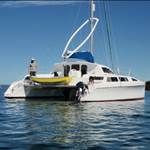
I am interested in converting my cat to twin electric drives with a single 18hp diesel running them. I only motor for long periods on one engine, the electric drives are mush smaller than twin outboards and I could swing huge props for better calm motoring efficiency. But I don't know how to do the electric part of it.
Hope your stinky engine lasts long enough for the currently eye watering price of hydrogen fuel cells to drop?
Energy wise we are in a transition phase but 'soon' this might be a good solution...
That being said ammonia is a current frontrunner for fuel cell tech so i'm not expecting a better smelling energy source there : p
Select to expand quotesparau said..
Hope your stinky engine lasts long enough for the currently eye watering price of hydrogen fuel cells to drop?
Energy wise we are in a transition phase but 'soon' this might be a good solution...
That being said ammonia is a current frontrunner for fuel cell tech so i'm not expecting a better smelling energy source there : p
I have been doing some maths on hydrogen. It's not just the cost of the fuel cell. To have enough hydrogen you need to store it in its compressed form at 7,000 to 10,000 psi to have enough on board. A standard gas cylinder is around 2,000 psi only and if you were to use a standard gas cylinder you then need many many cylinders which weight a lot!. So you need an expensive fibreglass tank that is lightweight and able to store at higher pressures similar to what is used in the Toyota hydrogen car.
Yeah, hydrogen is a bit of a bastard to store as a gas, not only the pressure to have enough but it is such a tiny molecule it even leaks through steel causing it to become brittle.
Possibly easier in liquid compound - ammonia NH4, or ethanol C2H6O
Pity you can't just use electrolysis to make hydrogen on board from seawater and feed it straight into the fuel cell/motor.
Select to expand quoteMadmouse said..
Pity you can't just use electrolysis to make hydrogen on board from seawater and feed it straight into the fuel cell/motor.
You need to desalinate it which uses energy then electrolyse it then put it through the fuel cell. It's a very energy inefficient process unfortunately.
For a steel Van de Stadt 34 I would be thinking diesel electric with the diesel mounted in the saloon just aft of the main bulkhead. Copy cruise-ship technology.
Thanks gang, from my research and the comments below there certainly looks like there's going to have to be some significant changes made for the cost efficiency of change to be effective. looks like I might be refining the changes to the ol' 'cooking oil burner' in the meantime.
Although the hydrogen does sound useful, storage and DG's issues may take a fair bit away from the 'fun' of sailing?
Cheers again