

Hi all,
Albeit a long time avid reader, I have never really had the need nor opportunity to engage the SB 'sailing' community forum till now.
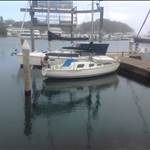
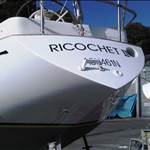
After a hiatus from sailing vessel ownership ( prev. 38 Endurance and Adams 13's ) but always been involved in racing, delivery of both sail and motor vessels up and down the east coast, and always employed in the maritime industry, my girl and I have dived in again and recently purchased a Vande Stadt 34 - steel - hard chine ..... and loving the idea of being able to go cruising again.
Vessel has been powered by an Arona C 290M 22 HP.
And yes, when you stop giggling after reading this and thinking to yourself either,
A) you idiot,
B) They don't make them or parts anymore,
C) Never heard of them before - refer to (A),
or D) all of the above, I will declare that I DID do my research and purchased the boat with full knowledge of same information.
As it was, the previous owner of the boat was one of 'those' who was fastidious in literally every aspect of record keeping, from ships log to manuals and instruction booklets for EVERY piece of gear and kit on board. Unfortunately this did not go as far as record keeping on who or where the engine was serviced. As a result, I have been blessed to have factory information on the motor and its maintenance and operational break down.
Apart from the fact the whole lot is in ITALIAN it is comprehensive to say the least. Armed with this information ( and the added bonus of learning Italian along the way - thanks Google translate ) I went into learning as much as I could about the power plant moving my new little toy about. What I did find during my research is that they are a marine version of a Lombadini motor, who sold them under the 'Arona" brand and were plentiful in their day ( mainly the UK )
When making preparations for servicing the motor, it quickly became apparent that there was no Oil filter, nor evidence of where one should have been bolted on the engine or even by passed. I then made enquires with diesel engineer mates who were aware of the make of engine but had nothin to do with the maintenance or repair of the same. I am told the Lomardini had a bolt on the side of the motor which concealed an internal conical styled 'Gauze' filter which was cleaned with every service. There is no evidence of this being portrayed in any of the manuals or maintenance procedures I have, and those that mention oil filter, show an external 'modern' style filter setup similar to that of a standard fuel filter element. ( Undo/ unscrew - replace - jobs done ) With the complete absence of anything that looks remotely like an oil filter, and armed with only hearsay knowledge of the Lombadini version, I was wondering if any of you folk may be able to assist with any knowledge of the engine and this unique issue - BEFORE I dive into plumbing in an external oil filter.
Any 'helpful' advice would be much appreciated.
All the best
Seapig.
Must add here that the only reason I haven't be able to remove bolts and check things further is that the vessel is at the other end of the state from where it will be delivered to its new 'home' and I am unable to conveniently duck down to the boat to check things ....at this stage anyway 
Hi SP
The first thought that comes to mind is to contact the previous owner.
He would be the most knowledgeable person on this particular engine.
Me = C) Never heard of them before
best of luck.
Gary
There was an Arona 10hp diesel inboard in a previous yacht of mine, the actual engine was a little gem, the problem was the appendages to it like the water pump, prop shaft, stern gland etc.
The engine was a pretty good quality build I believe, it didn't look good from the front, rusty brackets etc from the leaking pump, but when I removed it(to fit an outboard, 25ft boat), it looked good (from a slight distance)from the sides and back, and I was mildly regretting my decision to give it away, alloy block that the recipient cleaned up nicely.
Not helpful at all, but at least you have heard of someone else that owned one.
Category C. All I can add to that is we had a twin cylinder Ducati diesel running a hydraulic pump on a wood splitter with no oil filter arrangement in place it got regular oil change
Phew !!
Thanks Blue Moon, I was starting to think I had the only Arona in Australia? ( may still do yet )
Yep it doesn't look much, but starts on time, every time and effortlessly as well. I am extremely reluctant to replace anything at the moment as I am a card carrying student of the old, 'if it ain t broke ..' school of thinking.
Yes, its not pretty to look at, yes, its got a few bits that have been added to make it workable, i.e an old grease cap screw down Jabsco water pump and after market alternator etc. but still makes the right noises and has a nice sweet spot RPM level that hums along nicely and under power, and like any diesel motor I've ever owned, I use em' but never abuse em'. Hence the reason I so keen to look after it correctly to keep its longevity
Plenty of Aroona around once.
Look for a small handle coming out of the housing.
Idea was you turn it regularly then unbolt cover plate at service and clean the guaze drum inside.
I suspect the easiest way to find it is look for the oil leak.
not the case with every model but certainly the case with the smaller ones years ago.
Thanks so much crew!!
its great to know that there are people who are still willing and able to share helpful info. One of the reasons that I'm so looking forward to getting back to like minded people. Will keep all posted on the journey with this beastie as it unfolds with pics to show what I've found.
Cheers again for the responses it is very much appreciated.
Assume you have found these links. This one a 52 page workshop manual.
www.lospaziodibeppe.it/public/download/Altro/barche/motori/Arona-AD_290M_workshop.pdf
This one includes a link to the 29Mb download for the 290M maintenance manual and spare parts but not sure if it works or if it is free as indicated.
www.marinedieselbasics.com/arona-diesel-engine-manuals/
BTW great choice of yacht for your new journey.
Select to expand quoter13 said..
Assume you have found these links. This one a 52 page workshop manual.
www.lospaziodibeppe.it/public/download/Altro/barche/motori/Arona-AD_290M_workshop.pdf
This one includes a link to the 29Mb download for the 290M maintenance manual and spare parts but not sure if it works or if it is free as indicated.
www.marinedieselbasics.com/arona-diesel-engine-manuals/
BTW great choice of yacht for your new journey.
Awesome link mate, and in ENGLISH as well !!
I will keep all up to date with pics when I find out which bolt on the block is 'hiding' the gauze filter !!
Greato. I just found this which mentions oil filter on the port side..................
www.cruisersforum.com/forums/f54/arona-diesel-a-question-186297.html
Select to expand quoter13 said..
Greato. I just found this which mentions oil filter on the port side..................
www.cruisersforum.com/forums/f54/arona-diesel-a-question-186297.html
Champion work r13. Much appreciated.
I have had a mate drop into the boat for me and get some pics of he port side of engine.
Managed to dig up a brochure of the motor which shows the engine as a "C 295 m" and looking at actual engine its def the engine shown in the pic of brochure, although the name plate on the engine its self states its a "C290 MR" I am totally aware of how engines ( especially small ones ) are rebranded and butchered to make do - as most small boat owners are aware of how things need to be modified to suit different applications / engine bay sizes etc. So I may have a bit of a 'Mongrel' to deal with but thats fine, nothing like knowing your motor intimately I'd say.
Will attempt to load pics for hose interested showing what I've got
Cheers again to all those who have been helpful
Select to expand quoter13 said..
Greato. I just found this which mentions oil filter on the port side..................
www.cruisersforum.com/forums/f54/arona-diesel-a-question-186297.html


My thinking is that the bolt next to the oil pressure switch is the mysterious internal gauze oil filter which Lydia was alluding to and what my diesel engineer type contacts were talking about. I have no idea about the spring loaded 'tap' arrangement is directly above it ??
BTW, it has cleaned up a treat and definitley does not look this ugly or oily anymore 
Tap is probably to drain coolant or salt water from the block - depending on whether it's raw water cooled or not...
Select to expand quoteBushdog said..
Tap is probably to drain coolant or salt water from the block - depending on whether it's raw water cooled or not...
Remember some places "winterise" so all moisture must be drained out for winter storage
Ok, so for those who are interested into what happened with that Arona engine ?? here's the 'soldiers five' to bring you up to speed.
Managed to get back to the boat while I had the chance and find out once and for all where this mysterious internal oil filter was located.
The 'bolt' previously identified on port side of the motor was indeed the cover for the cylindrical gauze filter. Nice work r143 !!
After a quick warm up under load, the old oil was drained/suctioned out of the engine and I put ring spanner to said locking nut. Out slid a small, cylindrical gauze filter, approx 100mm long. I cleaned the same in a bath of oil and wax remover and as the fluid was drained away from the bottom of the container, a small teaspoon of shiny metal 'swarth' was revealed at the bottom. ( See pic ) I used a suction pump and hose to remove and flush remaining build up from sump, and replaced fuel filter, bled engine fuel system and she kicked over as normal.......for a few minutes .... and then simply stopped. No warning, no indication of issue, it was as simply as if some one had turned off the key. Re-bled the fuel system while checking for leaks or evidence of foul play. Nothing. Noticing that the lift pump did not feel like it was functioning when bleeding the fuel system for the second time, it was obvious then that I had a fuel pump problem as well !!
The fuel pump was gently worked open, revealing the wafer thin screen that was the 'fine filter' (thick with diesel growth) and the remains of the bakelite ( yes that right - bakelite ) valve non return and spring assembly, which had imploded inside the pump to the point where the diaphragm spring plate has pushed the valve seat into the body of the with enough force to gouge a small channel in the main body of the pump itself. (see pic) It quickly became obvious that these parts had been pressed together in the factory ( that now does not exist ) over 25 years ago and that there would be a cinders chance in hell of me being able to get a replacement.
After mumbling various versions of " oh dear', I decided to use this as incentive, and proceeded to turn the inside of the yacht into the smallest machine shop ever. I measured, scraped, cleaned, created, re sprung and replaced the valve assembly and managed to press the whole lot back into it original place. The freshly reassembled valve was then re bolted to the block, and reconnected fuel all fuel lines. She kicked over without hesitation. As I am one who likes to know the engine oil pressure is at all times, I removed the original oil pressure switch and connected a mechanical / capillary oil pressure gauge which would at least give me a visual benchmark of oil pressure to work with, which incidentally was a constant 25 -28 PSI. The engine was run again under load to achieve working temperature for a few hours and the oil changed again. Next to minimal 'swarth' was evident and it became more apparent that the material found in the original oil change, may have been 'historic' as I doubt that the engine had seen love like that for a long time.
It was also pointed out to me by an engineering friend who suggested that the gearbox draws it lubrication form the journals and sump of the engine. They metal 'may' be from any chaffing of the way the gears could have been selected over the years. The connections and levers are worn and loose there was by no means a smooth transition in and out of gears in its current set up. I have retained a sample of the material found int the filter so I can pass a magnet over it and look at tit under a scope in an effort to determine what its origin area and what part of the engine it may have come from.
I know that many of you who got to read this far are still thinking that the engine would probably make a good small boat mooring weight, and quite rightly so, but at least it has an oil pressure I can work with and I can nurse and nurture it as a delivery motor to assist us getting in and out of anchorages while we sail from one ed of the state to the other.
Another lesson for me and more knowledge of my new toy for our upcoming adventures.
Oh and by the way, Lydia and Bushdog, you were both bang on the money with the 'tap" being for for drawing the block of coolant water for 'winterising' the engine. This is more likely a hangover from when the engine was used on tractors et before the engine design was manipulated for marine installations.

The 'train smash' I found in the internal filter of the Arona.

The bits of the valve that had imploded in the diaphragm of the lift pump.
Select to expand quoteseapig said..
I know that many of you who got to read this far are still thinking that the engine would probably make a good small boat mooring weight, and quite rightly so, but at least it has an oil pressure I can work with and I can nurse and nurture it as a delivery motor to assist us getting in and out of anchorages while we sail from one ed of the state to the other.
Another lesson for me and more knowledge of my new toy for our upcoming adventures.
I think you are doing the right thing. I would suggest adding some FTC to your fuel. I used to use this with my old Gardner. I suggested it to a mate who had an old Arona in one of those Hawkesbury cabin cruisers and it transformed his engine. He ran an engineering shop and after that, he kept FTC on his shelves.
costeffective.com.au/product/ftc-decarbonizer/
Select to expand quoteseapig said..
Ok, so for those who are interested into what happened with that Arona engine ?? here's the 'soldiers five' to bring you up to speed.
Managed to get back to the boat while I had the chance and find out once and for all where this mysterious internal oil filter was located.
The 'bolt' previously identified on port side of the motor was indeed the cover for the cylindrical gauze filter. Nice work r143 !!
After a quick warm up under load, the old oil was drained/suctioned out of the engine and I put ring spanner to said locking nut. Out slid a small, cylindrical gauze filter, approx 100mm long. I cleaned the same in a bath of oil and wax remover and as the fluid was drained away from the bottom of the container, a small teaspoon of shiny metal 'swarth' was revealed at the bottom. ( See pic ) I used a suction pump and hose to remove and flush remaining build up from sump, and replaced fuel filter, bled engine fuel system and she kicked over as normal.......for a few minutes .... and then simply stopped. No warning, no indication of issue, it was as simply as if some one had turned off the key. Re-bled the fuel system while checking for leaks or evidence of foul play. Nothing. Noticing that the lift pump did not feel like it was functioning when bleeding the fuel system for the second time, it was obvious then that I had a fuel pump problem as well !!
The fuel pump was gently worked open, revealing the wafer thin screen that was the 'fine filter' (thick with diesel growth) and the remains of the bakelite ( yes that right - bakelite ) valve non return and spring assembly, which had imploded inside the pump to the point where the diaphragm spring plate has pushed the valve seat into the body of the with enough force to gouge a small channel in the main body of the pump itself. (see pic) It quickly became obvious that these parts had been pressed together in the factory ( that now does not exist ) over 25 years ago and that there would be a cinders chance in hell of me being able to get a replacement.
After mumbling various versions of " oh dear', I decided to use this as incentive, and proceeded to turn the inside of the yacht into the smallest machine shop ever. I measured, scraped, cleaned, created, re sprung and replaced the valve assembly and managed to press the whole lot back into it original place. The freshly reassembled valve was then re bolted to the block, and reconnected fuel all fuel lines. She kicked over without hesitation. As I am one who likes to know the engine oil pressure is at all times, I removed the original oil pressure switch and connected a mechanical / capillary oil pressure gauge which would at least give me a visual benchmark of oil pressure to work with, which incidentally was a constant 25 -28 PSI. The engine was run again under load to achieve working temperature for a few hours and the oil changed again. Next to minimal 'swarth' was evident and it became more apparent that the material found in the original oil change, may have been 'historic' as I doubt that the engine had seen love like that for a long time.
It was also pointed out to me by an engineering friend who suggested that the gearbox draws it lubrication form the journals and sump of the engine. They metal 'may' be from any chaffing of the way the gears could have been selected over the years. The connections and levers are worn and loose there was by no means a smooth transition in and out of gears in its current set up. I have retained a sample of the material found int the filter so I can pass a magnet over it and look at tit under a scope in an effort to determine what its origin area and what part of the engine it may have come from.
I know that many of you who got to read this far are still thinking that the engine would probably make a good small boat mooring weight, and quite rightly so, but at least it has an oil pressure I can work with and I can nurse and nurture it as a delivery motor to assist us getting in and out of anchorages while we sail from one ed of the state to the other.
Another lesson for me and more knowledge of my new toy for our upcoming adventures.
Oh and by the way, Lydia and Bushdog, you were both bang on the money with the 'tap" being for for drawing the block of coolant water for 'winterising' the engine. This is more likely a hangover from when the engine was used on tractors et before the engine design was manipulated for marine installations.
The 'train smash' I found in the internal filter of the Arona.
The bits of the valve that had imploded in the diaphragm of the lift pump.
Top job all round there. Without making a meal of it there are numerous companies providing oil analysis services - at a cost.........
www.seatechmarine.com.au/blogs/oil-analysis-an-open-view-of-your-boats-engine/
Be interesting to get a report on the original oil. Some companies can assess the metal wear debris itself - am sure your scope examinations would do most of that.
www.machinerylubrication.com/Read/30122/analyzing-wear-debris
www.yachtingmagazine.com/oil-rx/
Select to expand quoteRamona said..seapig said..
I know that many of you who got to read this far are still thinking that the engine would probably make a good small boat mooring weight, and quite rightly so, but at least it has an oil pressure I can work with and I can nurse and nurture it as a delivery motor to assist us getting in and out of anchorages while we sail from one ed of the state to the other.
Another lesson for me and more knowledge of my new toy for our upcoming adventures.
I think you are doing the right thing. I would suggest adding some FTC to your fuel. I used to use this with my old Gardner. I suggested it to a mate who had an old Arona in one of those Hawkesbury cabin cruisers and it transformed his engine. He ran an engineering shop and after that, he kept FTC on his shelves.
costeffective.com.au/product/ftc-decarbonizer/
+1 for FTC, it transformed my old Bukh 10 hp too.
Hi Seapig. I am also the lucky owner of a Arona diesel. In fact I have 2!! The one currently in my yacht is a 182. A few years ago I bought a rebuilt 186MR. During lockdown I have adding the necessary bits and hope to run it in the garage when a few of my more technical friends can help before replacing the existing motor. I am not too hopeful as I have no idea re priming the fuel etc. One question I think you cover was oil in the compartment where the gears live at the back of the motor where the drive shaft connects. There is no oil in this area currently but I wonder if that was due to the need to transport the motor from Queensland. There appears to be a filler spot!!
Currently the existing motor in the yacht starts fine, runs well but blows a fair bit of grey smoke.
While I have some manuals they are not comprehensive so I will investigate those in your post.
Basically I don't have much of an idea what I am doing so I am hoping you might help.
Cheers Laurie
G'day Laurie,
Wow there actually IS another running Arona engine out there as well !! And here I was thinking that I was alone in the briny with that. I must say I have learned a lot about my little engine, and due to the manuals I've managed to get hold of, Ive learned a decent amount of Italian in the translation as well !! If you want to PM me I will only be too pleased to share what I have gleaned about them. Surprisingly, they are a tough little beast as it turns out. Just like any engine - especially small older diesels, a little bit of love, and using them, and NOT abusing them, can extend their life and efficiency. I can guide your through what I have learned and it may help at least get your engine running.
"tutto il meglio amico"
Le' Pig.