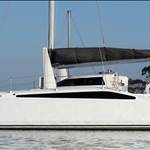


Getting ready to head out for a sail yesterday and noticed the boat rocking. No fishing boats heading out so no wake.
Then the rocking got stronger and STRONGER. Earthquake alarms went off on our phones.
Off the boat quick smart. Jog back to the car an head for the high ground. After a few minutes the all clear siren blasted as there was a "no tsunami" alert announced. My first earthquake at sea.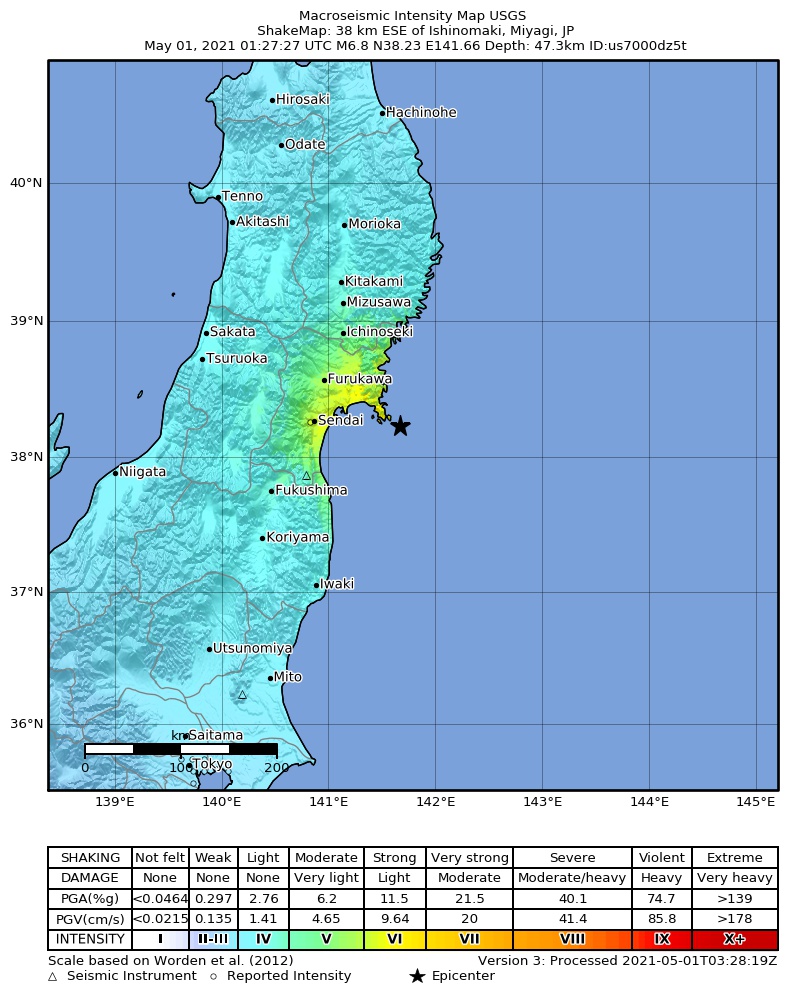
Select to expand quotegarymalmgren said..
Getting ready to head out for a sail yesterday and noticed the boat rocking. No fishing boats heading out so no wake.
Then the rocking got stronger and STRONGER. Earthquake alarms went off on our phones.
Off the boat quick smart. Jog back to the car an head for the high ground. After a few minutes the all clear siren blasted as there was a "no tsunami" alert announced. My first earthquake at sea.
Wow. Think of the forces involved.
You be safe over there Gary, you're braver than me. Living in a lovely place but where the threat of a tsunami is real...that's kinda surreal.
Stay safe over there brother. Experienced a 7.4 quake in LA in the 90's and never ever want to again.
In 1984 I was embarked in HMAS SYDNEY when we experienced an earthquake while tied up at either Kure or Nagoya. I was below decks when the ship started banging against the wharf. It lasted maybe 30 seconds. Surreal experience.
In Darwin in 1978 watching TV in the RAAF Officers mess (a building on stilts) the building stared shaking. Weird.
I was in my home town of Quorn back in the seventy's, I'd just finished building my house (out of concrete ) when a 7.2 shake came through, it was all of 5 seconds long but the vibration was fast and dramatic. No damage, but i was surprised we even got earthquakes in South Australia.
Hi Gary, interesting to hear your response to the earthquake. Obviously if you are at the dock getting off the boat is a good idea. There must be some distance offshore where you need to go the other way instead. Probably not a simple decision, need to know how long you have and what the ocean bottom is going to do to the wave as it comes in.
Gary. If you had prior warning of an incoming tsunami would you head out to sea and let it pass under you ?.
Gary. If you had prior warning of an incoming tsunami would you head out to sea and let it pass under you ?.
As we walked back to the boat after the all clear we talked about what we would do if a tsunami were to come.
A bit of geology.
The eastern sea bed off Japan has a series of steps down to where the continental plate drops off.
These are fault lines of ancient megaquakes. The really big and most dangerous fault is about 50 miles out.
If you are out past that you would feel nothing.
When a big quake happens on that fault the shock waves travel basically underwater.
They hit each step and magnify. Eventually they hit the shallowest step rise up and break.
These steps are why the megaquake that hit Chile in 1960 caused so much damage in this part of Japan.
Hilo in Hawaii was wiped out by a 10 meter tsunami and it is 10.000 kilometers from Chile.
So what would I do? Pretty well, the only choice would be to point off shore and hope that you are over a section of sea bed that wouldn't make the waves break. It took 50 minutes for the big tsunami to hit after the quake. ( in the chart above that would be about 39N 143 E) With the YSE 12 going flat out I would make 4 miles.
That would still be in shallow water.
These big tsunamis hit this area about once in 300 years , so hopefully the pressure has been released for a while.
gary
Thanks for that Gary. shakes are scary things. Remembering Christchurch NZ and people wondering where all the water was coming from, it was being squeezed out the ground by the pressure. Stay safe.
wow indeed mate.
thanks for sharing.
I forget not everyone is puddling around Aus.
Keep the companionway hatches in :)
In deep water a tsunami travels at about 200 m/s, or about 700 km/h so unless you have a huge lead time you will never be able to get to deep water fast enough.
If you were already at sea out at sea and the tsunami came it would be a ripple about 150mm high and pass under you so fast (700 km/h) you would possibly not even notice it.
Went down for a sail today and noticed some damage from the quake.
The landward section had sunk about 5 cm from the seaward section of the newly built breakwater.
This is really minor.

One reason the we had to jog from the boat to the car was the tsunami gates. They are automatic!

This a small oen at 2 meters high. As I said the sinking was only 5 cm. In the biggy 10 years ago 300 kilometers of the coast sunk around a meter.

This concept is a little hard to grasp. Next to the gate is the old wall. There is a new section added to the old one.
The height above sea level of the new addition is where the old one was.
After the quake ALL of the coastal infrastructure (underground sewage. water. roads. railways) had to be raised to bring it back to its original height above sea level. Ongoing but a massive rebuilding program. Sure kept the construction companies alive.