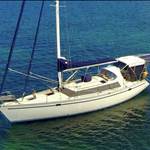


When I purchased my current yacht a Blue Water 420 the mechanics informed me she had a history of water in the fuel.
I serviced the engine and have been monitoring the CAV sight glass over the past 100 hrs with No proof of water in the system. Over Christmas on a 20 to 25 knot beam reach sailing in a rough Gulf once in smooth waters I completed engine checks and found the glass bowl cloudy and gunked up!
I Immediately changed out the filters and swapped over to the starboard 200 litre tank. Anyway I have now popped the inspection hatch and removed 100 litres of fuel and found a sump directly under the pick up and I expect that's where the gunk was sitting and was disturbed while the boat was rolling and then sucked into the fuel filters once the engine was restarted. I have now flushed the tank with a mixture of metho and bilge cleaner and will wipe clean with paper towel over the weekend.
I Recommend cleaning tanks out after 20 years as preventative maintenance schedule and peace of mind.
Now i just need to find 400 new litres to press up the two tanks! ??


Select to expand quotesouthace said..
When I purchased my current yacht a Blue Water 420 the mechanics informed me she had a history of water in the fuel.
I serviced the engine and have been monitoring the CAV sight glass over the past 100 hrs with No proof of water in the system. Over Christmas on a 20 to 25 knot beam reach sailing in a rough Gulf once in smooth waters I completed engine checks and found the glass bowl cloudy and gunked up!
I Immediately changed out the filters and swapped over to the starboard 200 litre tank. Anyway I have now popped the inspection hatch and removed 100 litres of fuel and found a sump directly under the pick up and I expect that's where the gunk was sitting and was disturbed while the boat was rolling and then sucked into the fuel filters once the engine was restarted. I have now flushed the tank with a mixture of metho and bilge cleaner and will wipe clean with paper towel over the weekend.
I Recommend cleaning tanks out after 20 years as preventative maintenance schedule and peace of mind.
Now i just need to find 400 new litres to press up the two tanks! ??
Thanks for that. Looks like you have a little rust down there. I have yet to attack my fuel tank but I have done both stainless steel water tanks which had pinhole leaks by coating them internally with some single part epoxy product which seems to have worked quite well. This required removal of the tanks and rolling them around the front lawn quite a bit so not an easy job. The product was billed as a fuel tank leak stopper so I could probably do the same for the fuel tank. Thankfully my filters are not showing cloudy yet.
Select to expand quotejulesmoto said..southace said..
When I purchased my current yacht a Blue Water 420 the mechanics informed me she had a history of water in the fuel.
I serviced the engine and have been monitoring the CAV sight glass over the past 100 hrs with No proof of water in the system. Over Christmas on a 20 to 25 knot beam reach sailing in a rough Gulf once in smooth waters I completed engine checks and found the glass bowl cloudy and gunked up!
I Immediately changed out the filters and swapped over to the starboard 200 litre tank. Anyway I have now popped the inspection hatch and removed 100 litres of fuel and found a sump directly under the pick up and I expect that's where the gunk was sitting and was disturbed while the boat was rolling and then sucked into the fuel filters once the engine was restarted. I have now flushed the tank with a mixture of metho and bilge cleaner and will wipe clean with paper towel over the weekend.
I Recommend cleaning tanks out after 20 years as preventative maintenance schedule and peace of mind.
Now i just need to find 400 new litres to press up the two tanks! ??
Thanks for that. Looks like you have a little rust down there. I have yet to attack my fuel tank but I have done both stainless steel water tanks which had pinhole leaks by coating them internally with some single part epoxy product which seems to have worked quite well. This required removal of the tanks and rolling them around the front lawn quite a bit so not an easy job. The product was billed as a fuel tank leak stopper so I could probably do the same for the fuel tank. Thankfully my filters are not showing cloudy yet.
I wonder if I should try to get some Marine clean acid on the rust? Do you think it's rust? Unfortunately the inspection hatch is about 1m from that section so I can't physically scrub it other than with a cobweb broom I got from Bunnings.
The tank material is probably 304 grade stainless which in the marine environment is susceptible to "tea staining" corrosion and subsequent further corrosion if not treated regularly especially at welds as evidenced in your photos. There are many links on line of this situation. 316L grade stainless would be better but even it has issues in salt water. Realise you are storing diesel not salt water but the marine environment after 20yrs means that the impact can occur even inside the tank due to water ingress.
Anzor have a good article and repair gel as per here, including other links to assda etc.
www.anzor.com.au/blog/tea-staining-all-about-de-rusting
Web links indicate that monel plate tanks are the longest lasting but the cost now is prohibitive.
Select to expand quoter13 said..
The tank material is probably 304 grade stainless which in the marine environment is susceptible to "tea staining" corrosion and subsequent further corrosion if not treated regularly especially at welds as evidenced in your photos. There are many links on line of this situation. 316L grade stainless would be better but even it has issues in salt water. Realise you are storing diesel not salt water but the marine environment after 20yrs means that the impact can occur even inside the tank due to water ingress.
Anzor have a good article and repair gel as per here, including other links to assda etc.
www.anzor.com.au/blog/tea-staining-all-about-de-rusting
Web links indicate that monel plate tanks are the longest lasting but the cost now is prohibitive.
There's No water ingress from the outside of tank which are fitted in the aft quarter cabins. The "teas straining " rust appears to be from the cause of water previously inside of the tank in the fuel. If no water or oxygen in the tank I can't see it progressing.
Select to expand quotesouthace said..r13 said..
The tank material is probably 304 grade stainless which in the marine environment is susceptible to "tea staining" corrosion and subsequent further corrosion if not treated regularly especially at welds as evidenced in your photos. There are many links on line of this situation. 316L grade stainless would be better but even it has issues in salt water. Realise you are storing diesel not salt water but the marine environment after 20yrs means that the impact can occur even inside the tank due to water ingress.
Anzor have a good article and repair gel as per here, including other links to assda etc.
www.anzor.com.au/blog/tea-staining-all-about-de-rusting
Web links indicate that monel plate tanks are the longest lasting but the cost now is prohibitive.
There's No water ingress from the outside of tank which are fitted in the aft quarter cabins. The "teas straining " rust appears to be from the cause of water previously inside of the tank in the fuel. If no water or oxygen in the tank I can't see it progressing.Select to expand quotesouthace said..r13 said..
The tank material is probably 304 grade stainless which in the marine environment is susceptible to "tea staining" corrosion and subsequent further corrosion if not treated regularly especially at welds as evidenced in your photos. There are many links on line of this situation. 316L grade stainless would be better but even it has issues in salt water. Realise you are storing diesel not salt water but the marine environment after 20yrs means that the impact can occur even inside the tank due to water ingress.
Anzor have a good article and repair gel as per here, including other links to assda etc.
www.anzor.com.au/blog/tea-staining-all-about-de-rusting
Web links indicate that monel plate tanks are the longest lasting but the cost now is prohibitive.
There's No water ingress from the outside of tank which are fitted in the aft quarter cabins. The "teas straining " rust appears to be from the cause of water previously inside of the tank in the fuel. If no water or oxygen in the tank progressing.
Maybe keep the tank full in winter to avoid condensation. Other than that if there is no sign of leakage just forget about it and enjoy the boat.