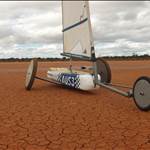

 Mast pockets is what I'm talking about. When I knocked together the sail for 'Test Bed' I just took the max spec size from the Class 5 regs which I think was 140mm flat. I've just spotted an article explaining windsurf downhaul about the bottom of the sail being the 'engine' and the top the 'exhaust'. And that the bottom needs the battens close to the mast to get the correct shape but away from the mast at the top. Is this correct? Should I tighten the pocket to be close to the mast (not too tight to stop easy movement) then run the stitching straight along the pocket or should I follow the mast's taper Thoughts from the experts please, as currently the sail is like an on off switch, literally nothing happens till the wind picks up then it's off like a rocket


 . Strip (Carefully) the Luff Pocket from a Large Area Windsurfer Sail and then proceed to Reshape the Luff edge of the sail using the natural curve of your mast or Paul's Formula. It is a simple enough job (Christ I got it right first time out on my Power Sail. Power sails need a little shape in them where as Speed Sails need to be Bed Sheets gaining shape from Battens. [}:)] Ask t' Missus she had to was me undies[}:)][}:)].. Mast pockets is what I'm talking about. When I knocked together the sail for 'Test Bed' I just took the max spec size from the Class 5 regs which I think was 140mm flat. I've just spotted an article explaining windsurf downhaul about the bottom of the sail being the 'engine' and the top the 'exhaust'. And that the bottom needs the battens close to the mast to get the correct shape but away from the mast at the top. Is this correct? Should I tighten the pocket to be close to the mast (not too tight to stop easy movement) then run the stitching straight along the pocket or should I follow the mast's taper Thoughts from the experts please, as currently the sail is like an on off switch, literally nothing happens till the wind picks up then it's off like a rocket
 I guess..
Fun only gets funerer directly proportionate too the increase of Wind Speed or until something goes very wrong
I guess..
Fun only gets funerer directly proportionate too the increase of Wind Speed or until something goes very wrong Gizmo
Gizmo
 But then I'm learning everything at once with this one, as I've not sailed for 33 years and even then I was mostly ballast
 Paul I've changed the design of Test Bed so that I can move the blocks on the boom and on the floor of the yacht - when I get it right I'll whack on a few wraps of tape to stop it up - but I can move them from short of my feet to above the back axle. I'll get sewing and post up the next attempts..), if it doesn't I'll unpick it and try something else!


 Bit of a scare when the front wheel went skywards on a tacking turn with the R+J. Weirdly found the balance point with the front 1m off the deck, so hoisted a monster for a few meters, before working out that leaning forward and sheeting out was a plan. Still more tweaks needed but the sail can be left for a while whilst I move onto wheels.
 That explain why rule number 1 "turn into wind and let go the sheet" didn't do what I expected Also realised looking at the photos that I'm sat slightly further back than normal to compensate for the new (for the umpteenth time) block position, that and a bit of slack that's crept into the steering. List of jobs to do - tilt mast, sort steering, shift blocks again, swap mast extension for about another 150-200mm, make softer headrest to encourage actually resting head on it as the cranial beating makes me sit up. Failing all that I'll fit 'wheelie bars' and really go for it[}:)]