Shipjack said..
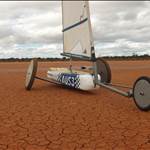
However, I'm also mulling over the idea for going for a shorter version with the direct steering bar behind the wheel (like a 'potty'..the land yacht I had a go on).
Hi again Lesley,
It might be a good idea to stick close to the Lefroy mini plans for your first build, and keep your souped up version for build no.2.
Making the yacht shorter will make it twitchier.
There are a few improvements from the initial design that have been developed, but are hidden away throughout the website.
-a strengthening strap that runs from one side of the mast step [support tube] wrapping underneath the chassis spine and back up the other side of the mast step with short "stitches" of weld to secure it [not one long continuous weld]
This prevents the mast step eventually tearing out of the spine from metal fatigue, mind you - you will have to sail hard-n-fast for an awfully long time to build up that sort of stress.
-The rear of the chassis spine gets sealed with a welded plate to stop eventual stress tearing the chassis spine.
-The braces running from the chassis spine to the rear axles can be 1 1/4" x 1/4" flat bar instead of round bar,
then you can also use this flat bar to bolt your seat and seat belt to - instead of separate short brackets.
-The angled brace that runs from the chassis spine up to the mast step can be made out of the same flat bar, and a series of holes drilled to fit the shackles that you use for your downhaul and sheet-rope.
-Recently, some of the crew have been moving the mast step further forward and a little more upright so bigger sails can be used, which seems to work well.
-Instead of bolting the rear axle extensions into the rear of the frame - you can use spring loaded clips, which can be salvaged from scrapped adjustable windsurfing booms.
This makes pulling out the rear axles a 2 second job and much easier for storage and transport.
Whereabouts are you going to be sailing, vacant airstrip, beaches, car parks?
How are you going to transport it -trailer, van or station wagon?
stephen