Peterc150 said..
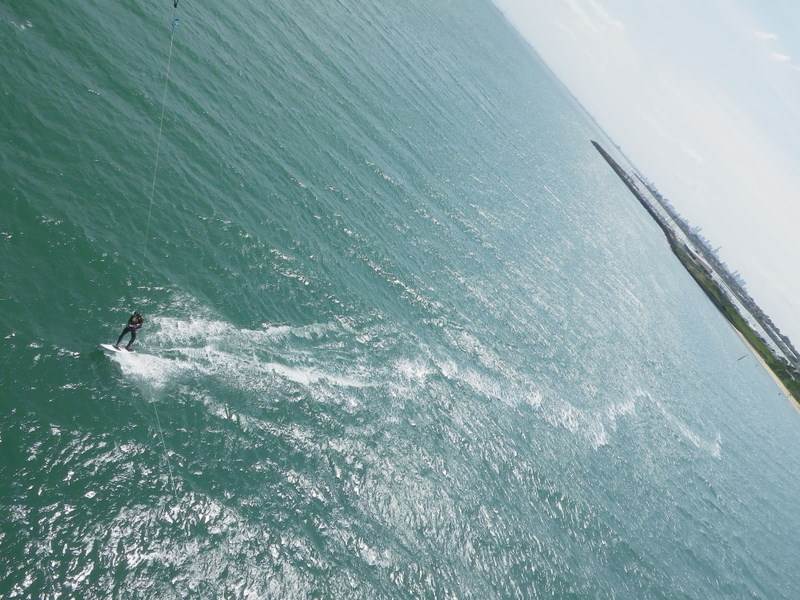
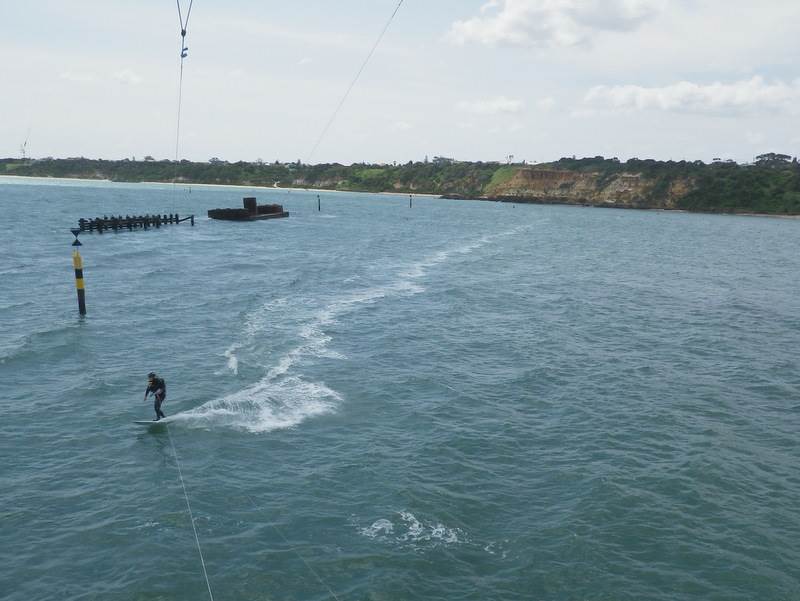
...We did come back towards the coast a bit, but the wind direction was such that were getting ample wind where we were and there might have been less in closer to shore (as happened to me at Ricketts). We could see the wind around us and in front so we went for it.
But yes, it would have been a very long swim if it dropped out.
That's reasonable, sort of. You took a chance but it looked ok
cesarphysio said..
Also, at that point (in front of Aspendale, 4-5Kms out west from shore) a big sailing boat was in the vicinity so in case of big trouble that would have been our alternative. Worse case scenario, VHF would allow us to contact Coast Guard. IN the very worse case scenario we always carry EPIRBs.
Most important, training sessions like this allow us to understand the wind patterns.
Exercising the constant checking of the wind, no matter if you are going out or not, will allow you to be more confident in making the decision while in the water. Knowing that there were no fronts coming, checking at least 3 different websites (BOM, Baywinds and Seabreeze) help to organise your logistics (times, sections, equipment, etc).
....
That's just nuts. Doing something silly and expecting other people to come and rescue you is not a good plan. You're carrying the gear as your primary safety plan. You should only carry the rescue gear as a backup if your safety plans fail.
Proper planning is to plan your route so that if you have a failure of a critical resource, such as gear or weather or a minor injury, then you are in a position to rescue yourself. If things go unreasonably bad then it's fine to expect the cavalry to come and rescue you. ie. Rule 1 is to never go out further than you're prepared to swim.
It's deluded to think that because you've done it a few time before and got away with it that you understand the wind and weather. It can and will do anything it wants. The more experience you have the more you learn to have a bigger safety buffer.
It doesn't make sense to punt out into the middle of the bay and expect everything to be ok because you've got a radio and an epirb and a cut lunch. There's nothing to see there. It takes no great skill to do it. It is much safer and much more fun to run along the coast. The scenery is better. You have escape routes the whole way and people can see what you're doing. You don't need support boats or any expensive infrastructure or excess gear.
PS A couple of weekends ago I came across two Southern Right Whales during a session. I got to ride around and check them out for half an hour (obviously without getting too close). We were only 500m off the beach. You don't need to go punting off into the middle of the ocean to have amazing experiences.