Yeah, go a bigger board – actually I going to go even further in the field of different. My solution allowed me to go down in kite size.
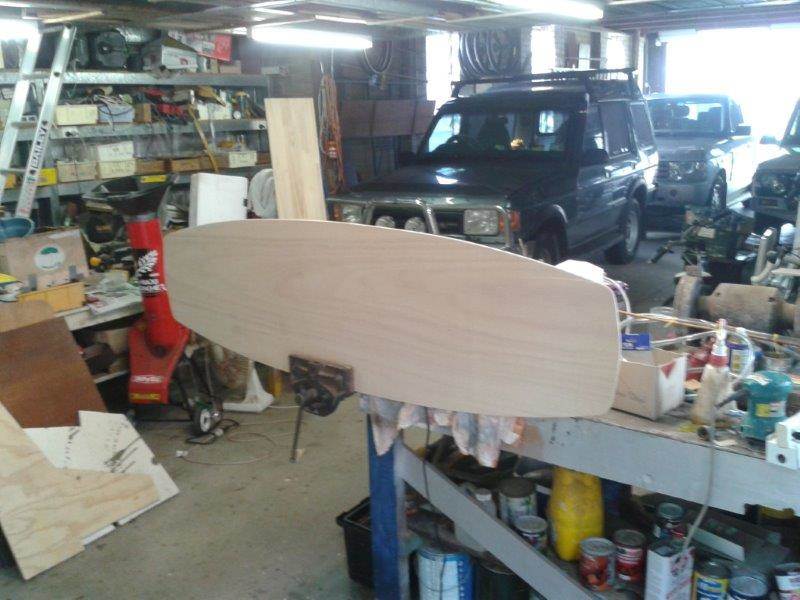
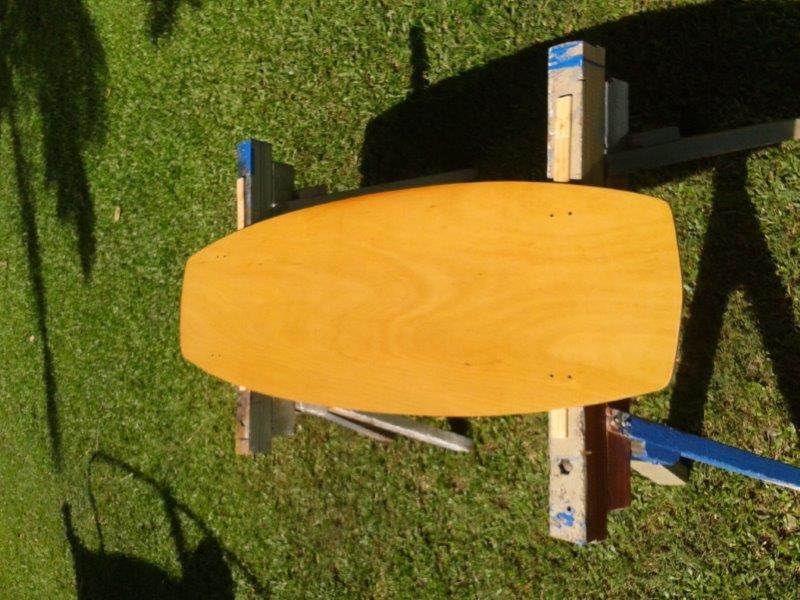
I ended up doing tons of research about beginner's boards and made one with a difference. 162x48 (I am 96kg), slightly rounded 6mm thick rail on one side, square on the other and quite thin at the tips. And it cost less than $50! Actually I could make another 2 from the left over sheet that cost $44.
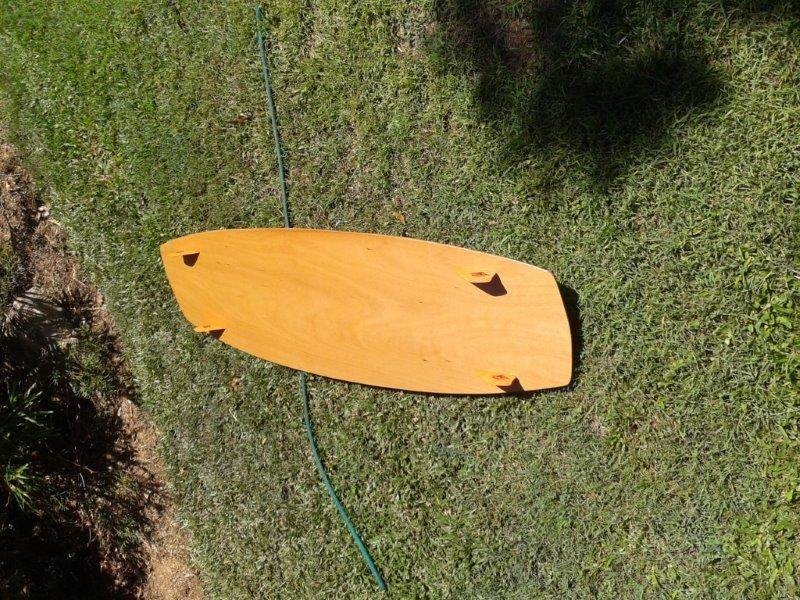
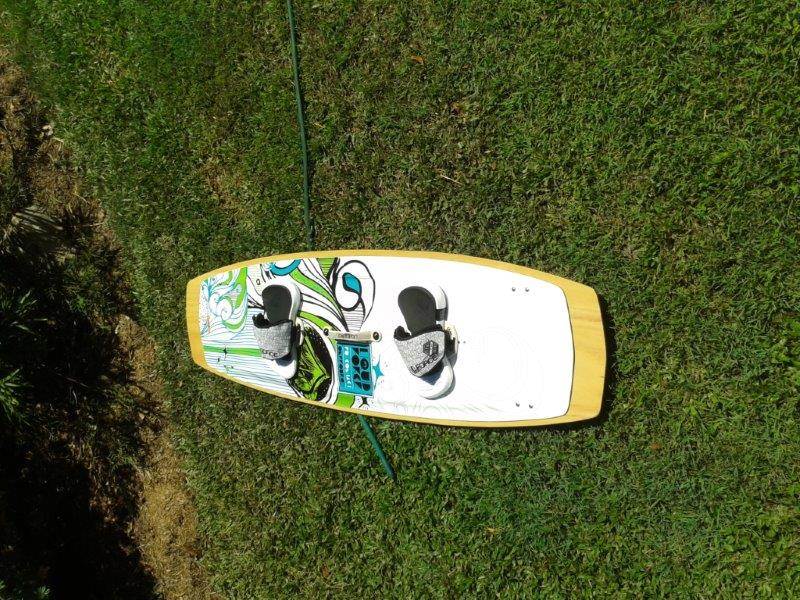
THIS IS FOR LEARNING – NOT A DEDICATED LIGHT WIND SOLUTION. It is simple and uses my current board for all the important stuff like flex and the (medium) rocker. 6mm marine ply (bugger all weight), shaped to what you want, seal it, replace the fin bolts (standard m5 thread) with longer ones that will go through the ply plank (I needed 25mm) – the fins secure the plank to your board, the rocker holds it tight. When the wind get going, unbolt it, replace the fin bolts and go on the standard board – we have found that it is too big to get the edge in with more than about 16/18kns.
This is not for everyone, and I expect to get flamed by some here; but works for me and my mate who is learning with me. Originally I thought we would cop some comments at the beach but I'm not sure anyone has even noticed what it is, although I am the type that doesn't give a **** what people think…
Specialist light wind boards (Nobile Flying Carpet or North Spike as examples) are actually quite different to beginner boards (Liquid Force Proof as example) and I'm told difficult to learn on, sharp rails grip well but are unforgiving (I find my board is harder to edge once up but forgives a slight incorrect stance or unbalanced wobble), flat rocker that reduces drag is also quite unforgiving for the learner (your back/front foot balance must be spot on). And the paralleled edges and full tips which give max lift and edging don't like chop. Light wind boards are as light as possible for obvious reasons, this solution gives the surface area to get up with far less power but is heavy (like a LF Proof) so doesn't get knocked around by chop.
It is our solution for a beginner board, as we both progress the ply layer is getting less use.