There are plenty of ways to self-land a kite and your experience will vary depending on the kite brand/model/size, type of safety system, wind conditions the space you have, etc.
I would recommend working up from a basic self-land to a more advanced self-land, all by using the safety system of your kite. This process will get your familiar with your safety system and the kite's behavior when activating it.
Lots of people try to self-land their kites without using their safety systems and this is very dangerous, simply because if it doesn't work the way you planned it, you will put yourself and/or your gear and/or other people at risk for obvious reasons.
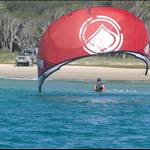
For a basic (beginner) self-land, rest your kite on the wing tip in the water from the water's edge and activate the safety system (Quick Release). Then follow the safety line hand over hand from your leash to your kite (like you would do in a basic self-rescue). If your kite uses two front lines for safety, then pull only one of the two lines to get kite to flag out. This method can also be done on the beach if there is enough beach space (Intermediate self-land) but the kite may roll and tumble a few times, which is not dangerous (safety system has been activated) but maybe not ideal for your gear.
The more “advanced” self-land consists in bringing the kite down to its secure position quickly and safely. Again I would only recommend doing this by using the safety system. This method depends on the safety system of the kite. There are 3 main safety systems on the market nowadays:
a) Single front line safety (four line reride bar, found on Ozone kites for example)
b) Dual front line safety system with mini fifth line (four line SLE bar), most common type.
c) Fifth line safety system, found on North kites for example.
So, if you have enough beach space and there is no one in sight that could land your kite, try the following for:
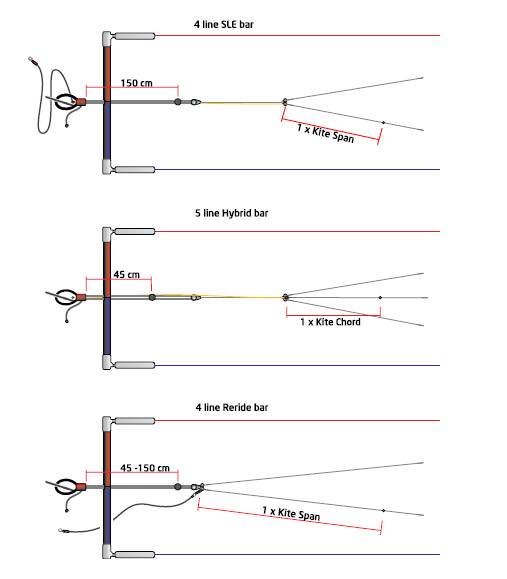
a) Rest the kite's wing tip on the edge of the wind window (3'oclock or 9'oclock) on the beach. Let go of the bar. Make sure your safety line is connected to the upwards bridle of the kite when the kite is resting on its wing tip (You can plan on which bridle you will connect the safety line when you rig your kite, in case you need to self-land). Hold the leash in your hand just below the connection point. Make a few steps upwind to put tension in your leash line and then activate your safety system, either by pulling the Quick Release (Q.R.) or by unhooking from the chicken loop.
Immediately pull the leash line hard whilst running upwind. How hard and fast you will have to pull the leash line will depend on the wind strength. More wind = pull harder and faster upwind. If done correctly this will bring your kite straight into its secure position. If it doesn't work as planned the kite may roll around a few times but you will still be safe because the safety system has been activated.
b) For a dual front line safety system, activate the safety system once the kite in resting on its wingtip (Q.R or unhook). The kite should now still be resting in the same position. Then follow the safety line (typically red in color) until you reach the “V” where the two front lines begin. Grab the upper front line and
pull it hard, hand over hand whilst running upwind. This will bring the kite down to its secure position if done quickly enough. In case it doesn't work, the kite may roll around but not pull you as you activated the safety system.
c) When using a fifth line, the kite will typically self-land in its secure position (95% of the time); simply by pulling the safety line hard upwind, once the safety system has been activated. The steps to follow for this one are the same as in a) for bars with single front line safety system.
I have done countless self-landing on all these safety systems using these methods, and they all work well regardless of wind conditions, and most important, they are all very safe. T
he key thing in all these methods is to put lots of tension on the safety line by pulling the leash early and quickly after activating the safety system. The very worst that can happen is the kite rolls around but will never pull you because you activated your safety system first. With practise and familiarization with your kite's safety system, this can easily be done successfully time after time.