Dear Moderators (and a couple of others)
Just time for a quick and short reply.
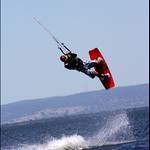
(There is still no wind here so I though I’d generate some).
I am positive about your respective positive comments, so you do not need to think I'm completely out of the loop. (yet anyway)
I did not come into the SB forum to cause trouble. But I will use all my life experiences and skills to good effect for myself and for others if I can.
That said, yes, I have browsed the guidelines. The rules and etiquette are much the same here as other good practice I’m familiar with.
In regard to cybernetic interpretation.
I do not envy your moderator task. It is VSM System 2 work largely. Not VSM System 5 unless S5 has collapsed into S2 which happens because/when there is not enough wind in systems S3 or S4 domains. This is not ‘reality’ out there: this is a languageing convention to help discuss the need for separation out, and specialisation of, and detained focus on, while remaining interconnected as a whole system as defined by the system boundary of concern (i.e system S1 or S5 depending on you perspective. It is a way of talking that appears clumsy at first but is precise. S5 is a self-governing S1. How this occurs is through S2,S3, S3*, S4 work which links the S1 unit responsibly to the next recursion level – e.g. individual member to organisation; organisation to environment; etc. Otherwise there is a degree of autism in effect.
VSM is not a hierarchical system even though it looks like it in the diagram – a generally accepted shortcoming in Beer’s approach and communication style. They just represent five inter-related sub-systems or points of view (well actually seven points of view if you count 3* and algedonic as well – i.e is better to say seven interrelated functions – see Law of Seven – plus or minus Two). By way of example: this is an algedonic ALERT:
rsckitesurfing.blogspot.com/ I'm not here to lecture but I do have some knowledge and experience in this field. It can help diagnose problems quicker. I’m happy to share. You can take it or leave it. No issue for me personally. I’ll watch the show.
For example, my perspective naturally, and as represented here in the ‘rsc’ id here, is strongly VSM S4. It always rubs S3 who is in ‘control’ mode and protecting the ‘eggs’. S4-vs-S3 is the dynamic dance/struggle that S5 can arbitrate on (i.e. if it exists as a dynamic). More or less of the same, or different? That is the S5 question. Equally, S3 may want to change and S4 recommends “no” based on external scan etc. (e.g. for the struggle see ‘Syntegration’ and ‘Tensegrity’ for the use of the Buckminster Fuller icosahedra structure to work it out).
For example, this is a typical S3 type tone (although weak and soliciting for peer-group acceptance imo) -- "
p.s. i assure you that rsc's rantings display a deep lack of understanding of the ideas and authors to whom he refers; don't be fooled by the big words, he's a pretender. on behalf of rigorous intellectuals i apologise for his ridiculous misrepresentations of a generally good group of people." (source not disclosed but obvious if you look in the SB forum).
Who is this ‘voice’ speaking for? Who is this ‘voice’ speaking too? Some imaginary collective in his head? Could it be the same mental condition that says something like: “I prostrate myself in homage to …” is also displaying character features that secretly want others to prostrate themselves to him/herself?
My blasts (now on my blog with a possibility that I will agree to remove as requested by email) was an algedonic signal: The siren. The whistle. They’ll come down when I think the situation has changed enough to make them unnecessary. That will be the quiet signal from me for those who wish to read it.
Look Moderators, S2 work is basically keeping S1s apart and yet still inter-related – traffic on roads (traffic lights); parents with kids (stop fighting …); inspectors on beaches; ticket booking systems etc are all S2.
If by experience you think the rules of operation (guidelines etc) need changing then that is S3 work – or at least a S3 decision on approving it. Those S3 control decisions are given to S1s directly (new user to go read the new guidelines) – AND it is S2 work to ensure it happens as such. S3* audits and tests occasionally and reports back to S3 as to actual performance, conformance and outcome/output achievement etc.
If I did a report back to an AKSA/WAKSA body then it would be a S3* feedback report on real world performance of S1 units (humans in this case, and hopefully AKSA/WAKSA members) compared to espoused values and standards and performance measures. In this case I would refer to two examples (at least) – (a) “Show Pony @ Brighton Beach (WA)” and (b) Idiot at Kawana”. I’m sure others may also exist. One more case study example would be good. I might also comment on thinking on S2 issues although they would be implied anyway.
Yes, everyone is busy. But all a busy S2 has to do here, in SB forums, is keep posts in conformance with guidelines and standards. The sticker the better really. For example: this site is said to be kid friendly etc. Good. So why all the suggestions to bad language? And why the soft porn erotica with something like breasts in wet t-shirts? (e.g myusernam). Sure I like it as well -- but it sets the tone -- the tone that says rules are just for grumpy old men like ‘rsc’ and not for us cool dudes.
Now you have probably never been challenged like this before with so much variety (complexity). That is what S4 brings to the table: interrelated variety and complexity from the outside world. Some may see it as payback to jerk S3 fascist behaviour (many in organisations do.) But I do not. I see it as a civil duty.
No problem with added stress, but now you realise that you cannot cope with the added complexity (variety). Suddenly it is all under system-stress and doing S2 well means not doing your own personal S5 effectively. That is what VSM says: so split the work. I'm not saying you specifically cannot do S5 -- we all can. I'm saying you cannot do it while doing a 1,000 other things in real life and at the same time be able to sit back and think more deeply about the S4-S5-S3 struggle going on.
The response? Either accept it and escalate it so the system can adapt and change as an early survival adaptation strategy to the BIG ‘real world’ wave that is just coming along behind it (S4 deals in early ‘weak signal’ detection). Or ignore it, suppress it, deny it – a typical S3 instinctive response due to internal inertia and focus on keeping things as they are. Holding it all together is the S5 perspective – i.e. with one eye on the long-term storm approaching (as seen through S4 eyes), and the other eye on the hassle of S3/S2/S1 change challenges and costs. The S5, when operating effectively, takes the call and the heat – sustainability and viability (survival) is the key autopoietic concern. Or should be.
Without adequate or requisite S4 input then S5 collapses into S3 mode. And then you have a corporatist fascist State (of affairs). Younger generation people should be very worried about this as a world trend.
The hippies in the 60s and 70’s fought this. You also have to stand up and fight it in your own domains and contexts. The freedom loving and freedom defending spirit is alive and well in kitesurfing. That is what attracts me. Been there done that, still doing it, feels a bit like home. BUT …!!! … Please do it smarter than the average bear or he/she will eat you.
Cybernetics can help you do it smarter – then you will have a better chance of protecting your sport, recreation and world view. It is a big hill. It always has been. It always will be. I’m hopeful. There are smart people here reading this. They have communicated with me. The S5 response ‘voice’ from me as a SB forum member is: deal with your own pack of prowling dysfunctions S1s here before you seek to manage the problem in the wider real world on the beach. That is an S3/S2 job. Then the real world problem on the beaches may not be such a problem. That is chaos theory and ‘initial conditions’ from a complex adaptive system perspective. Butterfly effect is only operative in certain dynamic precariously balanced system conditions. Here one might say that a single kitesurfing incident on single beach may affect the whole kitesurfing climate around the state, nation and world. Only time can tell.
S5 is a perspective. In organisations often S5 is seen as the Board, the Chair, the people (members). S3 is the CEO. S4 is the consultant (Director of R&D and/or Marketing), etc. S4 does not have power – S3 has that. S4 has variety, they have freedom. They can put up Blogs to the wider world if they wish. They do not challenge S3 with power – but with complex interrelated communications strategies. Eventually, if S3 is not listening and S5 is asleep or non-existing, then the members, and then the world, will decide. Rising outrage is the measure.
Looking, back to pragmatic monitoring. What I would like to say here is: think about splitting S2 monitoring work into two categories.
1. Basic 101 stuff that you can delegate to someone junior with less skills etc -- a mature kid even. All they have to do is: (a) check that the rules are followed for post content etc. Anything that flouts the rules gets bounced. 'Tits and bums' -- delete. Personal attack -- delete. Curse words -- delete. Simple 101 stuff really. No executive decision needs to be made about what the rules should be. It is routine.
2. If too complex and issue to be certain, or a grey area, then escalate up to an old hand like yourselves for a determination. Then bounce, modify, warn, suggest, etc. You'll get rid of 80% of the more routine admin work. That time can then be spent in working on the system -- not in the system. On the system is S4/S5/S3 work.
My 3* audit evaluation to your S3 mode is this: The “Show Pony Express” should have about 20-30 posts in it at most. The rest is noise - masturbation and rebuttal (both ways). If this pruning had been undertaken quickly then a whole different quality and outcome would have emerged.
The reasons why this did not happen are most likely due to culture, group dynamics, moderators also playing in the game (umpires having a kick), wanting to be accepted and fearing being outcaste etc. Play by all means but make it clear which id persona you are using (individual or S2 umpire role) and if you are not neutral, or not a very skilled hand, then shift the S2 role to another and then jump into the ring with your gloves on. Not doing this is confusing and implies bias.
My conclusions so far suggest Kitesurfing is the newbie on the public beach front and has not yet found its mature footing. It does not know how to self launch properly. It is (at the higher performance levels) the ‘Show Pony’ of the wind/wave world. Everything said here can be (and probably is being) said by others watching the show: “Another Noob sport!!!”
There are some smart intelligent people here, and those who understand that for a ‘whole hand’ to work effectively requires an opposing thumb, can better understand the difference between a single digit perspective and a whole-of-hand perspective.
Yes, ‘mirroring’ is an effective technique for effective communication. And yes, Show Ponies come in all shapes and sizes. Some are even academics (or want-a-be’s). The key difference is one of conscious action. Is one doing the mirroring consciously or not? That is the question!
Have fun with cybernetics – it a lot like kitesurfing in many ways, but with the mind … unless of course one is a practitioner. Then it is messy (*). That can be a good thing (but S3 do not like it in general).
Check out Peter Checkland’s work on Soft Systems Methodology (SSM) if you are interested. This here, in SB Forum-land, shows Kitesurfing on Beach-land is in a fine mess. There is hope – but only if the situation of concern is not denied and is actually worked through. What we have here (or at least I do) is a very nice “Rich Picture” (another Checkland term) to work with. Thank you one and all. Those that want to participate in my developing further diagnosis and prognosis are welcome to contact me via the message system.
It is Open Forum Research (OFR) and anyone else can do the same thing – including the various responsible associations involved in a ‘win-win’ solution with the wider general publics. My recommendation: find yourselves a good SSM practitioner and get them onto it pronto before the next crash landing on Brighton Beach for the kitesurfing ‘sport’ as a whole. They might find what is here on SB forum of some use.
Summary: So you can see I have related cybernetics (thread topic) which self-generated, without my direct help my myself (but rather through influence on the system in focus), to the various issues of concern raised here and in other related threads. Following an outline of the topic, with a focus on good moderation from a VSM perspective, I have pointed out that the image at the top left had side of this thread's 1st initiator entry is (imo) likely, on closer inspection (which one can do through a copy & paste to MSPaint or similar) to be highly sexually explicit end verging on erotica. I suspect this is not in conformance with SB guidelines. I have indicated that the moderator's role can be seen as having both routine and more complex dimensions. I have pointed out that 'initial conditions' are an opportunity to apply 'trimtab' theory and start pulling the rudder round. My hypothesis is that if this occurs then the effect will spread in other domains and have positive effects as judged by the greater capacity to resolve (self resolve) situations of concern.
Conclusion (for self-governing action): By way of example, I recommend that the image being displayed (myusernam, Posted 07/01/2011, 10:10 am) be removed. Now you have a S2/S3/S5 decision to make. Good luck.
[Note: If this action/change transpires then who will do it? S1= myusernam, or an S2? That capacity will then be a measurable cultural indicator towards evaluating the same relationship between kitesurfing (as a group activity) and the wider beach community.]
(*) for example:
--- quote ---
We can distinguish between two different classes of problems – ‘difficulties’ and ‘messes’. We experience them differently and dealing with them usually requires different approaches. The first class of problem is difficulties. These may be quite intractable but, broadly speaking, I can be fairly sure of the sort of solution I'm looking for. The problem itself is likely to be fairly well defined and most people involved will more or less agree on what it is. A difficulty is fairly bounded; that is, it only affects a limited set of things, events, people and processes. Political and ethical considerations intrude in only a minor way.
Messes, on the other hand, are much more difficult even to describe. There is likely to be little consensus about what the problem actually is. This means it is often hard to imagine what a solution might look like. Uncertainty is characteristic of messes. Not only does the problem solver not have enough information; it’s not easy to see what information will be needed to improve the situation. This uncertainty and lack of information can generate a sense of unease around the problem. The problem seems to be multifaceted and densely interconnected with a large number of things, events, people and processes. The problem appears to be unbounded: it seems to be interconnected with its environment. Human values, often conflicting, are often a feature of the problem. Often there have been previous attempts to deal with the problem. These may even have appeared to be successful for a time but it is a characteristic of a mess that the problem re-emerges later, perhaps in a slightly different form. Thus messes often have a characteristically longer time-scale than difficulties. Attempted solutions often precipitate the emergence of new forms of the problem. The problem owner may experience ‘problem paralysis’: whatever solution she thinks of seems likely to cause still further problems. A mess can be thought of as a tangle of interconnected problems.
--- end quote ---
(see
www.first-pages.com/ukss/spmc/2003july-armson-quicksprint-day1.pdf )