Since breaking my rudder (see here
www.seabreeze.com.au/forums/Sailing/General/What-did-you-do-to-your-sailing-boat-today?page=161), I have been thinking about rudder design and rudder theory.
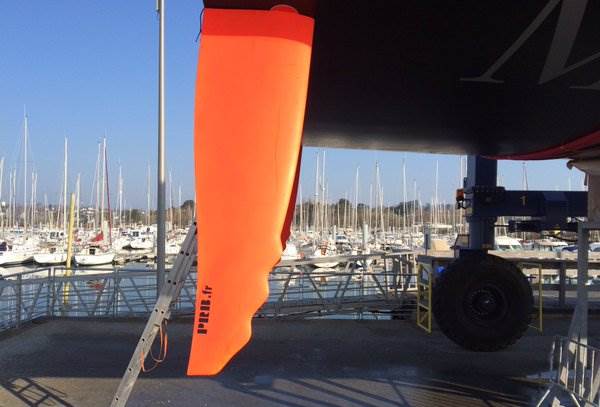
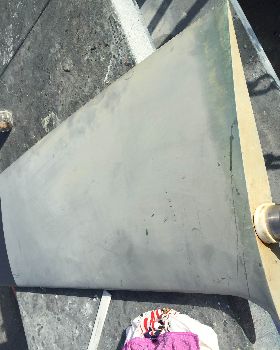
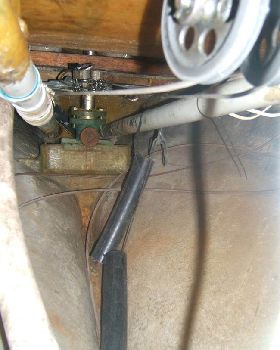
To recap, the "new" rudder that broke on my Cavalier 28 was fitted two or three owners ago to provide better downwind performance. The boat came with the "original" rudder, which is smaller. It is a transom-mounted rudder, and the transom has a rake on it. The "new" (broken) rudder is about 200mm longer, 150mm wider, with pre-balance (the leading edge is in front of the axis of rotation). I understand what the pre-balance does. However, I have some other questions ...
Should the rudder be heavy or light? Light might be better, because you have less weight at the ends of the boat. But, if light also means highly buoyant, it will also put an upthrust on the rudder pintles and gudgeons, and I'm not sure my pintles and gudgeons are designed to take such a force. Maybe it should be neutrally buoyant, when the bottom is submerged up to the waterline?
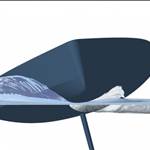
Should the lower end be square or pointed (per a Spitfire wing)? This is to do with vortex-shedding along the bottom edge. Maybe it doesn't make a noticeable difference?
Should the trailing edge be knife-edge sharp, or squared off to, say 5mm? This is to do with vortex-shedding, again, and I have heard that a little squaring off improves it.
Other than timber, what material(s) could I use to make up the core? If you've seen the photo of the rotten timber in my broken rudder, you'll understand why I'm asking this question.