During various threads, the concept of "supercavitation" has been mentioned. I thought it might be interesting to start a separate discussion.
Ian K said in another thread...
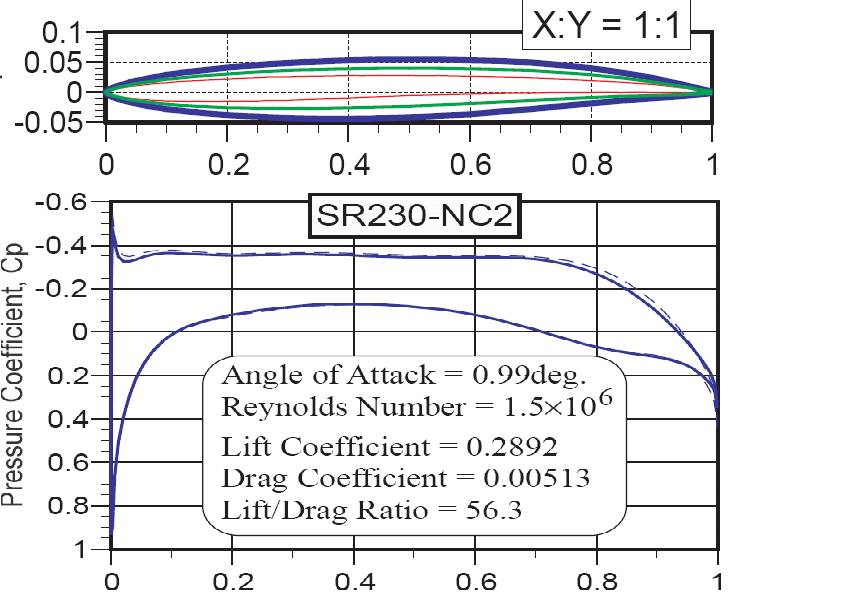
Looked up Wiki to see what there is out there on supercavitation - not much. From what I can gather its main purpose is to get a superbubble on the low pressure side which doesn't collapse and cause damage until the foil is clear. Deliberately inducing cavitation also bypasses a normal foils unpredictable behavior at ~50 knots. But the compromise is they have to have a high angle of attack and so a lower lift to drag ratio.
So getting the craft foiling might be the crux of the matter. Maybe it'll do 5 knots or 55 knots but nothing in between? 55 knots or bust. Good on 'em. Oi! Oi! Oi!.
I did some reading on this during summer - like you said, there isn't much info out there. What I could find said that a minimum of about 100knots is required for a stable cavitation bubble, increasing to 150 for big things like torpedoes. However just about all of the evidence suggests that some form of induced tip bubble needs to be generated, eg by diverting some torpedo exhaust gas, to the tip.
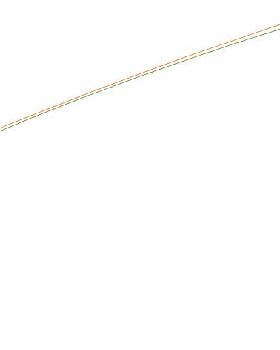
I did get the picture that a triangular shaped foil might work, with the pointy end forwards and with a sharp tip. The idea is that the tip creates a pressure vortex which quickly becomes unstable thus causing cavitation bubbles at very low speeds (say 20 knots boat speed). Then with enough speed, due to the sides of the triangle being sloped outwards, the tip-bubbles start to coalesce forming something stable. The rear-end of the foil shouldn't trail off like a normal foil as the negative pressure gradient will cause bubble instability. eg:

Of course a windsurfer probably couldn't use this foil as the horsepower needed to overcome the initial drag would be huge (although it might work if you could hold down a formula sail...).