Advice for the Practically Challenged
Hi
Sorry for the long post, but I have decided to try and be brave and do a few more of the maintenance issues on my boat- a solid fibreglass 27ft (cut away) integral full keel with barn door rudder from the early 1970s - rather than getting a pro to do it, but being practically challenged, was hoping for some guidance.
Next week she is on the hard in Brisbane for some (minor - I hope) osmosis treatment and an anti-foul. I have not done either before, but I have made a couple of ply dinghies/boats so have had a little to do with epoxy. Mixed success though.
She will only be on the hard for a week - time and money constraints don't allow anything more. I know that might not be long enough to treat the osmosis. I have been trawling the interweb, and some "how to fix old boat books" at home, but thought that you can't beat local knowledge, so here I am..
I was thinking that I will:
- Have her pressure washed down when she is lifted.
- Look for the blisters - it seems that they are more easily identified when the hull is still wet, looking along the length of the hull ?
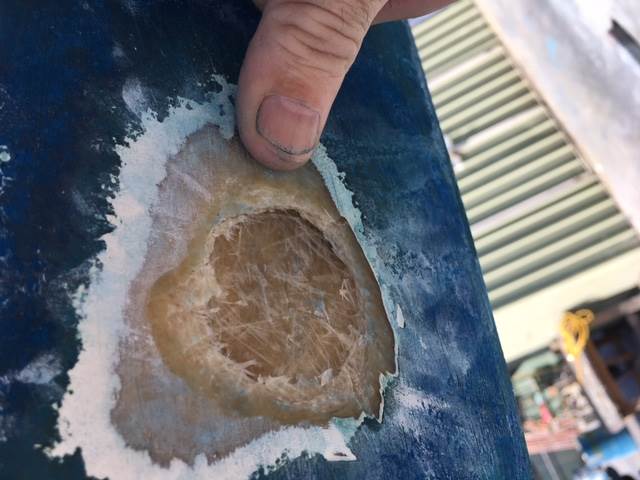
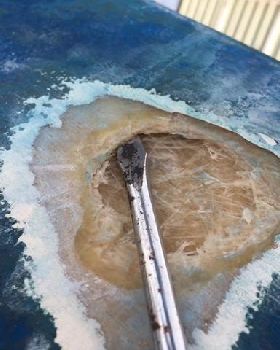
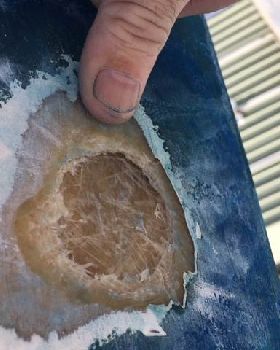
- Sand the blisters and remove the rubbish with an angle grinder (maybe a dremel), faired to allow an epoxy filler after allowing to dry
- Tape the line of the anti-foul with the top sides so that I don't accidentally run the sander onto the glass - bound to happen..
- While the blisters are drying out, sand the rest of the hull, doing one section at a time. Last time I looked it seemed to be a little bumpy all over, like it hasn't been sanded before applying anti-foul before, at least not for many years.
- I was thinking of going at it with an Ozito orbital sander, 60 grit. Long sleeves, and dust mask on.
- After letting dry for as long as possible, epoxy fill the blister holes. Maybe speed things up with the wife's hair dryer. Not sure what sort of filler with which I should thicken the epoxy ? Does it matter ?
- Sand the epoxy blister fills for a fair finish once ground and filled, but do I need to apply something like a barrier coat (whatever that is ?) or a primer as the base layer before anti- foul ? Any recommendations ?
- Apply 2 coats of anti-foul. It is currently an ablative and I was going to apply the same - I don't know the current brand. Any recommendations ?? She won't venture out of Moreton Bay in the near future.
- I was going to anti-foul with a roller and brush as necessary. Not sure what sort of nap for the roller ? No spraying though (I don't trust myself).
- Any ideas about what sort of coverage can I expect from the anti-foul - how many litres will I need ?? I'm not a very conservative painter.. - Back in the water and sail away !
Does that sound like a reasonable plan ???
Appreciate any thoughts !
KK
View topic